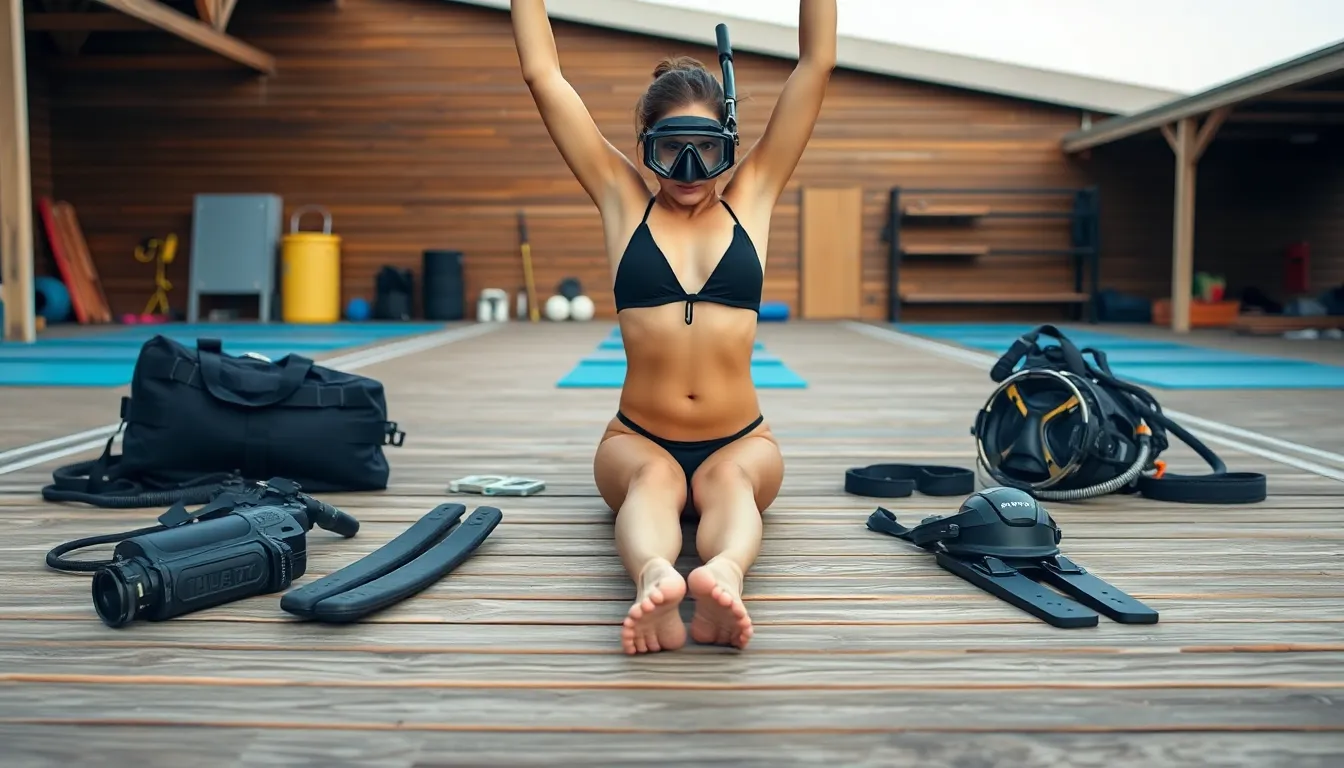
スピアフィッシングのための陸上トレーニングドリルは、成功する水中狩猟に必要なスキルとコンディショニングを発展させるために不可欠です。これらのドリルは、呼吸保持能力、泳ぎのテクニック、全体的な身体的フィットネスを向上させることに焦点を当てており、スピアフィッシング中のパフォーマンスを最大化するために重要です。特定の動きやテクニックを陸上で練習することで、水中での効率と効果を大幅に向上させることができます。
スピアフィッシングでは、すべての秒が重要であり、環境が予測不可能な場合があるため、陸上トレーニングドリルは以下のいくつかの目標を達成するのに役立ちます:
- 改善された呼吸コントロール:呼吸保持をマスターすることは、より深く、長く潜るために重要です。
- 向上した身体的コンディショニング:筋力と持久力を高めることで、スピアフィッシングの厳しさに耐えられるようになります。
- 洗練されたテクニック:陸上で動きを練習することで、水中での作業を実行する際の筋肉記憶が向上します。
- 怪我の予防:関連する筋群を強化することで、長時間の水中活動に伴う怪我を予防できます。
前提条件:呼吸保持と泳ぎのスキル
特定の陸上トレーニングドリルに入る前に、呼吸保持と泳ぎのスキルにおいてしっかりとした基盤を築くことが重要です。
呼吸保持トレーニング
呼吸保持トレーニングは、スピアフィッシングの基本的な側面です。これにより、水中に長く留まることができ、魚を見つけて近づく機会が増えます。呼吸保持能力を高めるためのいくつかのテクニックを紹介します:
- スタティックアプネア:プールの表面で静かに横たわりながら呼吸を保持する練習をします。徐々に時間を増やしていきます。
- ダイナミックアプネア:呼吸を保持しながら水平に泳ぎ、リラックスした流線型の姿勢を維持することに焦点を当てます。
- CO2耐性トレーニング:呼吸の間隔を徐々に短くする呼吸保持エクササイズを取り入れて、CO2耐性を高めます。
泳ぎのスキル
熟練した泳ぎのスキルも同様に重要です。さまざまなストロークやテクニックを練習することで、水中での効率が向上します:
- 自由形ストローク:強力で効率的な自由形ストロークに焦点を当て、迅速に距離をカバーします。
- ドルフィンキック:魚を捕まえるために潜る際の動きを模倣するこのテクニックを練習します。
- フィンテクニック:フィンを使用して水中でのスピードと敏捷性をトレーニングし、障害物の周りを移動する能力を高めます。
水中の考慮事項を含む詳細な実行の内訳
陸上トレーニングドリルを効果的に実行するには、それらが水中パフォーマンスにどのように影響するかを理解する必要があります。以下は、水中の考慮事項を考慮したこれらのドリルを実行するためのステップバイステップの内訳です:
ドリル実行手順
- ウォームアップ:筋肉を準備し、怪我を避けるために適切なウォームアップから始めます。肩、コア、脚に焦点を当てた動的ストレッチを取り入れます。
- 呼吸保持ドリル:陸上でのスタティックアプネアドリルから始めます。仰向けに寝て、深呼吸をし、息を止め、時間を増やすためにゆっくりとカウントします。
- 陸上シミュレーション:スピアフィッシングの動きをシミュレートするために、ダイブエントリーと水中での動作を練習します。ヨガマットを使用して、水中にいる感覚を模倣します。
- カーディオコンディショニング:持久力を高めるために高強度インターバルトレーニング(HIIT)を行います。バーピー、スプリント、ジャンプスクワットなどのエクササイズを取り入れます。
水中の考慮事項
陸上でドリルを実行する際は、常にそれらが水中でのパフォーマンスにどのように影響するかを考慮してください:
- 体の位置:水に移行する際の抵抗を減らすために、流線型の姿勢を維持します。
- 呼吸テクニック:潜水中の酸素交換を効率的に行うために、適切な呼吸テクニックを練習します。
- 筋肉の使い方:ドリル中に水中で使用する筋群を同様に使うことに焦点を当てます。
水中狩猟に特有の一般的なエラー
While practicing dry land training drills, it’s essential to be aware of common errors that can affect your underwater hunting success:
Common Errors
- Poor Breath Control: Many beginners hold their breath incorrectly, leading to rapid fatigue. Focus on a slow, controlled breath when preparing for a dive.
- Incorrect Body Position: Failing to maintain a streamlined position increases drag. Always practice proper positioning in drills.
- Overexertion: Pushing beyond your limits can lead to blackouts. Always listen to your body and know your limits.
- Inadequate Recovery: Not allowing sufficient recovery time between dives can lead to decreased performance. Incorporate rest periods into your training.
Advanced Variations for Different Conditions
Once you have mastered the basic dry land training drills, consider incorporating advanced variations to simulate different conditions you might encounter while spearfishing:
Advanced Drill Variations
- Weighted Training: Use a weight vest during your drills to simulate the added resistance of diving gear.
- Interval Training: Incorporate intervals of high-intensity exercises followed by breath-hold drills. This simulates the bursts of energy required during spearfishing.
- Obstacle Course: Set up a course that mimics underwater obstacles, requiring you to practice agility and speed while maintaining breath control.
Practice Drills for Pool and Open Water
Effective practice drills can be adapted for both pool and open water environments. Here’s a breakdown of drills suited for each setting:
Pool Drills
- Vertical Dives: Practice diving to the bottom of the pool and returning to the surface while holding your breath.
- Underwater Loops: Swim underwater in loops to practice navigation and breath control while simulating hunting movements.
- Timed Breath-Hold Competitions: Engage with fellow spearfishers in timed breath-holding challenges to build mental toughness.
Open Water Drills
- Deep Water Dives: Conduct dives in deeper water to practice your technique and breath-hold in varying depths.
- Surface Swimming: Swim at the surface while practicing breathing techniques and observing the underwater environment.
- Mock Hunts: Simulate hunting scenarios with partners to practice stealth and approach techniques.
Performance Metrics and Breath-Hold Integration
Tracking your progress is vital for improvement in dry land training. Establish performance metrics and integrate breath-hold training effectively:
Performance Metrics
- Time Trials: Keep track of your breath-hold times and swimming distances to measure improvement.
- Consistency: Monitor the frequency and consistency of your training to identify patterns and areas for improvement.
- Technique Review: Record your drills on video to analyze your technique and make necessary adjustments.
Breath-Hold Integration
Integrate breath-hold training into your overall conditioning plan:
- Combine Drills: Pair breath-hold exercises with physical drills to simulate the demands of spearfishing.
- Progressive Overload: Gradually increase the duration of breath-holds as your fitness improves.
- マインドフルネスの実践: 瞑想などのリラクゼーション技術を取り入れて、呼吸保持エクササイズ中の集中力を高めましょう。
安全プロトコルと緊急手順
魚突きのトレーニングを行う際は、安全が最優先です。堅牢な安全プロトコルを実施し、緊急事態に備えましょう:
安全プロトコル
- バディシステム: 呼吸保持トレーニングや水中活動中の安全を確保するために、常にパートナーと一緒に練習しましょう。
- 緊急計画: 事故や予期しない状況に備えて、明確な緊急手順を確立しましょう。
- 装備チェック: 各トレーニングセッションの前に、すべての装備が正しく機能していることを確認するために、定期的にギアを点検しましょう。
緊急手順
緊急時にどのように対応するかを知っておきましょう:
- 救助呼吸: 水中で意識を失った人を助けるための基本的な救助呼吸技術を学びましょう。
- CPRトレーニング: 発生する可能性のある緊急事態に備えて、CPR認定を取得しましょう。
- 救助信号: パートナーに効果的に危険を伝えるための信号に慣れましょう。