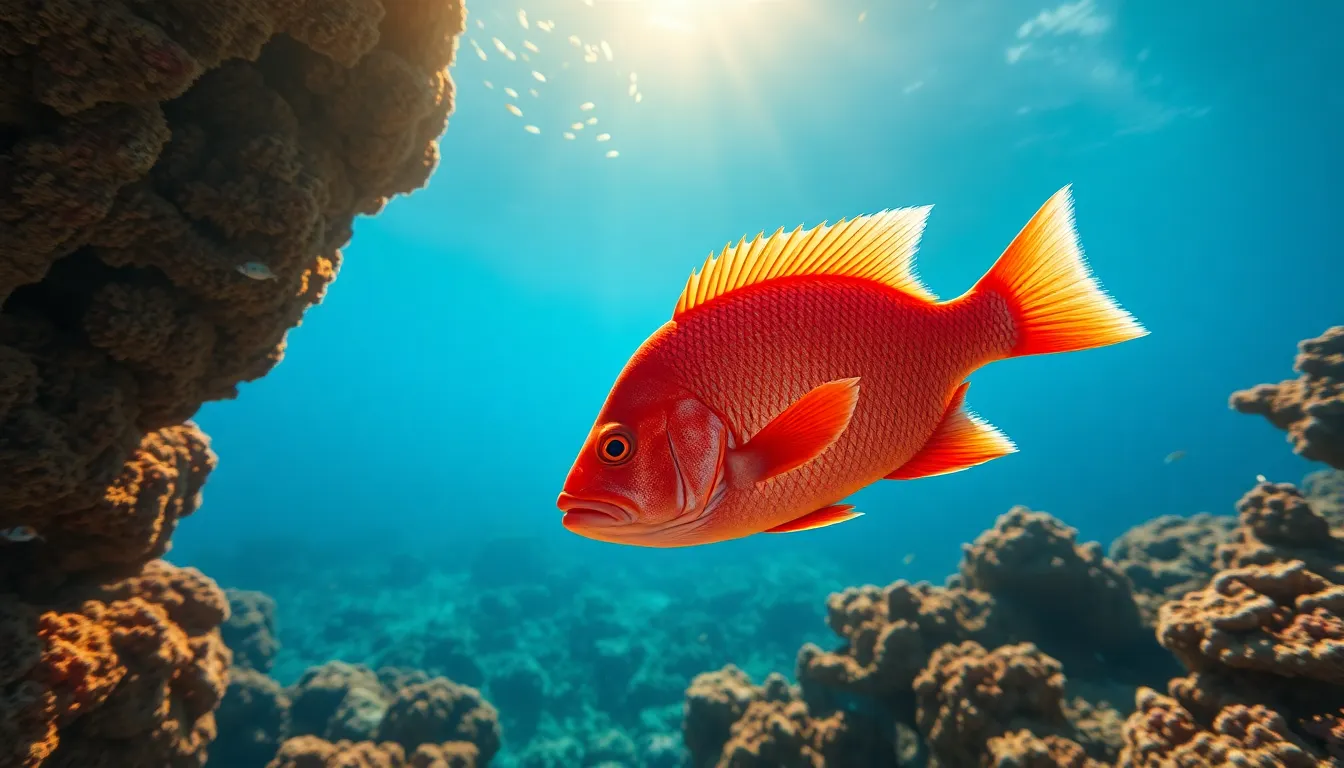
魚の分類を理解することは、スピアフィッシャーにとって重要です。これは、適切な識別を助け、地元の規制に従うことを保証します。魚は、界、門、綱、目、科、属、種などのさまざまなカテゴリーに分類されます。例えば、一般的なスナッパーは以下の分類に属します:
- 界:動物界
- 門:脊索動物門
- 綱:条鰭綱
- 目:スズキ目
- 科:スナッパー科
- 属:スナッパー属
- 種:スナッパー・カンペチャヌス
一般名は地域によって異なることがあり、スナッパーは赤スナッパーまたは単にスナッパーとも呼ばれます。これらの分類に精通することで、スピアフィッシャーはターゲット種を正確に識別し、保護された魚や絶滅危惧種を避けることができます。
物理的特徴と識別マーカー
物理的特徴は、水中で魚種を識別するための鍵です。例えば、赤スナッパーは以下の特徴を持っています:
- 流線型の体を持つ鮮やかな赤色。
- 長く尖った吻と大きな目。
- 連続していてわずかに切れ込みのある特徴的な背鰭。
魚種によって識別マーカーは大きく異なることがあります。例えば、コビア(Rachycentron canadum)は、暗褐色の上面と明るい下面を持つより細長い体をしていますが、黄肌マグロ(Thunnus albacares)は、目を引く黄色の背鰭と肛門鰭を特徴としています。種の識別チャートを手元に置いておくことで、ダイビング中にこれらのマーカーを認識するのに大いに役立ちます。
サイズ範囲と記録標本
魚のサイズ範囲は、スピアフィッシングの戦略に大きな影響を与えることがあります。赤スナッパーは通常、約20-30インチに成長し、記録標本は40インチを超えることがあります。一方、コビアははるかに大きく成長し、平均30-40インチですが、時には60インチを超えることもあります。これらのサイズ範囲を理解することで、スピアフィッシャーは現実的な期待を設定し、地元のサイズ規制に従うことができます。
記録標本
注目すべき記録標本には以下が含まれます:
- 赤スナッパー:43インチ、体重50ポンド。
- コビア:130ポンド、82インチの長さ。
これらの記録は、個人のベストを達成したり、スポーツに挑戦したりするスピアフィッシャーのためのベンチマークとして機能します。
生息地の分布と深さの範囲
魚種は、浅いサンゴ礁から深い海水までさまざまな生息地に生息しています。赤スナッパーは通常、以下の場所で見られます:
- 深さ30-200フィートのサンゴ礁や沈没船の周りの浅い水域。
- 時折、より深い沖合の水域。
対照的に、コビアは以下を好みます:
- ブイや構造物の周りの沿岸水域。
- 深さの範囲は20-100フィートです。
88. 生息地の深さ表habitat depth tablesを利用することで、スピアフィッシャーは特定の種をターゲットにするための最適な場所を特定するのに役立ちます。
季節的行動と移動パターン
Understanding the seasonal behavior and migration patterns of fish can enhance spearfishing success. Red snappers typically:
- Spawn in warmer months from May to September.
- Move to deeper waters during colder months.
Cobia are known for their migratory behavior, often moving along the Atlantic coast in spring and returning to deeper waters in fall. Monitoring seasonal behavior patterns can inform spearfishers when and where to hunt for the best catches.
Seasonal Behavior Patterns
A summary of seasonal behavior patterns includes:
- Red Snapper: Best targeted in summer months.
- Cobia: Active during spring migrations.
Spearfishing Difficulty Level and Techniques
The difficulty level of spearfishing varies by species. Red snapper are considered moderate in difficulty due to their schooling behavior and habitat. Techniques for spearfishing red snapper include:
- Using a float line for safety.
- Employing a silent approach to avoid spooking schools.
Cobia, on the other hand, may present a higher challenge due to their speed and elusiveness. Recommended techniques include:
- Chumming to attract them to the surface.
- Using a pole spear for accuracy.
Rating the hunting difficulty can help spearfishers gauge their skills and prepare accordingly.
Hunting Difficulty Ratings
Red Snapper: 3/5
Cobia: 4/5
Best Hunting Methods and Gear Recommendations
Successful spearfishing requires the right methods and gear. Recommended hunting methods include:
- Freediving: Ideal for shallow waters.
- Scuba diving: Preferred for deeper dives.
Essential gear includes:
- Wetsuit for protection and insulation.
- Speargun or pole spear for effective hunting.
- Fins and mask for improved mobility and visibility.
Investing in quality gear enhances performance and safety, making it easier to identify and catch target species.
Culinary Applications and Preparation Methods
Recognizing the culinary potential of your catch can enrich the spearfishing experience. Red snapper is highly regarded for its firm, white flesh and can be prepared in various ways:
- Grilled with herbs and lemon.
- Fried as fish tacos.
Cobia, known for its rich flavor, is often enjoyed:
- As steaks grilled or broiled.
- In sushi or sashimi form.
Understanding preparation methods can elevate the culinary enjoyment of spearfishing results.
Regulatory Status and Size Limits by Region
It is essential for spearfishers to be aware of regulatory statuses and size limits to promote sustainability. Regulations often vary by region. For instance:
- Red Snapper: Size limit of 16 inches in the Gulf of Mexico.
- Cobia: Minimum size limit of 33 inches in Florida waters.
Staying informed on local regulations helps protect fish populations and ensures responsible harvesting.
Conservation Status and Sustainability Notes
魚の健康な個体群を維持するためには、保全が重要です。オニカサゴは過剰漁獲の課題に直面しており、一部の地域では厳しい規制が設けられています。コビアの個体群は現在安定していますが、将来の減少を防ぐために監視されています。スピアフィッシャーは次のことを行うべきです:
- 責任ある釣り技術を実践すること。
- 保全活動に参加し、他の人を教育すること。
そうすることで、スピアフィッシャーは海洋生態系の持続可能性に貢献し、将来の世代がこのスポーツを楽しめるようにすることができます。
結論として、スピアフィッシングの成功のためには、魚の識別をマスターすることが重要であり、分類学、物理的特徴、行動、規制を理解することが含まれます。この知識を身につけることで、スピアフィッシャーはスキルを向上させ、保全に貢献し、責任を持って狩りのスリルを楽しむことができます。