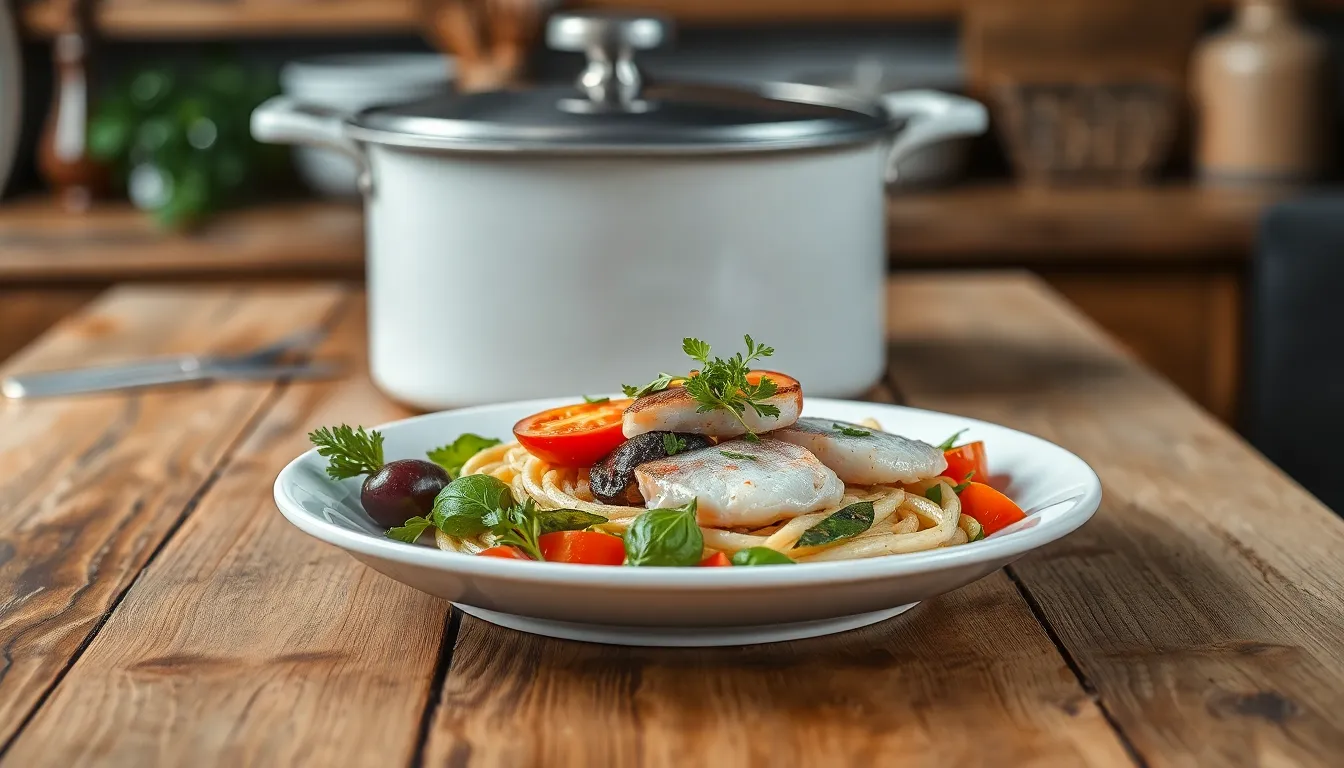
新鮮な魚をさばいたことがあり、骨や残り物の山を見つめながら、どうすればいいのかわからなくなったことはありませんか?あなたは一人ではありません!多くの家庭料理人は、これらの一見無駄な残り物の可能性を見落としています。しかし、この魚の骨から作る魚の出汁のレシピは、廃棄物を特別なものに変える料理の宝です。このガイドに従うことで、スープ、ソース、リゾットの完璧な基盤となる、豊かで風味豊かな出汁を作る方法を学ぶことができます。最終的な結果は、海の本質を封じ込めた香り高い出汁で、あなたの料理に、店で買った出汁では決して得られない深い味わいを与えます。料理を高め、材料を最大限に活用する準備をしましょう!
材料/構成要素の選定基準
優れた魚の出汁の基盤は、その材料の質にあります。構成要素を選ぶ際に留意すべき点は以下の通りです:
- 魚の骨:新鮮で高品質な魚(サーモン、スナッパー、またはヒラメなど)の骨を選びましょう。これらの魚は、出汁を引き立てるクリーンな風味を提供します。サバやイワシのような脂の多い魚は、濁った脂っこい出汁になる可能性があるため避けてください。また、責任ある漁業を支援するために、持続可能に捕獲された魚を調達することも考慮してください。
- 野菜:玉ねぎ、ニンジン、セロリの伝統的なミルポワは、出汁に深みと甘みを加えるために不可欠です。これらの野菜は風味を提供するだけでなく、栄養素や自然な甘みも加えます。より複雑な風味を求める場合は、フェンネルやリーキを取り入れることもできます。これらは微妙なアニスのような特性を加えることができます。
- ハーブ:パセリ、タイム、ローリエなどの新鮮なハーブは、出汁を引き立てる香りのノートを与えるために重要です。乾燥ハーブも使えますが、新鮮なハーブは明るさと複雑さをもたらし、乾燥ハーブでは再現できません。さらに風味を加えるために、魚と美しく組み合うディルの小枝を加えてみてください。
- 調味料:粒胡椒とひとつまみの海塩は、出汁の風味を強化しつつ、圧倒することはありません。全体のスパイスが好ましく、煮込む過程で風味を徐々に放出します。独特のひねりを加えるために、数粒のクローブやスターアニスを加えることを検討してください。これらは海鮮料理に良く合います。
- 水:材料から最大限の風味を引き出すために、常に冷たいろ過水を使用してください。塩素や他の不純物を含む可能性のある水道水は避けてください。これらは出汁の味を変えてしまう可能性があります。冷水を使用することで、出汁が煮込まれる際に風味が徐々に抽出されます。
必要な道具と器具
成功する出汁作りのためには、適切な道具を揃えることが不可欠です。必要なものは以下の通りです:
- 大きな鍋:厚底の鍋は、熱を均等に分散させ、出汁が焦げるのを防ぐために重要です。材料と水の量を考慮して、少なくとも6〜8クォートの鍋を推奨します。
- こし器またはチーズクロス:クリアな液体を得るためには、出汁を濾すための細かいメッシュのこし器またはチーズクロスが必要です。このステップは、固形物を取り除き、料理の最終的なプレゼンテーションを向上させるために重要です。
- まな板と包丁:野菜や魚の骨を準備するためには、頑丈なまな板と鋭い包丁が不可欠です。清潔な切り口を確保するために、包丁のメンテナンスをしっかり行い、均等に調理し、風味を抽出しやすくします。
- 計量カップ:正確な計量は、風味のバランスを取るために重要です。適切な量の水と材料を加えるために、計量カップのセットを用意しましょう。
- かき混ぜ用スプーン:長い柄のスプーンは、出汁が煮込まれる際にかき混ぜるのに理想的です。鍋の底に簡単に届き、くっつくのを防ぎ、すべての材料を均等に混ぜるのに役立ちます。
準備のタイムラインと計画
事前に計画することで、料理プロセスを大幅に効率化できます。整理を保つための提案されたタイムラインは以下の通りです:
- 準備時間:すべての材料を集め、野菜を切るために約15〜20分を割り当ててください。すべてを準備しておくことで、スムーズな料理体験が確保されます。
- 調理時間:出汁は最大限の風味を引き出すために1.5〜2時間の煮込みが必要です。このゆっくりとした調理プロセスは重要で、風味が美しく融合し、豊かで香り高い出汁が得られます。
- 冷却時間:調理後、出汁を濾して保存する前に約30分冷却してください。冷却は、保存容器内に結露が形成されるのを防ぎ、出汁の風味を薄めるのを防ぐために重要です。
ステップバイステップの詳細な指示
ステップ1:材料を準備する
魚の骨を冷水で洗い、出汁の味に影響を与える血液、ウロコ、不純物を取り除きます。この初期のステップは、クリーンな風味を得るために重要です。次に、選んだ野菜を大きな塊に切ります。後で濾すので、細かく切る必要はありません。粗く切るだけで大丈夫ですが、均等に調理できるように同じサイズにしてください。この準備が、バランスの取れた出汁の基盤を築きます。
ステップ2:野菜をソテーする
鍋にオリーブオイルを少し加え、玉ねぎ、ニンジン、セロリを中火で約5〜7分ソテーします。調理中に、香りがキッチンに広がるのを感じるでしょう。このプロセスは野菜を少しキャラメル化し、自然な甘みを引き出し、出汁全体の豊かさを深める風味の基盤を作ります。均等に調理し、焦げないように時々かき混ぜることが重要です。このステップは、力強い風味プロファイルの基礎を築くために不可欠です。
ステップ3:魚の骨と水を加える
野菜が柔らかく香りが立ってきたら、清潔な魚の骨を鍋に加えます。その後、冷水を注ぎ、骨が完全に浸るようにします。通常、骨と野菜の量に応じて約8〜10カップの水が必要です。材料を浸すことで、風味を完全に抽出できます。水の質は出汁の最終的な味に直接影響するため、可能であればろ過された水を選んでください。
ステップ4:ハーブと調味料を加える
新鮮なハーブ、粒胡椒、ひとつまみの海塩を鍋に加えます。中高火で混合物を優しく沸騰させます。この初期の沸騰は風味を活性化するのに役立ちますが、あまり激しく沸騰させないように注意してください。そうしないと出汁が濁ってしまいます。沸騰したら、塩が溶け始め、液体に風味が浸透します。これは、個人の好みに応じて調味料の量を調整する機会でもあります。
ステップ5:出汁を煮込む
沸騰したら、火を弱め、出汁を蓋をせずに1.5〜2時間煮込みます。この間、表面に浮かぶ泡や不純物に注意を払いましょう。これらを取り除くことで、出汁が澄み、オフフレーバーの発生を防ぎます。時々かき混ぜ、風味が融合する中でキッチンに漂う魅力的な香りを楽しんでください。この穏やかな煮込みが、豊かで風味豊かな出汁を作る鍵です。
ステップ6:出汁を濾す
煮込んだ後、細かいメッシュのこし器またはチーズクロスを使って、別の鍋またはボウルに出汁を慎重に濾します。このステップは、視覚的に魅力的で風味を引き立てるクリアな液体を得るために重要です。固形物は捨てますが、ピューレや他のレシピのためにいくつかの野菜を保存することを検討してください。特にクリアな出汁を好む場合は、追加の明瞭さを得るために、チーズクロスで二度目に濾すことができます。
Step 7: Cool and Store
Allow the stock to cool at room temperature for about 30 minutes before transferring it to storage containers. This cooling period is important to ensure it doesn’t retain excess moisture, which could dilute the flavor during storage. Once cooled, it can be refrigerated for up to 3 days or frozen for up to 3 months. When freezing, consider pouring the stock into ice cube trays for easy, portioned use in future recipes. This way, you can easily add a splash of flavor to risottos, sauces, or soups whenever you need it.
Quality Indicators and Checkpoints
To ensure your stock is of the highest quality, keep an eye out for these indicators:
- Color: A well-made fish stock should be clear to light golden in color. If it appears murky or dark, it may indicate overcooking or the use of poor-quality ingredients. A beautifully clear stock not only looks appetizing but also indicates that flavors have been extracted properly.
- Aroma: Your stock should emit a fresh, ocean-like scent without any fishy odor. A strong fishy smell can signal that the bones were not fresh or that they were overcooked. The ideal aroma should be inviting, hinting at the complexity of flavors within.
- Taste: A balanced taste that is rich but not overly salty is ideal. Take a small taste before storing; the flavors should be harmonious, allowing the essence of the fish and vegetables to shine through. If the stock tastes bland, consider adding a touch more salt or herbs to enhance it.
Serving, Presentation, or Finishing Tips
When it comes to serving your fish stock, consider these finishing touches to elevate the overall experience:
- Use as a Base: Incorporate your stock into a variety of dishes, including soups, sauces, or risottos, for an added depth of flavor. For example, a seafood chowder made with this stock will have an unparalleled richness compared to one made with water or store-bought stock.
- Garnish: Fresh herbs or a squeeze of lemon can elevate your dish when using the stock as a base. Consider finishing your seafood stew with fresh dill or parsley for a burst of freshness that complements the rich flavors.
- Presentation: Serve your stock in clear bowls to showcase the beautiful, clear liquid. Adding a sprig of fresh herb or a slice of lemon to the bowl can enhance the visual appeal and provide a hint of the fresh flavors to come.
Storage, Preservation, or Maintenance
To maintain the quality of your fish stock, follow these best practices:
- Refrigeration: Store your stock in airtight containers in the refrigerator for up to 3 days. Make sure containers are completely sealed to prevent any odors from other foods infiltrating your stock.
- Freezing: For longer preservation, pour stock into ice cube trays for easy portioning. Once frozen, transfer the cubes to a labeled freezer bag for long-term storage. This method allows you to use just the right amount of stock in future recipes without defrosting a large batch.
- Labeling: Always label your containers with the date and contents for easy tracking. This simple step helps you keep track of your stock’s freshness and ensures you use it within the optimal timeframe.
Variations and Customization Options
Don’t hesitate to customize your fish stock with these variations to suit your culinary preferences:
- Asian-Inspired: For a unique twist, add ingredients like ginger, lemongrass, and shiitake mushrooms for an umami-rich stock. These additions bring a depth of flavor that is perfect for Asian-inspired soups or noodles.
- Herbaceous Twist: Experiment with different herbs such as dill or tarragon for a unique flavor. For instance, dill can add a refreshing note that pairs beautifully with salmon-based dishes.
- Spicy Kick: Incorporate red pepper flakes or chopped chili for a spicy version of your stock. This can be a wonderful addition if you’re planning to use the stock in a spicy seafood stew or gumbo.
Conclusion: Unlocking Culinary Potential with Fish Stock
In conclusion, making fish stock from leftover bones is not just a sustainable approach to cooking, but it also unlocks a wealth of flavors that can elevate your culinary creations. By selecting quality ingredients and following the detailed steps outlined in this guide, you can transform what would have been discarded into a rich, aromatic stock that enhances your soups, sauces, and risottos. Remember to experiment with variations and customize your stock based on your preferences. As you continue to hone your cooking skills, consider making fish stock a regular part of your routine, allowing you to maximize your ingredients and reduce waste. So, what are you waiting for? Gather your ingredients, roll up your sleeves, and dive into the delicious world of homemade fish stock!