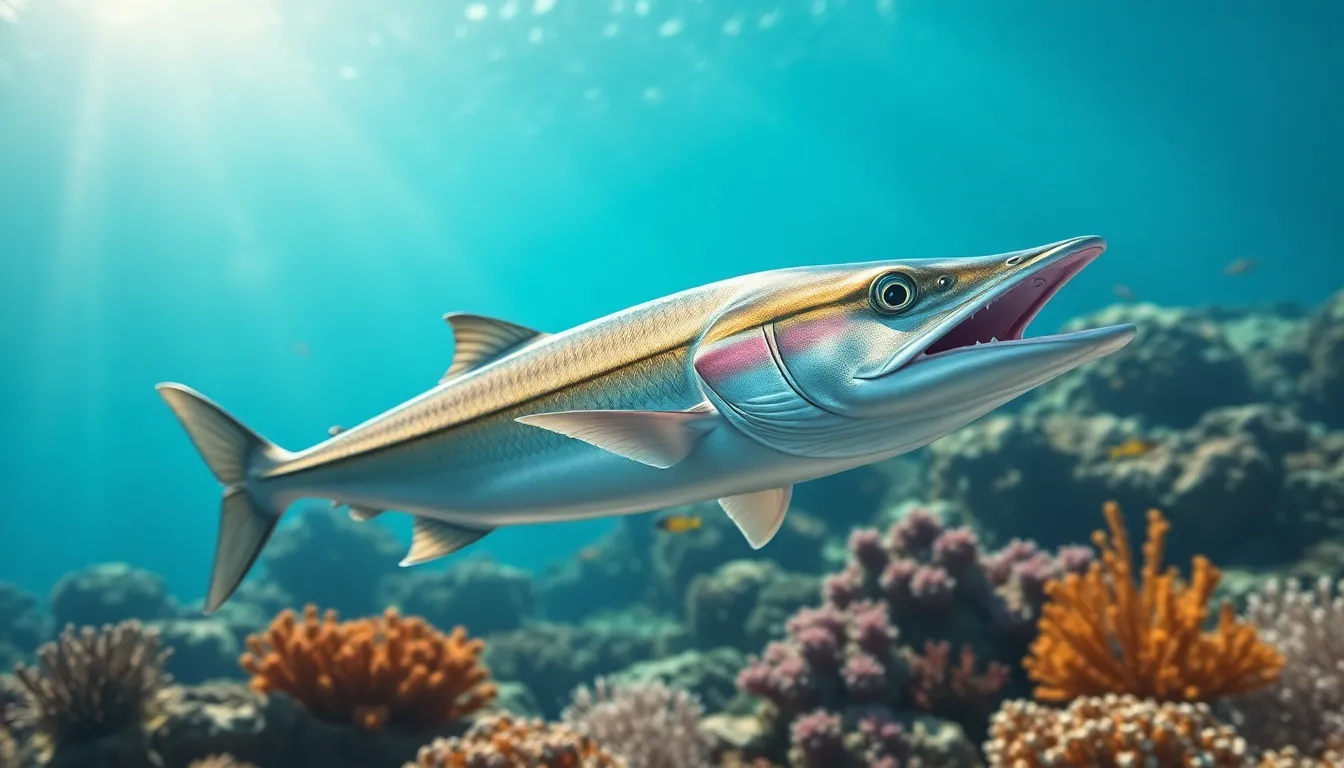
バラクーダ(学名: Sphyraena barracuda) はスフィレナ科に属します。この種はグレートバラクーダとして一般的に知られており、その細長い体と海洋生態系における威圧的な存在感で知られています。分類階層は以下の通りです:) belongs to the family Sphyraenidae. This species is commonly known as the great barracuda, and it is noted for its elongated body and intimidating presence in the marine ecosystem. The classification hierarchy is as follows:
- 界: 動物界
- phylum: 脊索動物門
- 階級: 条鰭綱
- 順序: スズキ目
- 家族: スフィレナ科
- 属: スフィレナ属
- 種: Sphyraena barracuda
物理的特徴と識別マーカー
バラクーダは、スピードのために作られた流線型の体形が特徴です。主な識別マーカーには以下が含まれます:
- 体形: 長くて細身で、尾に向かって細くなる。
- 色彩: 通常は背中に青みがかった銀色で、腹部は明るい色をしている; 一部は暗い縦のストライプを示すことがあります。
- 歯: 口が閉じているときでも見える目立つ鋭い歯。
- 鰭: 背鰭は体の後方に位置し、2つの部分からなり、最初の部分は棘状です。
これらの物理的特徴は、特に水中での狩猟行動を観察する際に、現場での迅速な識別を可能にします。
サイズ範囲と記録標本
バラクーダは印象的なサイズに成長することができます。平均して、彼らは3フィートから5フィート(0.9メートルから1.5メートル)の長さに達しますが、最適な条件下ではかなり大きく成長することがあります。
- 平均サイズ: 3フィートから5フィート(0.9メートルから1.5メートル)
- 記録サイズ: 標本は最大6.5フィート(2メートル)の長さと100ポンド(45kg)を超える重量で記録されています。
これまでに記録された最大のバラクーダはバハマで捕獲され、驚異的な102ポンド(46kg)の重さでした。このような大きな標本は稀で、釣り人やスピアフィッシャーによって捕獲されるものは大抵かなり小さいです。
生息地の分布と深さの範囲
バラクーダはさまざまな海洋環境に生息しています。彼らの好む生息地には以下が含まれます:
- サンゴ礁: 獲物を待ち伏せするための隠れ場所を提供する構造物の近くにしばしば見られます。
- 海草床: 小魚や甲殻類を狩るためにこれらのエリアを利用します。
- 開水域: 特に群れを成す魚を狩る際に、外洋ゾーンで頻繁に見られます。
深さに関して、バラクーダは通常以下の深さ範囲で見られます:
| 深さ範囲(メートル) | 生息地タイプ |
|---|---|
| 1 – 30 | Shallow coastal waters |
| 30 – 100 | Coral reefs and drop-offs |
They are adaptable fish, capable of thriving in various environments as long as adequate prey is available.
Seasonal Behavior and Migration Patterns
Barracuda exhibit distinct seasonal behaviors, which can influence their availability for spearfishing:
- Spawning Season: Generally occurs in warmer months, often in shallow waters.
- Migration: Some populations may migrate in search of food or suitable spawning grounds, typically following temperature changes in the water.
During the cooler months, barracuda may move to deeper waters, making them more challenging to target. Understanding these patterns can greatly enhance fishing success.
Spearfishing Difficulty Level and Techniques
Spearfishing for barracuda can be both thrilling and demanding. The difficulty level is often rated as moderate to high due to their speed and agility. Some effective techniques include:
- Stalking: Approach quietly to avoid spooking them, as they are highly alert.
- Ambush: Positioning yourself near likely hunting grounds where barracudas prey on smaller fish.
- Use of Float Lines: A float line can help to keep the fish at bay once speared, minimizing the risk of losing your catch.
Utilizing the right techniques can significantly increase your chances of a successful hunt.
Best Hunting Methods and Gear Recommendations
To effectively hunt barracuda, consider the following gear:
- Spear Types: A longer spear with a strong tip is advantageous for penetrating the tough skin of the barracuda.
- Wetsuit: A thicker wetsuit will help protect against the barracuda’s sharp teeth.
- Fins: Stiff fins allow for quick movements, essential for chasing after these fast swimmers.
In addition to the right gear, selecting the best hunting method is crucial. Some recommended approaches include:
- Freediving: Offers a stealthy approach, allowing spearfishers to get closer to the fish.
- Scuba Diving: Provides the ability to reach deeper waters where larger barracudas may reside.
Culinary Applications and Preparation Methods
Barracuda is known for its firm white flesh, making it a popular choice for various dishes. It can be prepared in several ways:
- Grilling: Marinated and grilled, it brings out the natural flavors.
- Smoking: Adds a unique taste that enhances its rich texture.
- Steaming: A healthy cooking method that retains moisture and flavor.
Before consumption, it is crucial to ensure that barracuda is properly prepared, as they can carry ciguatera toxin, which can be harmful if ingested. Always consult local guidelines regarding safe sizes and regions for consumption.
Regulatory Status and Size Limits by Region
The regulatory status of barracuda varies by region, with specific size limits implemented to ensure sustainable fishing practices. Some general guidelines include:
- United States: Size limit of 24 inches (61 cm) in many states.
- Bahamas: Minimum size limit of 30 inches (76 cm).
- Australia: 州によって異なりますが、一般的には持続可能な慣行に沿っています。
スピアフィッシャーは地元の規制を確認することが重要です。これらは頻繁に変更される可能性があり、地元の魚の個体群の保全状況によって異なる場合があります。
保全状況と持続可能性に関するメモ
保全の観点から見ると、バラクーダの個体群は一般的に安定していると考えられていますが、局所的な過剰漁獲がリスクをもたらす可能性があります。いくつかの重要な持続可能性に関するメモは以下の通りです:
- 個体数の監視:定期的な評価は、バラクーダの資源の健康状態を追跡するのに役立ちます。
- 責任ある漁業慣行:サイズ制限や季節的規制を遵守することは、個体数を維持するために重要です。
- 生息地の保護:サンゴ礁の保全活動を支援することは、バラクーダの個体群に利益をもたらす可能性があります。彼らはこれらの生態系を食料と繁殖のために頼っています。
これらのガイドラインに従うことで、スピアフィッシャーはバラクーダの個体群の持続可能性と海洋生態系の健康に貢献できます。