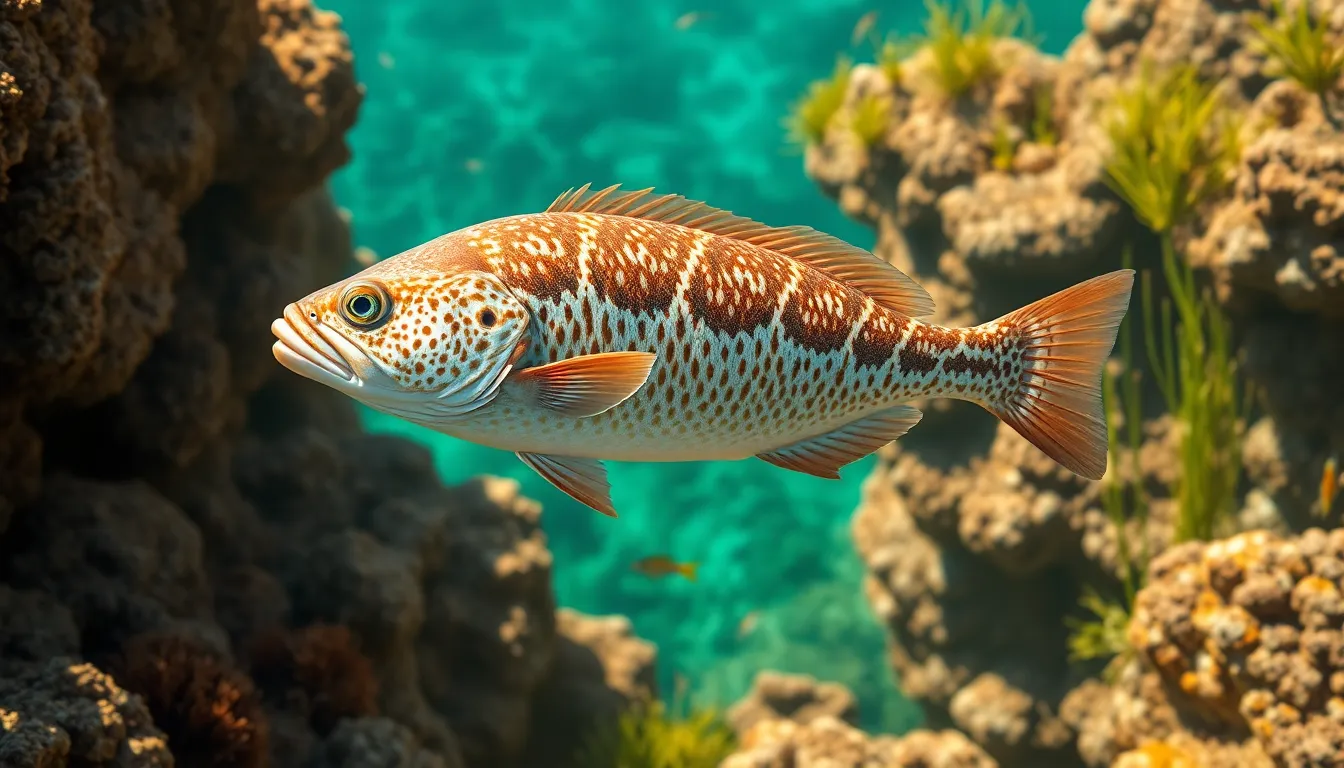
The Mediterranean grouper, known scientifically as Epinephelus marginatus, belongs to the family Serranidae. This species is commonly referred to by various names across different regions, including:
- Corvina (Italy)
- Grouper (Common English)
- Merou (France)
- Rascasse (Spain)
These names often reflect the Mediterranean grouper’s cultural significance and culinary value in various Mediterranean countries.
Physical Description and Identification Markers
The Mediterranean grouper exhibits a robust and elongated body, characterized by a large head and a wide mouth. Their coloration varies but typically includes a mix of brown, green, and yellow hues, often with mottled patterns that provide excellent camouflage against rocky substrates.
Identification Markers
- Body Shape: Thick and robust, tapering towards the tail.
- Coloration: Variable, typically brown to green with lighter spots or blotches.
- Fins: Dorsal fins are long and continuous, while the pectoral fins are rounded.
- Size: Adults can be recognized by their substantial size, often weighing between 5 to 15 kg (11 to 33 lbs).
Size Ranges and Record Specimens
The Mediterranean grouper is a sizable fish, with adults typically ranging from 60 to 120 cm (24 to 47 inches) in length. Specimens over this size are not uncommon, with record catches reportedly reaching up to 150 cm (59 inches) and weights exceeding 30 kg (66 lbs).
Such record specimens are often the result of careful management and sustainable fishing practices in various regions.
Habitat Distribution and Depth Ranges
This species is predominantly found in the warmer waters of the Mediterranean Sea, inhabiting rocky reefs, caves, and seagrass beds. The Mediterranean grouper favors depths ranging from 10 to 250 meters (33 to 820 feet), often residing in areas with ample cover to ambush prey.
Habitat Depth Table
| Depth Range (m) | Habitat Type |
|---|---|
| 10-50 | Shallow reefs, seagrass beds |
| 50-100 | Rocky substrates, underwater caves |
| 100-250 | Deep rocky ledges |
Seasonal Behavior and Migration Patterns
The Mediterranean grouper exhibits distinct seasonal behaviors, often influenced by water temperature and breeding cycles. During the warmer months, they tend to be more active and can be found in shallower waters.
Seasonal Behavior Patterns
- Spring: Spawning occurs, with fish congregating in specific areas.
- Summer: Increased activity; often found at shallower depths.
- Fall: Fish may migrate toward deeper waters as temperatures begin to cool.
- Winter: Generally less active; may remain in deeper habitats.
Spearfishing Difficulty Level and Techniques
Hunting the Mediterranean grouper can be challenging due to its cautious nature and the environments it inhabits. The difficulty level is rated as moderate to high, depending on the hunter’s experience and the local conditions.
Hunting Difficulty Ratings
1 – Beginner: Suitable for less experienced hunters.
2 – Intermediate: Requires some understanding of techniques and tactics.
3 – Advanced: Best suited for seasoned spearfishers with knowledge of the species.
Recommended Techniques
- Stalking: Approach slowly and quietly to avoid spooking the fish.
- Ambush: Hide behind rocks or ledges and wait for the grouper to come into range.
- Use of Float Lines: Helps to keep the fish from escaping into crevices.
Best Hunting Methods and Gear Recommendations
Successful hunting of the Mediterranean grouper involves employing the right techniques and equipment. Recommended gear includes:
Essential Gear
- Speargun: A mid to long-range speargun with a strong shaft is ideal.
- Wetsuit: A thicker wetsuit provides thermal protection in deeper waters.
- Mask and Snorkel: A low volume mask enhances visibility while snorkeling.
- Weight Belt: Necessary for buoyancy control while diving.
Culinary Applications and Preparation Methods
The Mediterranean grouper is highly regarded for its firm, white flesh and rich flavor, making it a prized catch among culinary enthusiasts. It can be prepared in various ways, including grilling, baking, or frying.
Popular Preparation Methods
- Grilled: Often marinated with herbs and olive oil.
- Baked: Cooked with vegetables and lemon for a fresh flavor.
- Fried: Breaded fillets are a local delicacy.
Regulatory Status and Size Limits by Region
Regulations surrounding the Mediterranean grouper vary by country, with specific size limits and seasonal closures aimed at protecting the species. It is crucial for spearfishers to familiarize themselves with local laws to ensure sustainable practices.
Size Limits by Region
- Italy: Minimum size limit of 50 cm.
- Spain: Minimum size limit of 60 cm.
- Greece: No formal size limit, but recommended to target larger specimens.
Conservation Status and Sustainability Notes
The Mediterranean grouper is currently classified as vulnerable due to overfishing and habitat degradation. Conservation efforts are essential to ensure the survival of this species, and sustainable fishing practices should be prioritized.
Conservation Status Alerts
It is vital for spearfishers to engage in practices that support the recovery of grouper populations:
- Adhere to size and catch limits.
- Participate in local conservation initiatives.
- Educate others about sustainable spearfishing practices.