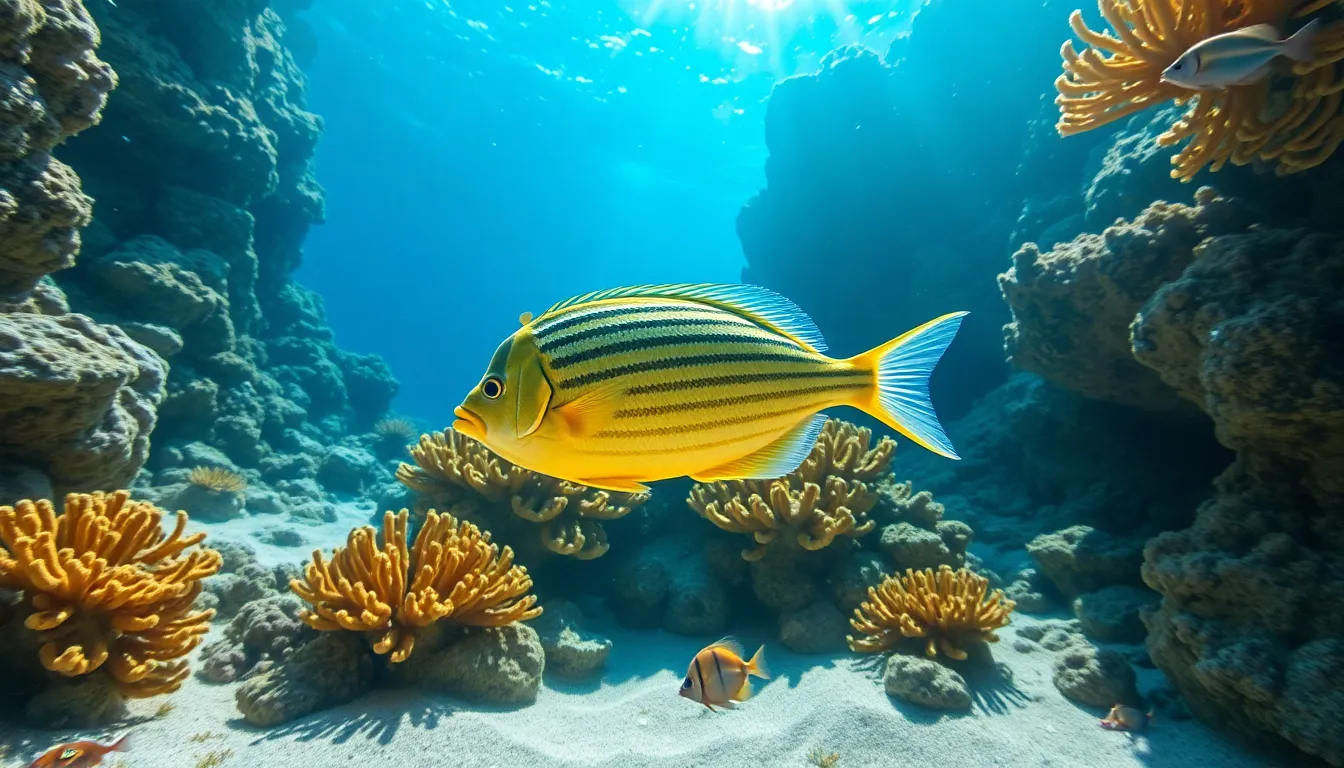
The Mediterranean Sea is home to a diverse array of reef fish, each with unique characteristics and adaptations. Understanding their taxonomy is vital for proper identification and conservation. Here are some common species:
- Sarpa salpa – Commonly known as the salema.
- Serranus scriba – Known as the painted comber.
- Diplodus sargus – Referred to as the white seabream.
- Coris julis – Commonly called the rainbow wrasse.
- Chromis chromis – Known as the Mediterranean chromis.
Physical Description and Identification Markers
Identifying Mediterranean reef fish involves examining physical traits such as coloration, body shape, and fin structure. Here are key identification markers for some common species:
Sarpa salpa (Salema)
- Body: Elongated with a laterally compressed shape.
- Coloration: Distinctive yellowish-green with horizontal blue stripes.
Serranus scriba (Painted Comber)
- Body: Oval and robust.
- Coloration: Brightly colored with blue and orange vertical stripes.
Diplodus sargus (White Seabream)
- Body: Deep and laterally compressed.
- Coloration: Silver with dark vertical bands.
Coris julis (Rainbow Wrasse)
- Body: Slender and elongated.
- Coloration: Males have bright blue and green hues, while females are more subdued.
Chromis chromis (Mediterranean Chromis)
- Body: Small and streamlined.
- Coloration: Deep blue with a lighter underside.
Size Ranges and Record Specimens
The size of Mediterranean reef fish varies significantly among species. Here are the typical size ranges and some record specimens:
- Sarpa salpa: Average size is 30 cm; record up to 50 cm.
- Serranus scriba: Average length of 25 cm; record length is 30 cm.
- Diplodus sargus: Typically reaches 40 cm; record is 48 cm.
- Coris julis: Usually around 20 cm; maximum recorded size is 30 cm.
- Chromis chromis: Commonly measures 10 cm; can reach 12 cm.
Habitat Distribution and Depth Ranges
Habitat distribution for Mediterranean reef fish varies based on species and environmental conditions. Most reef fish are found in shallow coastal waters, but some species inhabit deeper zones:
Habitat Depth Table
| Species | Typical Depth Range (m) |
|---|---|
| Sarpa salpa | 1 – 50 |
| Serranus scriba | 5 – 30 |
| Diplodus sargus | 1 – 100 |
| Coris julis | 1 – 40 |
| Chromis chromis | 1 – 30 |
Seasonal Behavior and Migration Patterns
Understanding the seasonal behaviors and migration patterns of Mediterranean reef fish can enhance spearfishing success. Many species exhibit specific spawning seasons and migratory behaviors:
Seasonal Behavior Patterns
- Winter: Many species, including Sarpa salpa, aggregate in deeper waters.
- Spring: Spawning begins for most species, notably Diplodus sargus.
- Summer: Reef fish become more active and move into shallower waters.
- Autumn: Fish start to migrate back to deeper waters in preparation for winter.
Spearfishing Difficulty Level and Techniques
Spearfishing for Mediterranean reef fish varies in difficulty depending on the species and environmental conditions. Here’s a breakdown of the difficulty level for common species:
Hunting Difficulty Ratings
- Sarpa salpa: Easy – often found in schools.
- Serranus scriba: Moderate – requires stealth due to their cautious behavior.
- Diplodus sargus: Moderate to hard – often hides in rocky crevices.
- Coris julis: Easy – tends to be curious and approachable.
- Chromis chromis: Easy – abundant and found in schools.
Best Hunting Methods and Gear Recommendations
Successful spearfishing involves using the right techniques and gear. Here are some recommendations tailored to Mediterranean reef fish:
- Spearfishing Techniques:
- Stalking: Approach silently to avoid scaring fish.
- Ambush: Hide behind rocks or corals to wait for fish.
- Gear Recommendations:
- Speargun: Use a mid-range speargun for versatility.
- Wetsuit: A 3mm to 5mm wetsuit is ideal for temperature regulation.
- Fins: Long fins for efficient movement through water.
Culinary Applications and Preparation Methods
Many Mediterranean reef fish are not only prized for their sport but also for their culinary value. Here are some popular preparation methods:
- Sarpa salpa (Salema): Often grilled or baked, served with lemon and herbs.
- Serranus scriba (Painted Comber): Best when pan-seared with olive oil and garlic.
- Diplodus sargus (White Seabream): Can be prepared as a ceviche or grilled whole.
- Coris julis (Rainbow Wrasse): Frequently used in Mediterranean stews or soups.
- Chromis chromis (Mediterranean Chromis): Commonly fried or used in fish tacos.
Regulatory Status and Size Limits by Region
Regulations concerning spearfishing vary across the Mediterranean, focusing on sustainability and conservation. Here are some key points:
- Size Limits: Most regions enforce minimum size limits to protect juvenile fish.
- Licensing: Many countries require a spearfishing license to ensure responsible fishing practices.
- Seasonal Closures: Specific seasons may be closed to protect spawning populations.
Conservation Status and Sustainability Notes
Maintaining healthy fish populations is crucial for the ecosystem. Here are important conservation notes for Mediterranean reef fish:
- Conservation Status Alerts: Some species are listed as vulnerable due to overfishing and habitat loss.
- Sustainable Practices: Spearfishers are encouraged to follow catch and release practices for endangered species.
- Marine Protected Areas (MPAs): Respecting MPAs helps to preserve biodiversity and ensure healthy fish stocks.