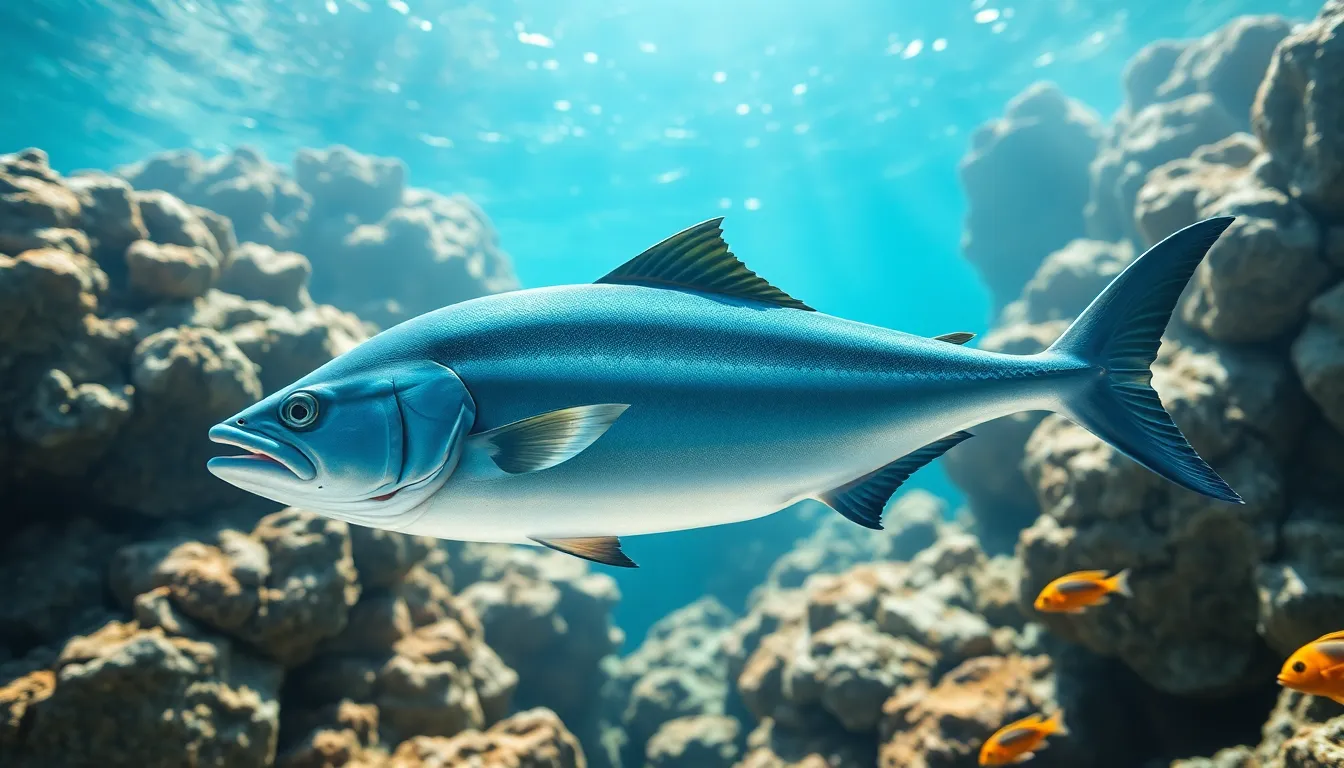
The greater amberjack, scientifically known as Seriola dumerili, belongs to the family Carangidae. This family is commonly referred to as the jacks or horse mackerels. The greater amberjack is also known by various common names, including:
- Amberjack
- Giant amberjack
- Yellowtail amberjack
These names reflect the fish’s impressive size and significance in both recreational and commercial fishing.
Physical Description and Identification Markers
The greater amberjack exhibits a robust and streamlined body, adapted for speed and agility in the water. Key identification markers include:
- Coloration: The fish’s back is a deep blue-green, transitioning to a yellowish or silver belly. This coloration provides excellent camouflage against the ocean backdrop.
- Body Shape: It has a muscular, elongated body with a pointed snout and a prominent dorsal fin.
- Lateral Line: A distinctive lateral line runs from the eye to the tail, which is slightly curved and prominent.
- Fins: The first dorsal fin is tall and angular, while the second dorsal fin is shorter and more rounded.
These features make the greater amberjack easily distinguishable from other species in the same habitat.
Size Ranges and Record Specimens
The greater amberjack is known for its impressive size, typically ranging from:
- Juveniles: 10 to 20 inches (25 to 51 cm)
- Adults: 30 to 50 inches (76 to 127 cm)
- Record Specimens: The largest recorded greater amberjack weighed over 200 pounds (90 kg) and measured 63 inches (160 cm) in length.
These size ranges and records highlight the species’ potential as a target for skilled spearfishers.
Habitat Distribution and Depth Ranges
Greater amberjacks are primarily found in the western Atlantic Ocean, from New England to Argentina, including the Caribbean Sea and the Gulf of Mexico. They prefer:
- Habitat: Offshore reefs, wrecks, and deep waters.
- Depth Ranges: Typically found at depths of 50 to 300 feet (15 to 90 meters), although they can be encountered in shallower waters during specific times.
These habitats are crucial for their feeding and spawning behaviors, making them prime locations for spearfishing.
Seasonal Behavior and Migration Patterns
The behavior of greater amberjacks varies seasonally and is influenced by water temperature and food availability. Key patterns include:
- Spring: As temperatures rise, greater amberjacks migrate towards shallower waters for spawning, making them more accessible to spearfishers.
- Summer: They remain in these shallower depths, often found around reefs and wrecks, feeding on smaller fish and squid.
- Fall: The fish begin to move back to deeper waters as temperatures drop, making hunting more challenging.
- Winter: Greater amberjacks can be found in deeper offshore waters, where they tend to be less active.
Understanding these seasonal patterns is essential for planning successful spearfishing trips.
Spearfishing Difficulty Level and Techniques
When it comes to spearfishing for greater amberjacks, the difficulty level is rated as moderate to challenging. Factors influencing this include:
- Size and Strength: Greater amberjacks are powerful fish that require proper technique and strength to successfully land.
- Habitat Complexity: Their preference for structures like reefs and wrecks can complicate the hunting process, as they can easily retreat into these environments.
Effective techniques involve:
- Stalking: Approach quietly and use the element of surprise.
- Free Diving: Many spearfishers prefer free diving to pursue greater amberjacks, allowing for stealthy approaches.
- Use of Flashers: Attracting fish using flashers can help bring greater amberjacks into shooting range.
Best Hunting Methods and Gear Recommendations
To optimize your chances of success when hunting greater amberjacks, consider the following methods and gear:
Hunting Methods
- Spot and Stalk: Look for schools of amberjacks near structure and approach cautiously.
- Chumming: Use chumming to attract fish into a specific area, increasing visibility for spearfishing.
Gear Recommendations
- Speargun: A powerful speargun with a minimum length of 100 cm is recommended for targeting greater amberjacks.
- Wetsuit: A thick wetsuit is necessary for warmth and protection in deeper waters.
- Fins: Long, efficient fins allow for better propulsion and maneuverability.
- Mask and Snorkel: A low-volume mask and a comfortable snorkel enhance visibility and breathing ease.
Culinary Applications and Preparation Methods
The greater amberjack is not only a sought-after game fish but also a culinary delight. Its firm, flaky flesh is versatile and can be prepared in various ways:
- Grilling: Marinate and grill fillets for a delightful smoky flavor.
- Baking: Bake with herbs and lemon for a healthy meal option.
- Sushi: Due to its quality, greater amberjack is often used in sushi and sashimi.
When preparing greater amberjack, ensure to remove all bones and skin for optimal dining experience.
Regulatory Status and Size Limits by Region
Understanding the regulatory framework for greater amberjack is crucial for responsible spearfishing. Regulations can vary significantly by region:
- United States: In the Atlantic, the minimum size limit is typically 34 inches (86 cm) fork length. Check local regulations for specific state rules.
- Gulf of Mexico: Similar regulations apply, with seasonal closures during spawning periods to protect the population.
Always consult local fishing regulations before embarking on a hunting trip to ensure compliance.
Conservation Status and Sustainability Notes
The conservation status of greater amberjack is of growing concern, primarily due to overfishing and habitat degradation. Key points include:
- Population Trends: While there have been efforts to manage stocks, many regions report declining populations.
- Sustainability Practices: Responsible spearfishing practices, such as adhering to size limits and seasonal closures, are critical for the species’ sustainability.
As a spearfisher, it is essential to engage in sustainable practices to help preserve greater amberjack populations for future generations.