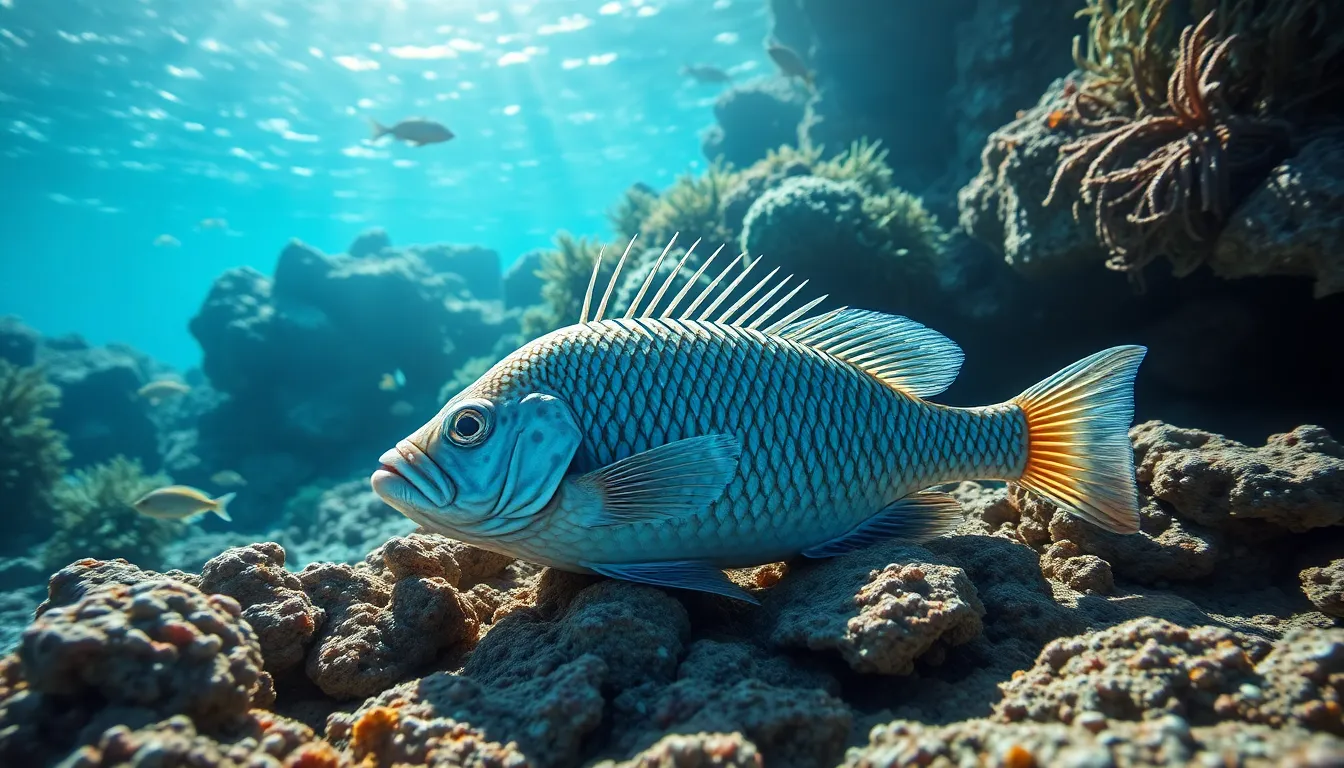
TheScorpaena(scientific name:Scorpaena scrofa) belongs to the Scorpaenidae family. This species is known by various common names in different regions, including “gallo” in some parts of Spain and “pescadilla” in others. Its taxonomic classification is as follows:
- Kingdom: Animalia
- Phylum: Chordata
- Class: Actinopterygii
- Order: Scorpaeniformes
- Family: Scorpaenidae
- Genus: Scorpaena
- Species: Scorpaena scrofa
Physical description and identification markers
The Scorpaena is a robust fish with a large, flattened head. Its skin is covered in spines and displays a color that ranges from brown to red, with irregular patterns that allow it to camouflage in its environment. The most notable identification markers include:
- Spines on the dorsal part that are notably prominent.
- A long, sharp snout that facilitates prey hunting.
- Large eyes that allow for good vision in murky waters.
Size ranges and record specimens
The size of the Scorpaena can vary significantly, generally reaching lengths of 30 to 50 cm. However, specimens exceeding 70 cm have been recorded under optimal conditions. The average weight of an adult Scorpaena ranges from 1 to 3 kg, although larger specimens can weigh up to 5 kg.
Habitat distribution and depth ranges
The Scorpaena is primarily found in the eastern Atlantic waters, from Norway to Morocco. It can also be observed in the Mediterranean. It prefers rocky habitats and sandy bottoms, at depths ranging from 10 to 200 meters, although it can be found in deeper waters on certain occasions.
| Region | Depth (m) |
|---|---|
| Norway | 10-100 |
| Spain | 10-200 |
| Morocco | 30-150 |
Seasonal behavior and migration patterns
The Scorpaena exhibits seasonal behavior that varies with water temperatures. During warm months, they can be found in shallower waters searching for food. In winter, they tend to descend to deeper waters to escape the cold. Their migration patterns are less pronounced than those of other species, but they may move in search of abundant feeding areas.
Seasonal behavior patterns
- Spring: Reproduction, movements towards warmer waters.
- Summer: Active feeding in shallower waters.
- Autumn: They begin to descend to greater depths.
- Winter: Staying in deep waters.
Difficulty level for spearfishing and techniques
Spearfishing for Scorpaena presents a moderate level of difficulty. Its camouflage and rocky habitat can make it a challenging target. The most effective techniques include:
- Stalking and ambushing: This technique allows for stealthy approach to the fish.
- Use of flashlights: In deep or dark waters, a flashlight can help locate scorpionfish.
- Spearfishing: It is the most recommended technique, using a spear of 75 to 90 cm to maximize accuracy.
Additionally, it is recommended to practice fishing in areas where you have a good knowledge of the environment to avoid entanglements in rocks and other obstacles.
Best hunting methods and equipment recommendations
To successfully hunt scorpionfish, it is essential to have the right equipment. Some recommendations include:
- Spear: A good quality spear, preferably double-tipped to ensure capture.
- Wetsuit: A suit that offers good thermal protection and mobility.
- Mask and snorkel: Equipment that allows for good visibility and comfort.
- Air tanks: For deeper dives, it is recommended to use an appropriate breathing system.
Additionally, it is essential to consider sea conditions and visibility before going out to hunt.
Culinary applications and preparation methods
Scorpionfish is valued in Mediterranean cuisine for its firm and flavorful meat. Various recipes can be prepared, including:
- Grilled scorpionfish: Marinated with herbs and spices, grilled to enhance its flavor.
- Scorpionfish stew: Cooked with vegetables and spices, it is a traditional dish in many coastal regions.
- Scorpionfish soup: Ideal for making use of bones and scraps, creating a broth rich in flavor.
The meat of scorpionfish can also be used in ceviches and salads, providing a special touch to dishes.
Regulatory status and size limits by region
It is important to consider local regulations regarding scorpionfish fishing, which may vary by region. In general, the following rules usually apply:
- Minimum size: In many areas, a minimum catch size of 30 cm is established.
- Catch quota: Some countries impose annual quotas to limit fishing and protect the population.
It is advisable to consult local regulations before fishing to ensure compliance with all rules.
Conservation status and sustainability notes
The conservation status of scorpionfish is considered of minor concern, but its population may be affected by overfishing and habitat degradation. Sustainable fishing practices are recommended, such as:
- Respecting established size and quota limits.
- Avoiding fishing in protected areas or during breeding seasons.
- Participating in marine habitat conservation and restoration initiatives.
Sustainability is key to ensuring that future generations can enjoy scorpionfish fishing and marine biodiversity in general.