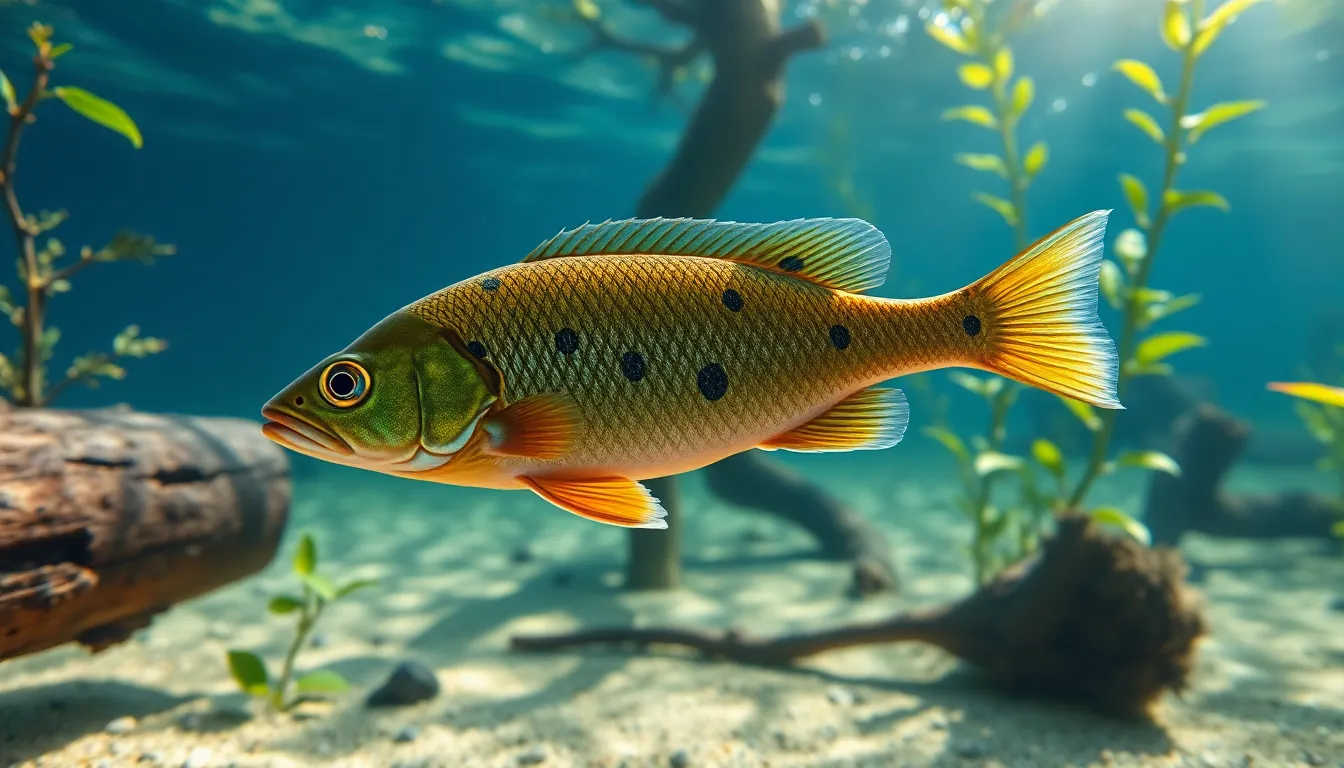
The Peacock Bass, scientifically known asCichla ocellaris, belongs to the Cichlidae family and is one of the most popular freshwater fish in sport fishing. Commonly, it is referred to as “tucunaré,” “tucuna,” and “tucunaré-açú” in different regions of Brazil and South America. This species is widely recognized for its economic and sporting importance, as well as being a symbol of aquatic biodiversity.
Physical description and identification markers
The Peacock Bass is a robust fish that can be easily identified by its distinctive features. Its coloration ranges from olive green to yellow, with dark spots that usually appear in distinct patterns along its body. The presence of a large black spot at the base of the tail is one of the main characteristics that help in identifying the species. Additionally, Peacock Bass have a large mouth, ideal for capturing their prey.
Identification characteristics
- Body: Robust and elongated.
- Scales: A large number of scales, which give a smooth texture.
- Coloration pattern: Olive green with dark spots.
- Spot on the tail: A large black spot at the base of the caudal fin.
Size ranges and record specimens
The size of the Peacock Bass can vary significantly depending on the habitat and environmental conditions. On average, these fish can reach between 30 to 90 cm in length. However, there are reports of specimens exceeding 1 meter, with weights reaching up to 15 kg. The largest Peacock Bass are often found in deep rivers and large lakes, where food is abundant.
Habitat distribution and depth ranges
The Peacock Bass is native to several watersheds in South America, including the Amazon and the Orinoco and Paraná rivers. They prefer warm, still waters, often inhabiting areas with dense aquatic vegetation, such as streams and lagoons. The ideal depth for fishing Peacock Bass varies, but is generally between 2 to 10 meters, depending on the time of year and water temperature.
Habitat depth table
| Location | Depth Range |
|---|---|
| Amazon | 2-10 m |
| Paraná Rivers | 3-12 m |
| Streams | 1-5 m |
Seasonal behavior and migration patterns
The behavior of the Peacock Bass is influenced by seasonal factors, such as water temperature and food availability. During the rainy season, Peacock Bass tend to migrate to shallower areas where they spawn and feed. However, during the dry season, they move to deeper waters where they feel safer. These migrations are crucial for the preservation of the species and the maintenance of its habitat.
Seasonal behavior patterns
- Rainy season: Migration to shallow waters for spawning.
- Dry season: Movement to deeper waters.
Difficulty level of underwater fishing and techniques
Fishing for Peacock Bass can be considered of medium to high difficulty, depending on the fisher’s knowledge of the fish’s behavior and the fishing techniques used. The use of appropriate equipment and the choice of bait are essential for successful capture. Experienced anglers recommend practicing camouflage techniques and a silent approach, as the Peacock Bass is quite cautious.
Hunting methods and equipment recommendations
For underwater fishing of the Peacock Bass, it is recommended to use high-quality spearguns and artificial lures that mimic natural prey. Equipment such as fins, masks, and appropriate wetsuits are essential for a safe and successful fishing experience. Additionally, it is important to know the locations of high concentrations of Peacock Bass and the best times for fishing.
Recommended equipment
- Underwater fishing speargun: choose a lightweight and durable model.
- Artificial lures: use those that mimic small fish.
- Diving mask: choose one that offers good visibility.
- Wetsuits: opt for materials that provide warmth and camouflage.
Culinary applications and preparation methods
The Peacock Bass is highly valued in Brazilian cuisine, known for its tasty meat and firm texture. There are various ways to prepare Peacock Bass, including baking, grilling, and stewing. Traditional recipes often include simple seasonings that enhance the fish’s natural flavor, making it a favorite dish in many regions of Brazil.
Preparation methods
- Baked: Seasoned with herbs and lemon, wrapped in aluminum foil.
- Grilled: Marinated in olive oil and spices, grilled until golden.
- Stewed: Cooked with vegetables and seasonings in a flavorful broth.
Regulatory status and size limits by region
Regulations regarding the fishing of Peacock Bass vary from region to region, with size and quantity limits set by local environmental agencies. It is crucial for fishermen to be aware of the fishing laws in their areas to ensure the sustainability of the species and avoid penalties. In some regions, the capture of juvenile Peacock Bass is prohibited, aiming to protect local populations.
Conservation status and sustainability notes
The Peacock Bass, despite being a widely distributed species, faces challenges due to overfishing and habitat degradation. Implementing sustainable fishing practices is essential to ensure the species’ survival. Conservation initiatives are underway in various areas, aiming to protect the aquatic ecosystems where the Peacock Bass resides. Fishermen are encouraged to respect catch limits and participate in conservation programs.
Alerts on conservation status
- Overfishing: risk of population decline.
- Habitat degradation: negative impact on breeding areas.
- Conservation initiatives: active participation of fishermen is essential.