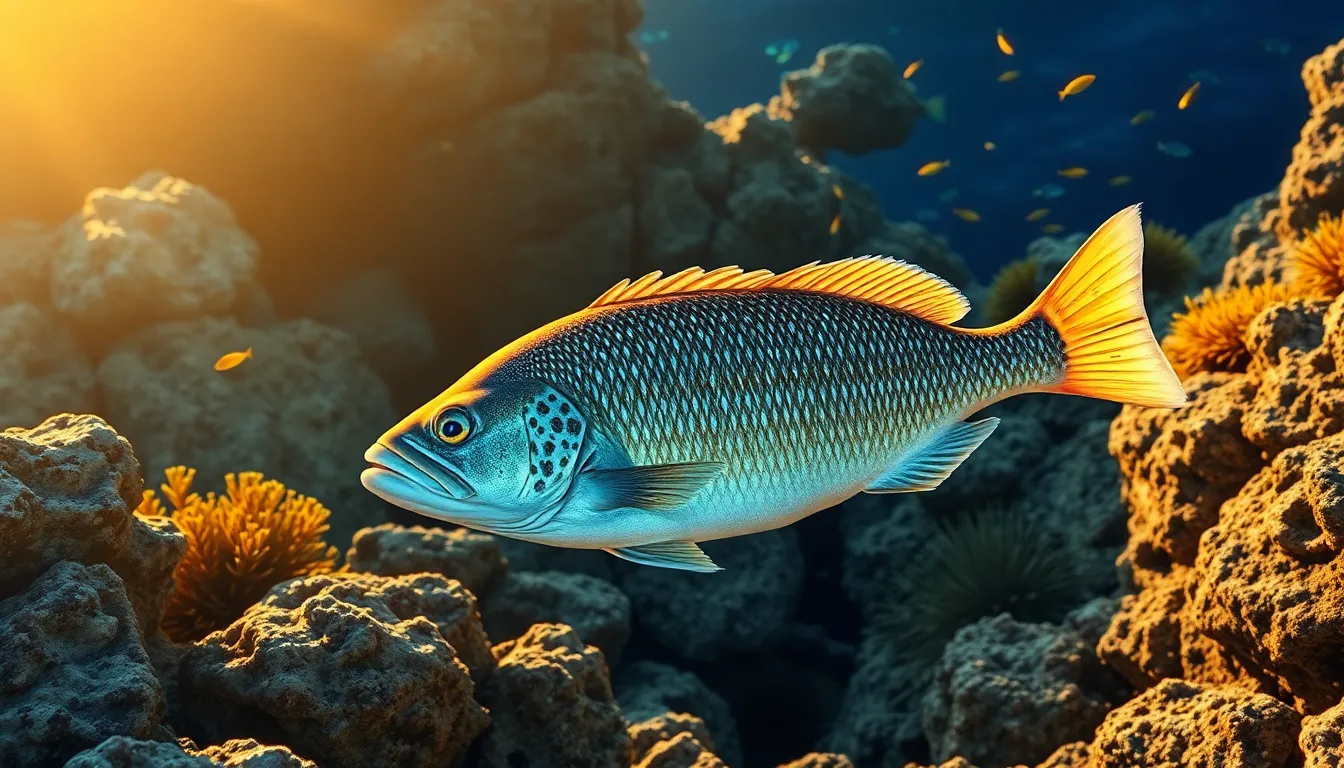
TheMediterranean grouper(scientific name:Epinephelus marginatus) belongs to the family of the epinephelids. It is known by various common names in different regions, including:
- Grouper
- Grouper
- Scorpaenid
This fish is part of the order Perciformes, which includes a wide variety of fish species of great economic and ecological importance.
Physical description and identification markers
The Mediterranean grouper is characterized by its robust and elongated body, with a large head and prominent mouth. Its color varies between shades of gray and brown, often with lighter or darker spots that aid in its camouflage in the marine environment.
Distinctive characteristics
- Large, smooth scales.
- Two dorsal fins, where the first is taller and has strong spines.
- The caudal fin is rounded.
The size and pattern of the spots are key for identification, as these characteristics are unique to each individual.
Size ranges and record specimens
The Mediterranean grouper can reach considerable sizes, typically between60 and 100 cmin length, although specimens exceeding130 cmhave been recorded. The weight of these fish can vary from10 kgto over50 kgin large individuals.
A record specimen was captured in the waters of the Mediterranean, weighing75 kg, making it one of the largest of its species.
Habitat distribution and depth ranges
The Mediterranean grouper is primarily found in the coastal waters of the Mediterranean Sea, preferring rocky areas and coral reefs where it can hide and hunt.
Depth range
It can be found at depths ranging from30 to 200 meters, although it generally prefers areas closer to the coast, between10 and 50 meters.
| Zone | Depth Range (m) |
|---|---|
| Rocky Coast | 10 – 50 |
| Coral Reefs | 30 – 200 |
Seasonal behavior and migration patterns
The Mediterranean grouper exhibits notable seasonal behavior, with changes in its activity and habitat according to the time of year. During spring and summer, they are more active and can be observed in shallower waters, while in autumn and winter they tend to move to greater depths.
Migration patterns
These fish are known to undertake short migrations in search of food and for reproduction, which primarily occurs between the months ofMarch and August.
Difficulty level of spearfishing and techniques
Mediterranean grouper fishing is consideredmedium to high difficultydue to its size, strength, and the need for appropriate techniques for capture. Water visibility and sea conditions also play an important role in the difficulty of fishing.
Recommended techniques
- Wait fishing: Using camouflage and patience.
- Free diving: Requires diving skills and breath control.
Best hunting methods and equipment recommendations
For grouper fishing, it is recommended to use aspeargunof good quality, with adequate power to ensure an effective catch. Additionally, a wetsuit is essential to protect against the cold and provide camouflage.
Recommended equipment
- Speargun of at least 90 cm.
- High-quality mask and snorkel.
- Long fins to facilitate movement.
Culinary applications and preparation methods
Mediterranean grouper is highly valued for its firm and tasty meat, making it a popular choice in Mediterranean cuisine. Its preparation can vary from grilling to stews and ceviches.
Recommended preparation methods
- Grilled: Simply seasoned with herbs and lemon.
- Stew: Slowly cooked with tomatoes and olives.
Regulatory status and size limits by region
Mediterranean grouper fishing is regulated in many areas to ensure the sustainability of the species. Size limits and fishing seasons may vary by region.
Size limits
In general, a minimum catch size of50 cmis established in many legislations, although it is crucial to check local regulations before going fishing.
Conservation status and sustainability notes
Mediterranean grouper is considered a vulnerable species due to overfishing and habitat degradation. Conservation efforts are being implemented to protect this species and its environment.
Conservation status alerts
- Habitat recovery programs.
- Strict regulations on commercial and recreational fishing.
It is vital for spearfishers to follow sustainable practices to ensure the survival of grouper and the health of marine ecosystems in general.