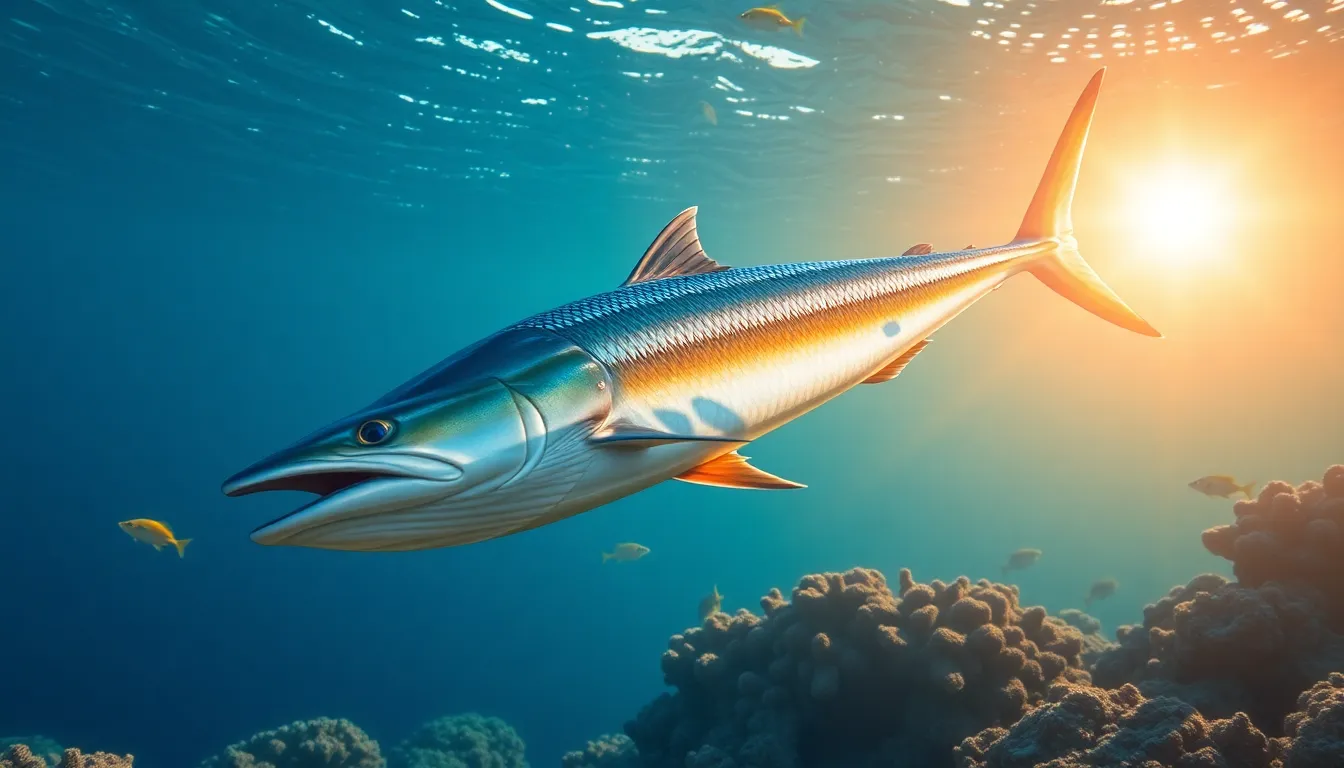
The great barracuda, scientifically known as Sphyraena barracuda, belongs to the family Sphyraenidae. This species is commonly referred to as the barracuda, and it is one of the most recognized predatory fish in tropical and subtropical waters. The taxonomic classification is as follows:
- Kingdom: Animalia
- Phylum: Chordata
- Class: Actinopterygii
- Order: Perciformes
- Family: Sphyraenidae
- Genus: Sphyraena
- Species: S. barracuda
Physical Description and Identification Markers
The great barracuda is easily identified by its elongated body, sharp teeth, and distinctive coloration. It features a sleek, torpedo-shaped body that can reach impressive lengths and weights. The main identification markers include:
- Coloration: Generally silver with a bluish or greenish back and a white underside.
- Size: They can grow up to 6 feet (1.8 meters) in length, although most are between 3 to 5 feet.
- Teeth: Prominent, sharp teeth that are well-adapted for catching and holding slippery prey.
- Fins: Long dorsal and anal fins that help in their agile swimming.
Size Ranges and Record Specimens
The size of great barracudas varies significantly depending on their environment and availability of food. Average specimens are typically between 3 to 5 feet long, but record specimens have been documented:
- Average Size: 3 to 5 feet (0.9 to 1.5 meters), weighing between 30 and 100 pounds (14 to 45 kg).
- Record Size: The largest recorded great barracuda was measured at 6.6 feet (2 meters) and weighed over 200 pounds (91 kg).
Habitat Distribution and Depth Ranges
Great barracudas inhabit tropical and subtropical ocean waters around the world. They are commonly found in:
- Preferred Habitats: Coral reefs, mangroves, and seagrass beds.
- Depth Range: Typically found at depths of 10 to 50 feet (3 to 15 meters), although they can dive deeper when hunting.
These habitats provide ample opportunities for hunting smaller fish, which constitute their primary diet.
Seasonal Behavior and Migration Patterns
Great barracudas exhibit seasonal behaviors that are influenced by water temperature and prey availability. Their migration patterns can be detailed as follows:
- Breeding Season: Generally occurs in warmer months, when water temperatures rise.
- Feeding Behavior: More active during the warmer months, often seen hunting in schools.
- Migration Patterns: While they are generally resident fish, some populations may migrate to deeper waters during colder months.
Spearfishing Difficulty Level and Techniques
When it comes to great barracuda hunting, the difficulty level can be rated as moderate to challenging, depending on the hunter’s skill and experience. Here are some key techniques:
- Stalking: Approach quietly and avoid sudden movements to prevent scaring the fish.
- Aim for the Head: Due to their agility, a well-placed shot to the head is critical for a successful catch.
- Use of Float Lines: Employ float lines to keep track of your catch and avoid losing your spear.
Best Hunting Methods and Gear Recommendations
Successful great barracuda hunting requires specific methods and gear. The following recommendations can enhance your hunting experience:
- Spearguns: A mid-range speargun (75-110 cm) is ideal for targeting barracuda.
- Fins: Long, efficient fins allow for stealthy movement through the water.
- Wetsuits: A well-fitted wetsuit protects against stings and provides thermal insulation.
- Dive Knives: Essential for safety and dealing with caught fish.
Culinary Applications and Preparation Methods
Great barracuda is not only a thrilling catch but also a delicious one. Here are some culinary applications:
- Cooking Methods: Great barracuda can be grilled, baked, or fried.
- Flavor Profile: The flesh is firm, white, and has a mild flavor, making it versatile for various recipes.
- Preparation Tips: Always ensure proper cleaning and cooking to avoid the risk of ciguatera poisoning, which can occur in larger specimens.
Regulatory Status and Size Limits by Region
Understanding the regulatory status of great barracuda is crucial for sustainable fishing. Regulations vary by region:
- U.S. Regulations: In many states, the minimum size limit is 30 inches (76 cm).
- Bahamas Regulations: There are strict limits on the number of barracuda that can be harvested.
- Conservation Alerts: Always check local regulations as they can change frequently to ensure sustainable practices.
Conservation Status and Sustainability Notes
The conservation status of great barracuda is currently evaluated as “Least Concern” by the IUCN. However, sustainability practices are crucial:
- Overfishing Risks: Due to their popularity, overfishing is a concern in some regions.
- Best Practices: Follow local regulations and size limits to help maintain healthy populations.
- Community Engagement: Participate in local clean-up efforts and advocate for sustainable fishing practices.
Conclusion
Mastering great barracuda hunting involves understanding the species’ biology, behavior, and the best hunting practices. With proper techniques and safety measures, you can enjoy a rewarding experience while contributing to the sustainability of marine ecosystems.