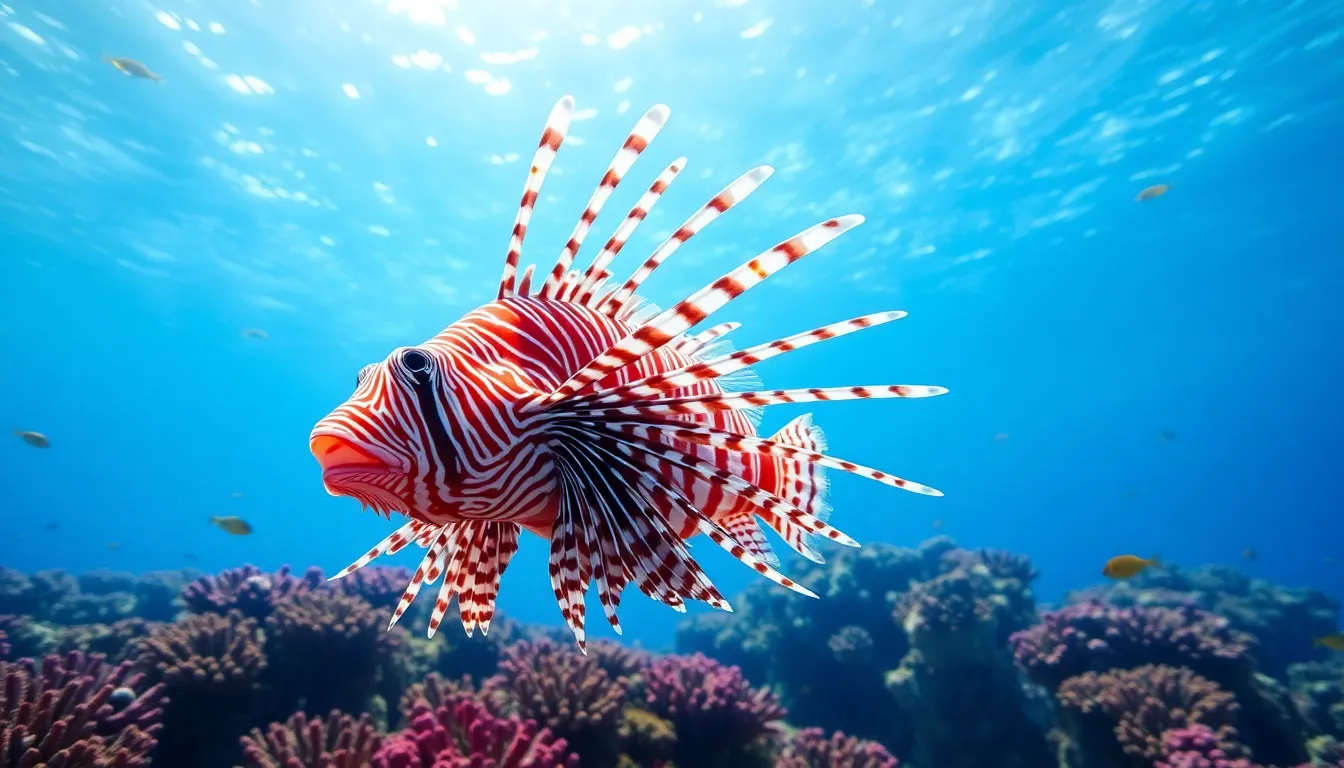
The invasive lionfish, known scientifically as Pterois volitans, belongs to the family Scorpaenidae. This family is renowned for its venomous species, which include various scorpionfish and rockfish. The lionfish is commonly referred to by several names, including:
- Red lionfish
- Turkeyfish
- Firefish
- Scorpaenid lionfish
These names reflect its striking appearance and diverse habitats, emphasizing its role as both a predator and a target for spearfishers.
Physical Description and Identification Markers
The lionfish is easily identifiable due to its distinctive morphology. Key physical characteristics include:
- Coloration: Lionfish exhibit a stunning array of colors, primarily reddish-brown with white stripes, which serve as camouflage among coral reefs.
- Fins: The long, venomous spines that protrude from its body are one of its most notable features. These spines can be used defensively against predators.
- Body Shape: An elongated body structure that can reach a length of up to 15 inches (38 cm), making it a formidable presence in the water.
When identifying lionfish, look for the characteristic fan-like pectoral fins and the distinct pattern of stripes that run vertically along its body.
Size Ranges and Record Specimens
Lionfish typically reach sizes of 12 to 15 inches (30 to 38 cm) in length. However, record specimens have been reported reaching up to 18 inches (45 cm). The size of the lionfish can vary depending on its habitat and food availability. In regions where they are heavily fished, younger and smaller specimens may be more common.
Habitat Distribution and Depth Ranges
The invasive lionfish thrives in a variety of marine environments. Its habitat distribution includes:
- Coral reefs
- Rocky outcrops
- Seagrass beds
Typically found at depths ranging from 0 to 1,000 feet (0 to 300 meters), lionfish tend to prefer warmer waters, making them prevalent in the Caribbean Sea, the Gulf of Mexico, and the Western Atlantic Ocean.
Seasonal Behavior and Migration Patterns
Lionfish are known for their year-round presence in their habitats, showing minimal seasonal migration. They are solitary hunters but can aggregate in areas with abundant prey. Their breeding season peaks in the warmer months, contributing to their rapid population growth in invaded regions.
Seasonal behavior patterns indicate that lionfish may become more aggressive in feeding during the summer months, coinciding with increased prey availability.
Spearfishing Difficulty Level and Techniques
Spearfishing lionfish is considered moderately difficult due to their elusive behavior and the environments they inhabit. Hunters should be equipped with:
- Freediving gear: A wetsuit, fins, and mask tailored for comfort and mobility.
- Spearguns: A medium-sized speargun is ideal for targeting these fish, as it allows for precision and control.
Techniques for spearfishing lionfish include:
- Approaching from below to avoid startling them.
- Using a float line to maintain control over the speargun and the catch.
Hunting success increases with practice and familiarity with lionfish behaviors.
Best Hunting Methods and Gear Recommendations
To effectively hunt lionfish, consider the following methods and gear:
- Spot and stalk: This method involves quietly observing lionfish behavior and waiting for the right moment to strike.
- Chumming: Attracting lionfish with bait can increase the chances of a successful catch.
Recommended gear includes:
- Hawaiian sling: For those who prefer a more traditional approach, a Hawaiian sling can be effective for short-range shots.
- Underwater camera: Capture the beauty of these fish and enhance your spearfishing experience.
Culinary Applications and Preparation Methods
Lionfish is not only a target for spearfishing but also a delicious catch. Culinary applications include:
- Grilling: Lionfish fillets can be marinated and grilled for a flavorful meal.
- Sashimi: Fresh lionfish can be served raw, offering a delicate taste and unique texture.
Preparation methods involve:
- Filleting the fish carefully to avoid the venomous spines.
- Cooking the fish thoroughly to ensure safety and enhance flavor.
Overall, lionfish offers a sustainable and tasty seafood option, contributing to the control of their invasive populations.
Regulatory Status and Size Limits by Region
The regulatory status of lionfish varies by region. In many areas, there are no size limits due to their invasive nature. However, it is essential for spearfishers to stay informed about local regulations to ensure compliance. Some regions encourage the harvesting of lionfish through:
- Open hunting seasons
- Incentives for removing lionfish from local waters
Consult local fish and wildlife agencies for specific regulations governing lionfish hunting in your area.
Conservation Status and Sustainability Notes
As an invasive species, lionfish pose a significant threat to native marine ecosystems. Their rapid reproduction and aggressive feeding habits can decimate local fish populations. Conservation efforts focus on:
- Promoting lionfish hunting to reduce their numbers.
- Educating the public about the ecological impacts of invasive species.
Participating in lionfish removal programs can contribute to the sustainability of marine environments, making spearfishing a responsible and rewarding activity.
Species Identification Charts
Utilizing species identification charts can greatly aid in recognizing lionfish among other species.
Habitat Depth Tables
Consulting habitat depth tables can help spearfishers identify optimal locations for hunting lionfish.
Seasonal Behavior Patterns
Understanding seasonal behavior patterns is crucial for timing hunts effectively and increasing success rates.
Hunting Difficulty Ratings
Hunting difficulty ratings can help novice spearfishers gauge their readiness and skill level before attempting to target lionfish.
Conservation Status Alerts
Stay updated on conservation status alerts to be informed about the ecological impacts of lionfish and regulations that may affect spearfishing practices.