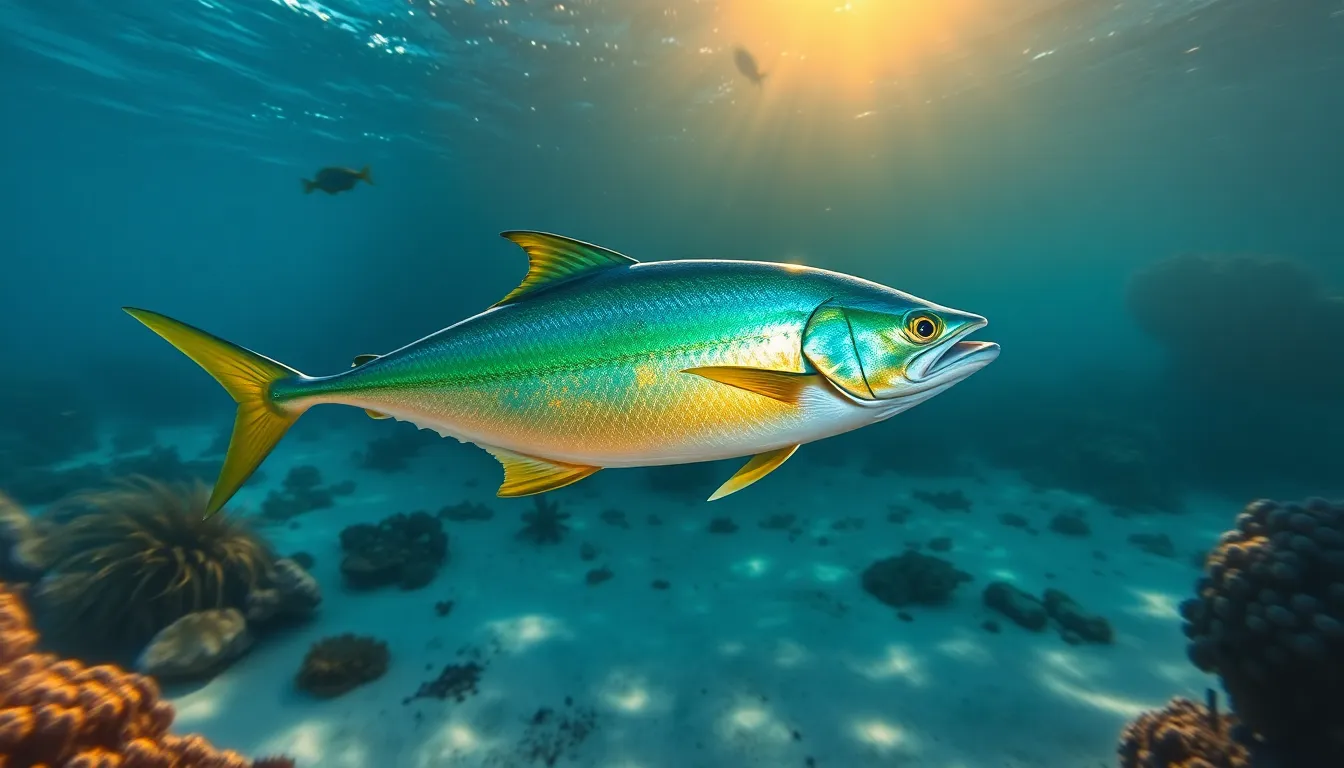
TheMahi-mahi(Coryphaena hippurus), also known asdorado,mahi-mahiorcommon dorado, is a fish from the family Coryphaenidae. This species is recognized for its vibrant color and streamlined shape, making it a popular target for underwater and sport fishermen. The dorado is found in tropical and subtropical waters, and its taxonomic classification is as follows:
- Kingdom: Animalia
- Phylum: Chordata
- Class: Actinopterygii
- Order: Carangiformes
- Family: Coryphaenidae
- Genus: Coryphaena
- Species: C. hippurus
Physical description and identification markers
The dorado is known for its elongated and laterally compressed body, which can reach lengths of up to 2 meters. Its color is one of its most distinctive features; it has a bluish-green back, golden sides, and a pale yellow belly. As it ages, the dorado may develop a darker tone on its upper side and a duller sheen on its flanks. The dorsal and anal fins are long and elongated, and its tail is forked, giving it great agility in the water.
Identification markers include:
- Color: Bluish-green on top, golden on the sides.
- Body shape: Elongated and compressed body.
- Fins: Long and mobile dorsal and anal fins.
Size ranges and record specimens
The size of dorados varies considerably depending on their habitat and environmental conditions. Generally, dorados can grow between 1 and 2 meters in length. However, specimens have been recorded reaching up to 2.3 meters and weighing over 39 kilograms. These extreme sizes are uncommon but reflect the growth potential of this species under optimal conditions.
Dorado fishing records are highly coveted and require specific skills to achieve. In fishing competitions, anglers often seek dorados over 15 kilograms to stand out.
Habitat distribution and depth ranges
The dorado is found in tropical and subtropical ocean waters, preferring water temperatures between 20 and 30 degrees Celsius. Its distribution ranges from the coast of Florida, through the Caribbean, to the coasts of South America and West Africa. They are generally found in open waters but can also approach structures like buoys and oil platforms, where they seek shelter and food.
In terms of depth, dorados can be found from the surface down to depths of 100 meters, although they are commonly fished in areas of less than 30 meters deep.
Seasonal behavior and migration patterns
The behavior of the dorado is strongly influenced by the seasons and variations in water temperature. During spring and summer, dorados are more active and move closer to shore in search of food, making them easier to catch. In autumn and winter, they tend to migrate to deeper and warmer waters, which can make underwater fishing more challenging.
Migration patterns are also related to the availability of prey, such as sardines and other small fish. During months of high activity, large schools of dorado can be observed, making them more accessible to fishermen.
Level of difficulty for underwater fishing and techniques
Underwater fishing for dorado is classified as moderately difficult due to their speed and agility. Fishermen must be well-trained in apnea techniques and the use of appropriate fishing gear. The most effective techniques include:
- Stalking: Stalking dorados in shallow waters or around structures.
- Use of lures: Using bright lures that mimic their natural prey.
- Group fishing: Fishing in groups to increase the chances of finding schools.
It is advisable to practice in waters where golden dorado activity has been observed before embarking on a serious fishing session.
Best hunting methods and equipment recommendations
For hunting golden dorado, it is recommended to use aspeargunwith a range of 75 to 110 cm, which allows for a balance between precision and power. Additionally, a wetsuit that provides comfort and protection is essential, especially in colder waters.
96. Air gunsescopetas de aireare a good option for more experienced fishermen, as they offer a more powerful and precise shot. It is advisable to carry adiving knifeand aflotation vestfor added safety.
Culinary applications and preparation methods
Golden dorado is highly valued in cooking for its white meat and delicate flavor. It can be prepared in various ways, including:
- Grilled: Ideal for fillets, marinated with herbs and lemon.
- Baked: Cooked with vegetables and spices.
- Sushi and sashimi: Fresh meat is perfect for raw dishes.
Regardless of the preparation method, golden dorado is a delicacy enjoyed in many coastal cultures.
Regulatory status and size limits by region
The regulatory status of golden dorado varies by region and specific fishing laws. In many places, there are size limits and catch quotas to protect populations. For example:
- Florida: Catch limits of 2 dorados per person and a minimum size of 20 inches.
- California: A limit of 10 dorados per person per day.
It is essential for fishermen to be informed about local regulations before going fishing.
Conservation status and sustainability notes
Golden dorado is considered a sustainable resource in many areas, although overfishing can affect its populations. Responsible fishing practices are crucial to ensure that this species continues to thrive. Fishermen are encouraged to:
- Respect established catch limits.
- Avoid fishing in areas where populations are low.
- Participate in marine life conservation and monitoring programs.
Sustainability in golden dorado fishing not only benefits the species but also ensures that future generations can enjoy this exciting activity.