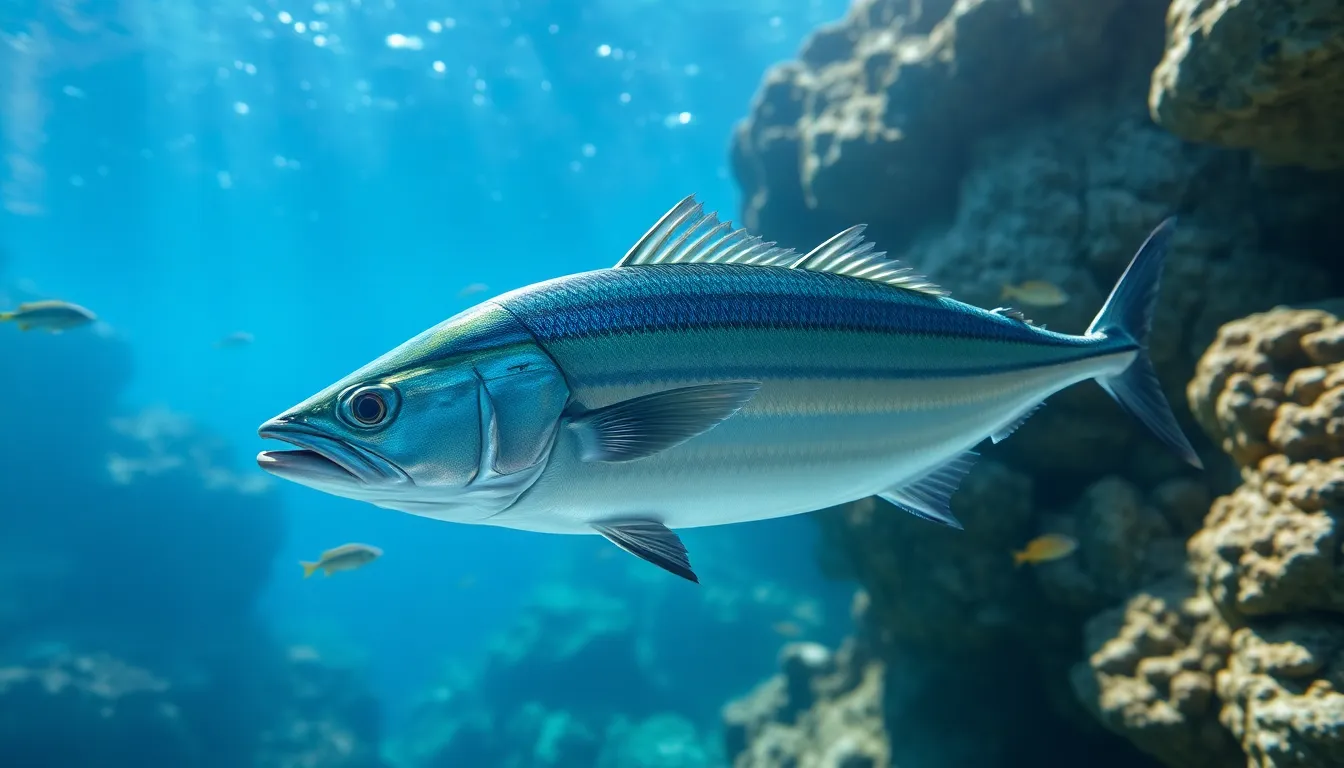
The Carite Rey, scientifically known as Scomberomorus cavalla, belongs to the family Scombridae. This species is commonly referred to as the King Mackerel in the English-speaking world. In various regions, it may also be called by other names such as “Kingfish” or simply “Mackerel.” The taxonomic hierarchy of the Carite Rey is as follows:
- Kingdom: Animalia
- Phylum: Chordata
- Class: Actinopterygii
- Order: Scombriformes
- Family: Scombridae
- Genus: Scomberomorus
- Species: S. cavalla
Physical Description and Identification Markers
The Carite Rey is a streamlined fish characterized by its elongated body and tapered head, which contributes to its speed in the water. Identification markers include:
- Coloration: The dorsal side is a bluish-green to dark blue, while the belly is silver-white. Adults typically exhibit faint vertical stripes along their sides.
- Fins: It has a pair of pectoral fins, which are relatively long, and a deeply forked caudal fin, aiding in swift movements.
- Teeth: The mouth is lined with sharp teeth, which are helpful for capturing slippery prey.
When identifying the Carite Rey in the field, look for its distinctive coloration and fin structure, which can help differentiate it from other mackerel species.
Size Ranges and Record Specimens
The Carite Rey is known for its impressive size, capable of reaching lengths of up to 6.5 feet (2 meters) and weights exceeding 100 pounds (45 kg). However, the average size of mature individuals typically ranges from:
- Length: 30 to 50 inches (76 to 127 cm)
- Weight: 10 to 30 pounds (4.5 to 14 kg)
The record specimen, caught in the waters off the coast of Florida, weighed 96 pounds (43.5 kg) and was an astonishing 6.5 feet long, showcasing the potential size of this majestic species.
Habitat Distribution and Depth Ranges
The Carite Rey is primarily found in warm, temperate waters of the Atlantic Ocean, especially along the eastern coast of the United States, the Gulf of Mexico, and the Caribbean Sea. Its habitat preferences include:
- Depth Ranges: Typically, the Carite Rey inhabits waters ranging from 30 to 300 feet (9 to 91 meters) deep, often found near the surface during feeding times.
- Habitat Types: This species tends to favor areas with strong currents, reefs, and drop-offs, where it can hunt for prey like smaller fish and squid.
Understanding their habitat distribution is crucial for spearfishing enthusiasts, as it informs the best locations to target these fish.
Seasonal Behavior and Migration Patterns
The Carite Rey exhibits distinct seasonal behavior and migration patterns, which are influenced by water temperature and food availability. Key points include:
- Migration: During the warmer months, typically from spring to early fall, Carite Rey migrate closer to shore to spawn and feed on abundant baitfish.
- Feeding Behavior: They are pelagic fish, often found in schools, and are known to be aggressive feeders, particularly during dawn and dusk.
These patterns are essential for understanding the optimal times for spearfishing, as they dictate when and where the fish are most likely to be found.
Spearfishing Difficulty Level and Techniques
Spearfishing for Carite Rey is considered to be of moderate to high difficulty due to their speed and agility. Some of the challenges include:
- Speed: The Carite Rey is a fast swimmer, making it necessary for spearfishers to have quick reflexes and excellent aim.
- Technique: Employing techniques such as stalking, ambushing, and proper breath-hold are crucial for success.
Recommended techniques include using a float line to help manage the fish once speared, and hunting in schools, as this increases the chances of a successful catch.
Best Hunting Methods and Gear Recommendations
To maximize success when hunting Carite Rey, proper gear and methods are essential. Here are some recommendations:
- Speargun: A medium to large speargun with a 90-110 cm shaft is ideal for targeting these larger fish.
- Wetsuit: A lightweight wetsuit is recommended for warmth and protection, particularly in cooler waters.
- Fins: Long, efficient fins can help you keep up with the swift movements of the Carite Rey.
Additionally, using a dive computer can assist in monitoring depth and time, ensuring safe hunting practices.
Culinary Applications and Preparation Methods
The Carite Rey is not only prized for its sporting qualities but also for its culinary merit. It has a firm, flavorful flesh that lends itself well to various cooking methods. Popular culinary applications include:
- Grilling: Grilled Carite Rey steaks are a favorite, often marinated in citrus and herbs.
- Searing: Quick searing in a hot pan can enhance its rich flavors, especially when served with a side of fresh vegetables.
- Smoking: The fish can also be smoked, providing a unique flavor profile that pairs well with various sides.
When preparing Carite Rey, it is essential to ensure freshness for the best taste and texture.
Regulatory Status and Size Limits by Region
The regulatory status of Carite Rey varies by region and often includes size limits and bag limits to ensure sustainable fishing practices. Key regulations include:
- United States: In many states, the minimum size limit is set at 24 inches (61 cm), with a daily bag limit of two fish.
- Caribbean Regions: Regulations may vary, but many areas have similar size limits to protect the species during its spawning season.
It is crucial for spearfishers to stay informed about local regulations to promote conservation and responsible fishing practices.
Conservation Status and Sustainability Notes
Currently, the conservation status of the Carite Rey is monitored by various marine organizations. While the species is not considered endangered, overfishing and habitat loss remain concerns. Key points include:
- Sustainability Practices: Adopting catch-and-release methods can help maintain healthy populations, especially for larger breeding individuals.
- Monitoring Programs: Participating in local conservation programs can aid in the protection of this species and its habitat.
By being aware of conservation efforts, spearfishers can contribute to the sustainability of the Carite Rey and ensure that future generations can enjoy this remarkable species.