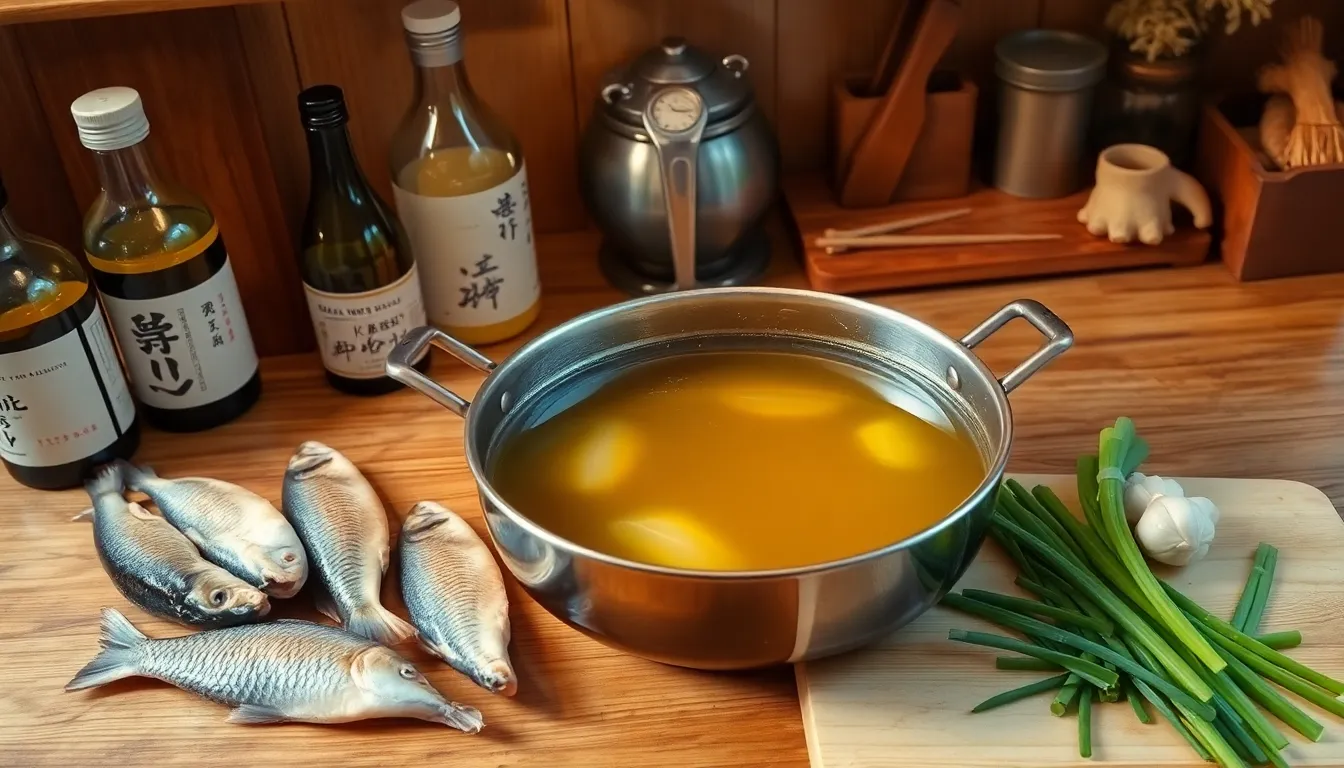
One of the charms of Japanese cuisine is the technique of maximizing the flavors of the ingredients. Among them, fish bone soup is a heartwarming traditional soup that allows you to fully enjoy the umami of fresh fish. Since fish bone soup is made using fish bones and heads, it is also very nutritious and is especially valued as a dish that warms the body during the cold seasons. The finished fish bone soup has a beautiful presentation with a clear broth, tender fish meat that easily falls apart, and aromatic green onions sprinkled throughout. Furthermore, due to its simplicity, fish bone soup is also very easy to make as a home-cooked dish. Through this recipe, I hope you experience the deliciousness of fish bone soup that can be easily made at home and enjoy it with family and friends.
List of Required Ingredients
- Fish bones (such as sea bream or amberjack, your preferred fish) – 500g: Choosing fresh fish bones greatly changes the flavor of the soup. Especially, white fish like sea bream and amberjack are suitable for fish bone soup and bring out a refined taste.
- Water – 1 liter: Using soft water as the base for the soup enhances the umami of the fish. Since water quality affects the taste, using mineral water is also a good option.
- Sake – 50ml: Sake plays a role in removing the fishy smell and enhancing the flavor. Using cooking sake allows you to enjoy a richer aroma.
- Mirin – 30ml: Mirin is an important seasoning that not only adds sweetness but also gives depth to the soup. Using mirin balances the overall flavor and makes it even more delicious.
- Salt – to taste: Salt is an essential seasoning for adjusting flavor. It is important to add it gradually during the final seasoning to suit individual preferences.
- Green onions – 1 stalk (sliced diagonally): Green onions are an important ingredient that adds aroma and color. Using fresh green onions increases the refreshing quality of the soup.
- Ginger – 1 piece (sliced thinly): Ginger adds warmth to the soup and helps to soften the fishy smell. Adding sliced ginger enriches the aroma.
- Kombu – 10cm (optional): Kombu contains glutamic acid, which adds richness to the soup. Using kombu allows you to enjoy a deeper flavor.
List of Cooking Tools and Utensils Needed
- Pot – a large pot for simmering the soup: A pot with sufficient capacity is necessary for simmering the fish bones. Using a thick-bottomed pot ensures even heat distribution and prevents the fish from falling apart.
- Ladle – for scooping the soup: A ladle is a handy tool for scooping the soup. It can also be used as a spoon for skimming off scum, so it’s good to keep one in the kitchen.
- Knife – for cutting ingredients: A sharp knife is essential for preparing the ingredients. Especially when handling fish bones, using a well-sharpened knife allows for safe and smooth work.
- Cutting board – a workspace for cutting ingredients: Prepare a clean cutting board for cutting ingredients. Wooden or plastic cutting boards are common, but having one specifically for fish is also recommended.
- Strainer – for straining the soup: A strainer is necessary for straining the simmered soup. Choosing a fine-mesh strainer ensures a smooth finish for the soup.
Preparation Time and Cooking Time
- Preparation Time: 15 minutes – includes the preparation of the fish and cutting the ingredients.
- Cooking Time: 30 minutes – includes simmering time and seasoning.
- Overall Difficulty Level: ★☆☆☆☆ (Beginner-friendly) – A dish with simple steps that anyone can try.
Step-by-Step Cooking Instructions
Step 1: Prepare the Fish
Remove the blood and internal organs from the fish bones and rinse them lightly with water. This helps eliminate any unpleasant odors and keeps the soup’s flavor pure. This task should be done carefully, as insufficient handling of the internal organs can lead to off-flavors in the soup. As a professional tip, soaking the bones in water can further reduce any fishy smell.
Step 2: Add Water and Ingredients to the Pot
Pour water into a large pot and add the fish bones. Also add the sake and mirin, and heat on high. At this stage, sake and mirin play an important role in extracting the umami from the fish. As a professional tip, adding a small amount of sake to the pot first and bringing it to a boil to evaporate the alcohol before adding the other ingredients can enhance the depth of flavor.
Step 3: Simmer
Once the water comes to a boil, skim off any scum, reduce to low heat, and simmer for about 20 minutes. Add the ginger and green onions during the process to enhance the flavor. Skimming off the scum is very important to maintain the clarity of the soup. As a professional tip, be careful not to overcook, and aim to simmer until the fish is tender and falls apart.
Step 4: Strain the Soup
Once simmering is complete, use a strainer to strain the soup. This removes the solids like fish bones, ginger, and green onions, resulting in a smooth soup. When straining the soup, press gently to avoid losing any umami. As a professional tip, the strained fish bones have a mild flavor and can be enjoyed as a snack with a sprinkle of salt.
Step 5: Season
Return the strained soup to the pot and adjust the flavor with salt. You can also add kombu if desired. It is important to add salt gradually while tasting to adjust the flavor. As a professional tip, adjusting the flavor while simmering significantly enhances the final result.
Step 6: Serve
Pour the soup into a bowl and finish by sprinkling fresh green onions on top. The green of the onions enhances the color of the soup, resulting in a visually appealing dish. As a professional tip, you can enjoy different flavors by using cilantro or shiso leaves instead of green onions when plating.
Tips for success and common mistakes
Tips: It is important to choose fresh fish scraps. Frozen ones tend to lose flavor, so use fresh whenever possible. Additionally, be careful not to overcook the fish, as it can easily fall apart; maintaining the right cooking time is crucial. As a professional tip, clear eyes and bright red gills are signs of fresh fish.
Common mistakes: If you overcook the fish, it can easily fall apart, so it’s important to stick to the appropriate cooking time. Also, when seasoning, gradually add salt while adjusting the flavor. A common pitfall is that simmering kombu for too long can result in bitterness, so be mindful of the cooking time.
Plating suggestions and presentation
Fish soup is a simple yet visually appealing dish. Add color by sprinkling diagonally sliced green onions on the soup poured into the bowl. Additionally, serving rice alongside the soup creates a nutritionally balanced meal. Furthermore, you can enjoy changing the flavor by sprinkling shichimi or yuzu pepper according to your preference. As a professional tip, choosing a larger bowl for the soup can make the dining table look more vibrant.
Proper storage methods and using leftovers
When storing fish soup in the refrigerator, it is recommended to consume it within 2 to 3 days. When reheating, it’s best to bring it to a boil before warming it up. You can also mix leftovers with rice to make a porridge. By adding rice and simmering for a bit, you can enjoy a different flavor. As a professional tip, adding an egg when making porridge results in a creamy finish and increases the nutritional value.
Recipe variations and customization options
Fish soup can be enjoyed in various variations by changing the type of fish and ingredients used. For example, adding vegetables during cooking enhances the nutritional value and deepens the flavor. Try adding daikon, carrots, or mushrooms. Additionally, changing the type of fish allows for different flavors; feel free to experiment with mackerel or yellowtail according to your preference. As a professional tip, incorporating seasonal vegetables allows you to experience the season and expands the range of your cooking.
Summary and next steps
Fish soup is a heartwarming home-cooked dish that maximizes the umami of the ingredients. It can be easily enjoyed as it is made with fresh fish and simple ingredients. By incorporating points to be mindful of during cooking and professional tips, you can create even more delicious fish soup. Be sure to refer to this recipe and enjoy fish soup with your family and friends. As the next step, try changing the ingredients according to the season to discover new ways to enjoy fish soup. Then, create your own original fish soup to brighten up your dining table.