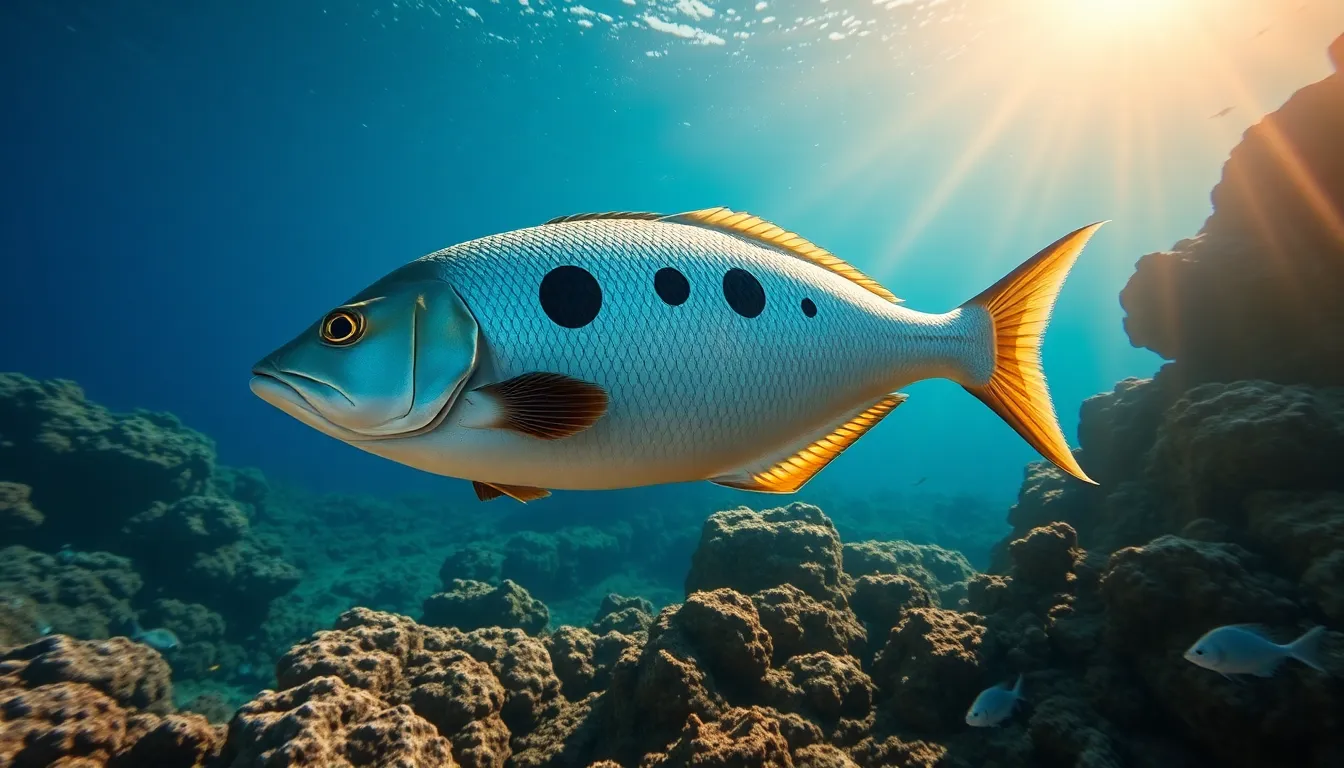
Thedentex(scientific name:Dentex dentex) is a fish from the family ofSparidae. This fish is known in various regions of the Mediterranean by different common names, includingdentex,common dentexandyellowfin dentex. Its taxonomic classification is as follows:
- Kingdom: Animalia
- Phylum: Chordata
- Class: Actinopterygii
- Order: Perciformes
- Family: Sparidae
- Genus: Dentex
- Species: D. dentex
Physical description and identification markers
The dentex is a fish with an elongated and robust body, capable of reaching considerable lengths. Its color varies from silver on the flanks to a darker shade on the dorsal part, with a series of dark spots that are characteristic of the species. Its fins are prominent, especially the dorsal fin, which has strong and flexible spines.
Identification markers include:
- Large and prominent eyes, allowing it to see in deep waters.
- A wide mouth with sharp teeth, ideal for capturing crustaceans and other fish.
- Pelvic fins that are longer in male individuals than in females.
Size range and record specimens
The dentex can reach sizes of up to 1 meter in length, although most specimens caught in the Mediterranean usually measure between 50 and 70 cm. The most impressive records speak of dentex that have exceeded 10 kg in weight. This size makes it an attractive target for spearfishers.
Habitat distribution and depth ranges
The dentex is distributed throughout theMediterranean Sea, preferring coastal waters and rocky bottoms. Its habitat extends from 10 meters to 200 meters in depth, where they can be found in schools near underwater structures such as reefs, canyons, and sandy bottoms.
The following table summarizes habitat distribution and depth ranges:
| Habitat type | Depth range (m) |
|---|---|
| Rocky coasts | 10 – 60 |
| Reefs | 20 – 100 |
| Sandy bottoms | 30 – 200 |
Seasonal behavior and migratory patterns
The behavior of the dentex varies according to the time of year. During spring and summer, there is an increase in reproductive activity, leading to a migration towards warmer and shallower waters. In autumn and winter, dentex tend to return to deeper waters in search of cooler temperatures and abundant food sources.
Migratory patterns can be affected by factors such as water temperature, food availability, and fishing pressure, making their behavior a key aspect to consider for spearfishers.
Difficulty level in spearfishing and techniques
The dentex is considered a species ofmedium to high difficultyfor spearfishing. Its sharp vision and cautious behavior make it a challenging fish for anglers. Here are some recommended techniques:
- Static wait: Remain still in a spot where you know there is dentex activity.
- Group hunting: Dentex are social fish and often swim in schools. Hunting in groups increases the chances of success.
- Use of lures: Use lures that mimic their natural prey, such as crustaceans and small fish.
Best hunting methods and equipment recommendations
For dentex fishing, it is recommended to use ahigh-quality speargunwith an appropriate length to facilitate aiming in deeper waters. Additionally, it is essential to have awetsuitthat provides thermal insulation, as temperatures can be cold in the depths of the Mediterranean.
Additional equipment includes:
- Mask and snorkel: For optimal visibility.
- A weight belt: To facilitate diving.
- A diving knife: For safety and handling catches.
Culinary applications and preparation methods
The dentex is highly valued in Mediterranean cuisine, thanks to its firm white flesh. It can be prepared in various ways, including:
- Grilled: Marinated with herbs and lemon, it is a delicious and light dish.
- In ceviche: Cut into small pieces and marinated in lemon juice and onion.
- Baked: Cooked with vegetables and spices for a tasty and nutritious dish.
Regulatory status and size limits by region
Dentex fishing is regulated in many areas of the Mediterranean. It is crucial for anglers to be aware of local regulations, which may include size limits and catch quotas. Generally, the minimum catch size is usually 30 cm, although this can vary depending on the region.
It is important to consult local fishing laws before going out to hunt, to ensure the sustainability of the species and respect the established regulations.
Conservation status and sustainability notes
The dentex faces threats due to overfishing and habitat degradation. Currently, its conservation status isconcerningin several areas of the Mediterranean. Sustainable fishing practices are essential to preserve this species and its ecosystem. It is recommended to:
- Respect minimum catch sizes.
- Participate in conservation initiatives and population monitoring.
- Promote selective fishing and the use of techniques that minimize habitat damage.
By taking responsible measures, we can ensure that future generations can also enjoy dentex fishing in the Mediterranean.