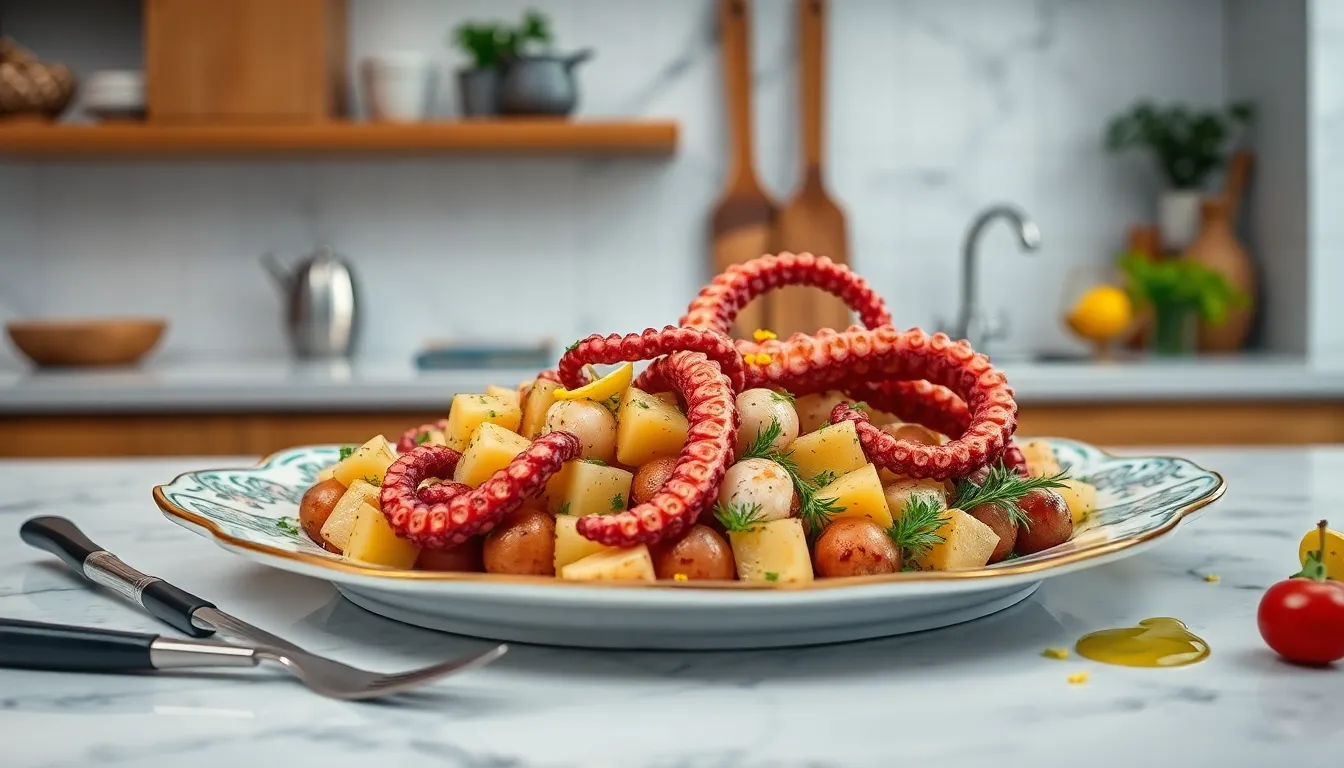
Have you ever dreamed of bringing to the table a dish that tells the story of the sea and Mediterranean culinary traditions? Theoctopus with potatoes recipeis a true celebration of simplicity and authenticity of flavors. This dish features tender and succulent octopus, paired with soft and creamy potatoes, all drizzled with a splash of extra virgin olive oil, chopped fresh parsley, and a squeeze of lemon that enhances the flavors. The final result is a colorful and aromatic meal, perfect for warm summer days or a convivial dinner with friends and family. Imagine savoring a dish that not only satisfies the palate but also evokes memories of seaside lunches, with the scent of the sea filling your kitchen!
Ingredient selection
The choice of ingredients is crucial when preparing octopus with potatoes. A dish so simple can easily become extraordinary if high-quality ingredients are used. Here are some criteria to follow to ensure a delicious and authentic dish:
- Octopus: Choose fresh octopus, preferably small-sized, that is tender. Fresh octopus can be recognized by its vibrant color and shiny skin. If fresh is not available, frozen octopus is a great alternative, as the freezing process can help make the meat more tender. Be sure to thaw it slowly in the refrigerator to preserve its quality.
- Potatoes: Opt for yellow or red potatoes, which hold their texture better during cooking. These varieties not only add a rich flavor to the dish but also help create a creamy texture when slightly mashed. Avoid white potatoes, which tend to break apart during cooking, compromising the dish’s appearance.
- Seasonings: Use high-quality extra virgin olive oil, fresh parsley, and lemon to enhance the dish’s flavors. Olive oil not only adds a rich and fruity flavor but also numerous health benefits. Freshly chopped parsley will contribute freshness, while lemon adds a note of acidity that balances the richness of the octopus and potatoes.
Necessary tools and equipment
To prepare this delicious dish, you will need some essential tools that will facilitate the cooking and preparation process. Here’s a list of what you will need:
- A large pot for cooking the octopus. It is important that the pot is big enough to hold the whole octopus without bending it, ensuring even cooking.
- A sharp knife for cleaning and cutting the ingredients. A good knife not only makes cutting easier and faster but also reduces the risk of injury in the kitchen.
- A slotted spoon for removing the octopus from the water. This tool is essential for gently lifting the octopus without breaking it, keeping the pieces intact.
- A large bowl for mixing the ingredients. Choose a bowl that allows for comfortable mixing without risking spilling the ingredients.
- A serving platter for presenting the finished dish. A wide and decorative plate will make your octopus with potatoes even more inviting.
Preparation and planning timeline
Preparing octopus with potatoes takes about 1 hour and 30 minutes. Here’s a timeline to help you plan your time in the kitchen:
- 30 minutes: Cleaning and preparing the ingredients. Spend this time rinsing and cleaning the octopus, peeling and cutting the potatoes, and preparing the other fresh ingredients.
- 60 minutes: Cooking the octopus and potatoes. During this time, it is important to check the cooking occasionally to ensure everything is going as planned.
- 10 minutes: Resting and plating. This final step is crucial; allowing the dish to rest for a few minutes helps the flavors meld better.
Detailed step-by-step instructions
Step 1: Preparing the octopus
Start by rinsing the octopus under running water, making sure to remove any sand residues. Remove the beak and eyes if necessary. Bring a pot of salted water to a boil and immerse the octopus. The secret to tender octopus is to gently dip it in the boiling water 2-3 times before fully submerging it; this helps contract the muscle fibers. Let it cook for about 30-40 minutes until tender. Check the doneness by inserting a fork; if it goes in easily, the octopus is ready.
Step 2: Cooking the potatoes
While the octopus is cooking, peel and cut the potatoes into uniform-sized cubes to ensure even cooking. In another pot, cook the potatoes in salted water for about 20 minutes, until they become soft but not mushy. To check for doneness, insert a knife into a potato; if it slides in easily, they are ready. Drain the potatoes and let them cool slightly before adding them to the octopus.
Step 3: Assembling the dish
Once the octopus is cooked, drain it and let it cool slightly. Cut it into uniform-sized pieces for an appealing presentation. Mix the octopus with the potatoes in a large bowl. Add extra virgin olive oil, chopped parsley, and lemon juice to taste. The olive oil not only enriches the dish but also helps bind the ingredients together. Taste and adjust with salt and pepper according to your preference.
Step 4: Plating
Serve the dish on a large serving platter, garnishing with lemon slices and a few sprigs of fresh parsley for a touch of freshness. For an even more visually appealing effect, you can arrange the octopus and potatoes artistically, creating a layered effect. A drizzle of raw olive oil at the end adds shine and flavor to the dish.
Quality indicators and checkpoints
To ensure that your octopus with potatoes turns out perfect, keep an eye on the following quality indicators:
- Tenderness of the octopus: It should be tender but not falling apart. A trick is to insert a fork; if it goes in easily, it’s ready. Keep in mind that overcooking can make the octopus rubbery, while undercooking leaves it tough.
- Cooking of the potatoes: Check that they are soft but not overcooked, to avoid them falling apart. The potatoes should maintain their shape and have a creamy texture inside. If you notice that some potatoes are starting to break apart, it’s best to drain them immediately.
Presentation and finishing tips
For an attractive presentation, you can serve the octopus with potatoes in individual bowls, garnishing with black olives and capers. The olives not only add a salty flavor but also a nice visual contrast. A drizzle of raw olive oil and a sprinkle of black pepper can add a final touch. Don’t forget to serve it with slices of crusty bread, perfect for soaking up the dish’s juices and completing the culinary experience.
Storage and maintenance
If you have leftover octopus with potatoes, you can store it in the refrigerator in an airtight container for 2-3 days. It’s also great served cold as a salad; in this case, you can add a bit of olive oil and a pinch of pepper to liven it up. Avoid freezing it, as the texture of the octopus may deteriorate, becoming rubbery upon thawing. If you wish to enjoy it again, quickly reheat it in a pan over low heat to maintain its quality.
Variants and customization options
There are many variations of the octopus with potatoes recipe that you can explore. Here are some ideas to customize the dish and make it unique:
- Addition of vegetables: You can enhance the dish by adding carrots, cherry tomatoes, or olives. The carrots can be diced and cooked together with the potatoes, while the cherry tomatoes can be added fresh at the time of assembly. Black olives provide a salty flavor that pairs perfectly with the dish.
- Spices: Try adding smoked paprika or chili for a spicy note. Smoked paprika adds depth and a smoky aroma that enhances the flavor of the octopus. If you love heat, a pinch of chopped fresh chili can give an extra touch of liveliness to the dish.
- Baked version: For an interesting alternative, try baking everything in the oven with a drizzle of oil and parsley for 20 minutes. This preparation allows the flavors to meld further and creates a delicious crust on the surface of the octopus, offering a different texture compared to boiling.
Conclusion and final tips
Octopus with potatoes is a dish that embodies the beauty of Mediterranean cuisine, combining freshness, simplicity, and authentic flavors. Remember that the quality of the ingredients is key to guaranteed success. Experiment with variations and customizations to create a unique dish that tells your story and culinary style. Don’t be afraid to play with spices and vegetables to make the dish even more appealing. Finally, share this delight with friends and family, because food is, above all, a moment of togetherness. Enjoy your meal!