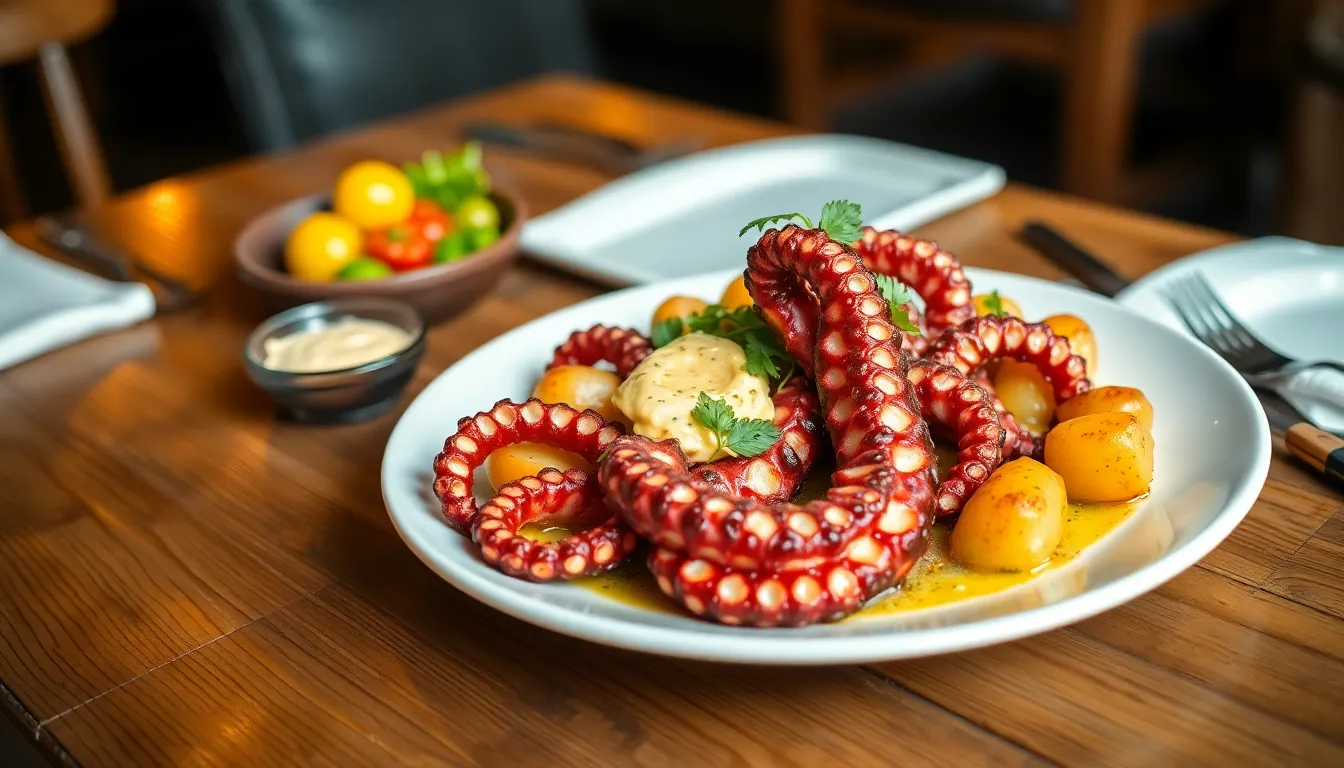
Have you ever tried a dish that instantly transports you to the Mediterranean coast? Theoctopus with potatoes and aioli recipeis a true emblem of Spanish cuisine, where the freshness of the sea meets the simplicity of home cooking. This dish stands out not only for its intense flavors and beautiful presentation but also for its ability to bring people together around the table. It is perfect for sharing at a family meal or a special dinner, and the final result is a colorful, aromatic feast that is, most importantly, incredibly tasty! In this article, I will guide you through each step so you can recreate this culinary gem at home, ensuring that every bite is memorable.
Ingredient/component selection criteria
The quality of the ingredients is crucial for the success of any recipe, and in the case of octopus with potatoes and aioli, this is even more important. Here are detailed recommendations for selecting the best components:
- Octopus: Opt for fresh octopus if possible. If you can’t find it, frozen octopus is an excellent alternative, as the freezing process helps tenderize the meat, allowing it to cook more evenly. Make sure the octopus has a fresh sea smell, without strong odors that indicate a lack of freshness.
- Potatoes: New or “waxy” potatoes are ideal for this dish, as they cook well and provide a creamy texture. Look for potatoes with smooth skin and no sprouts, as this indicates freshness. The “Monalisa” variety is an excellent choice for its flavor and texture.
- Garlic: Fresh garlic is essential for a tasty aioli. Avoid garlic powder or preserved garlic, as they do not provide the same intense and spicy flavor. Look for firm garlic bulbs with dry skin and no spots, as these are indicators of quality.
- Olive oil: A good extra virgin olive oil will not only enhance the flavor of the aioli but also provide health benefits. Choose oils from known origins, preferably from varieties like Arbequina or Picual, which are known for their fruity and slightly spicy flavor.
- Salt and pepper: Use sea salt and freshly ground black pepper for optimal flavor. Sea salt, with its coarser texture, dissolves better in food, while freshly ground pepper offers a more complex and aromatic flavor than pre-ground pepper.
Necessary tools and equipment
Preparing octopus with potatoes and aioli does not require very sophisticated tools, but it is important to have the right equipment to facilitate the process. Here’s what you will need:
- Large pot for boiling the octopus, preferably stainless steel, which distributes heat evenly and avoids reactions with the seafood.
- Medium pot for the potatoes, also stainless steel or enamel, to prevent sticking and ensure proper cooking.
- Blender or mortar for preparing the aioli. If you choose the mortar, make sure it is made of a sturdy material like granite, which helps extract the flavors of the garlic.
- Sharp knife and cutting board to make cutting the octopus and potatoes easier. A chef’s knife is ideal for these tasks.
- Colander to drain the octopus and potatoes after cooking, ensuring that no water remains that could affect the presentation of the dish.
- Large serving plate, preferably flat and white, which will enhance the vibrant colors of the dish.
Preparation and planning timeline
Planning is key to making your culinary experience smooth and enjoying the process without stress. Here’s a detailed time guide:
- Ingredient preparation: Spend 15 minutes washing, peeling, and cutting all the necessary ingredients. Having everything ready will allow you to cook more efficiently.
- Cooking the octopus: This process can take between 30-45 minutes. It is essential to monitor the time to ensure that the octopus is tender and does not overcook.
- Cooking the potatoes: The potatoes should be boiled for 20-25 minutes, or until tender. It is advisable to poke them with a fork to check their doneness.
- Preparing the aioli: This task will take you about 10 minutes. Make sure all the ingredients are at room temperature for a perfect emulsion.
- Plating the dish: Spend about 10 minutes plating. Presentation is important, so take your time to ensure each element is in its place.
Detailed step-by-step instructions
1. Cook the octopus
Start by bringing a large pot of water to a boil. It is advisable to add salt to the water, as this will help enhance the flavor of the octopus. When the water is boiling, immerse the octopus for 3 minutes and then remove it. Repeat this process two or three times to help the meat become more tender and prevent it from shrinking. After this blanching, simmer the octopus for 30-45 minutes, depending on its size. Once cooked, remove it and let it cool a bit before cutting it into pieces.Pro-Tip: Slow cooking is key to maintaining the tender texture of the octopus, so be sure not to rush it.
2. Cook the potatoes
In another pot, boil salted water and add the peeled and uniformly cut potatoes. The salt not only adds flavor but also helps the potatoes maintain their shape during cooking. Cook for 20-25 minutes, or until tender when poked with a fork. Drain and set aside.Pro-Tip: To ensure the potatoes do not fall apart, it is important not to overcook them; controlled cooking time is key.
3. Prepare the aioli
In a mortar or blender, crush 2-3 cloves of garlic with a little salt. The salt helps release the oils from the garlic, enhancing its flavor. Gradually add 150 ml of olive oil while whisking or mixing vigorously. This step is crucial for emulsifying the aioli and achieving a creamy and homogeneous mixture. If desired, add a few drops of lemon to give it a special touch that will balance the flavor.Pro-Tip: If the mixture does not emulsify properly, you can try adding an egg yolk to help stabilize it.
Quality indicators and checkpoints
Make sure to check the following during preparation to ensure that the final dish is of high quality:
- Tenderness of the octopus: It should be tender when pierced with a fork. If you notice it is tough, continue cooking it and check every 5 minutes.
- Texture of the potatoes: They should be tender but firm, meaning they should not crumble when touched. A good indicator is using a knife that should go in without resistance.
- Flavor of the aioli: It should be strong but balanced, with the garlic present but not overwhelming. If you feel the garlic flavor is too intense, you can add more olive oil to soften it.
Suggestions for serving, presentation, or finishing touches
The presentation of your dish can make a big difference in your diners’ experience. For an appealing presentation, consider the following:
- Place the potatoes at the base of the plate and artistically distribute the pieces of octopus on top, creating a visual effect that invites tasting the dish.
- Drizzle with a little extra virgin olive oil and garnish with chopped fresh parsley to add a touch of color and freshness.
- Serve the aioli in a small bowl on the side so each diner can add it to their liking, allowing them to adjust the flavor according to their preferences.
Storage, preservation, or maintenance
If you have leftover octopus or potatoes, store them in an airtight container in the refrigerator. It is advisable to consume them within the next 2-3 days to ensure freshness. If you decide to reheat the octopus, do so gently to avoid it becoming rubbery. Freezing the aioli is not recommended, as it may lose its texture and emulsify improperly. If you have leftover aioli, store it in the refrigerator and consume it within 3 to 5 days.
Variations and customization options
The octopus with potatoes and aioli recipe can be customized in various ways to suit your tastes or those of your guests:
- Herb aioli: Add fresh herbs like basil or cilantro to the aioli for a different and fresh flavor. This not only enhances the taste but also adds visual appeal to the dish.
- Grilled octopus: After boiling the octopus, you can grill it for a smoky flavor that complements the tenderness of the potatoes. Be sure to brush the octopus with a little olive oil before grilling to prevent it from sticking to the grill.
- Include vegetables: Add asparagus, carrots, or even steamed red peppers to enrich the dish and bring more colors and nutrients. Vegetables not only add nutritional value but also provide a contrasting texture.
Conclusion
Octopus with potatoes and aioli is more than just a dish; it is a culinary experience that combines tradition, flavor, and presentation. Through this guide, you have learned not only how to prepare this delicious delicacy but also how to select quality ingredients and present the dish attractively. Remember that the key lies in the freshness of the ingredients and attention to detail during each step of the preparation. So, the next time you have a special meal or simply want to enjoy a good dish, don’t hesitate to put this recipe into practice. Your friends and family will be impressed with your cooking skills and the exceptional flavor of this iconic dish!