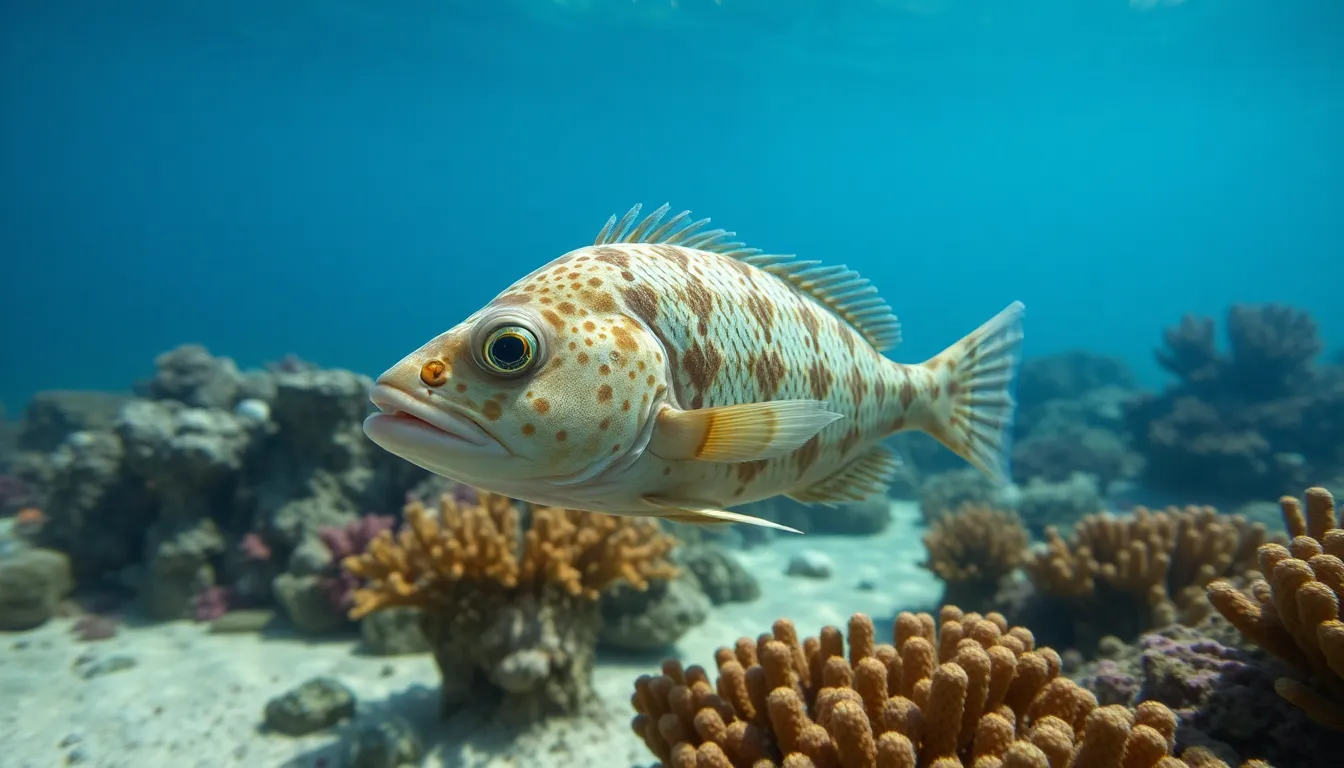
Thecubera snapper(Lutjanus cyanopterus) is a species of fish that belongs to the family Lutjanidae. This fish is known for its distinctive characteristics and its popularity among spearfishers. In addition to its scientific name, the cubera snapper is commonly referred to as “snapper cubera” in English and “pargo” in various Spanish-speaking countries.
Physical description and identification markers
The cubera snapper has a robust, elongated body, with a large head and a prominent jaw. Its coloration ranges from a bright silver tone to a dark red, with bluish hues on the fins and the upper part of the body. The fins are short and rounded, and the fish has a well-defined lateral line that extends along its body.
To correctly identify it, fishermen should observe the following markers:
- Coloration: Silver with red and blue hues.
- Head size: Proportionally larger than the body.
- Shape of the caudal fin: Deeply forked.
Size ranges and record specimens
The cubera snapper is known for its impressive size, reaching lengths of up to 1.2 meters and weights that can exceed 50 kg. Fishing records for this species indicate that some specimens have been caught weighing up to 60 kg, making it a sought-after target for spearfishers.
Habitat distribution and depth ranges
TheLutjanus cyanopterusis primarily found in tropical and subtropical waters of the Atlantic Ocean. Its habitat includes coral reefs, rocky areas, and sandy bottoms, where it seeks shelter and food. The cubera snapper has been documented to inhabit depths ranging from 5 to 100 meters, although it is more commonly found in shallower waters.
Seasonal behavior and migration patterns
The behavior of the cubera snapper varies throughout the year, and its activity can be influenced by factors such as water temperature and food availability. During the breeding season, which generally occurs in summer, cubera snappers gather in specific areas to spawn. Outside of this season, they tend to be more solitary or may be seen in small groups.
Seasonal behavior patterns
- Spring: Increased reproductive activity.
- Summer: Spawning in specific areas.
- Autumn: Migrations to deeper waters.
- Winter: Reduced activity.
Difficulty level for spearfishing and techniques
Fishing for cubera snappers can present a significant challenge due to their size and strength. They are considered a species ofintermediate to high difficulty, meaning that proper techniques and skills are required to successfully catch them.
Recommended techniques
- Wait and stalk: Remain silent and wait for the fish to approach.
- Use of live bait: Attract the snapper using smaller fish as bait.
- Fishing at depths: Use free diving techniques to reach deeper areas where the snappers are found.
Best hunting methods and equipment recommendations
For a successful spearfishing experience, having the right equipment is essential. Here are some recommendations:
- Speargun: A speargun of at least 1.5 meters is ideal for capturing cubera snappers.
- Wetsuit: A 3 mm to 5 mm wetsuit is recommended to protect against cold and rocks.
- Mask and fins: Make sure to have a well-fitting mask and fins that allow for good maneuverability underwater.
Culinary applications and preparation methods
The cubera snapper is highly valued in gastronomy due to its firm flesh and delicate flavor. It can be prepared in various ways, including:
- Baked: Marinated with herbs and lemon, baked to perfection.
- In ceviche: Cut into cubes and marinated in lemon juice with onion and cilantro.
- Fried: Breaded and fried for a crunchy and tasty dish.
Regulatory status and size limits by region
The fishing of cubera snapper is subject to regulations that vary by region. It is crucial for fishermen to be informed about local laws before heading out to fish. In many areas, the minimum catch size is 50 cm, and there are daily catch limits to protect the population of this species.
Conservation status and sustainability notes
The cubera snapper is considered a species of conservation interest, as its population can be affected by overfishing and habitat degradation. Fishermen are encouraged to follow sustainable practices, such as:
- Respecting closed seasons.
- Using fishing techniques that minimize bycatch.
- Participating in local conservation programs.
By following these guidelines, fishermen can help ensure that the cubera snapper remains a viable resource for future generations.