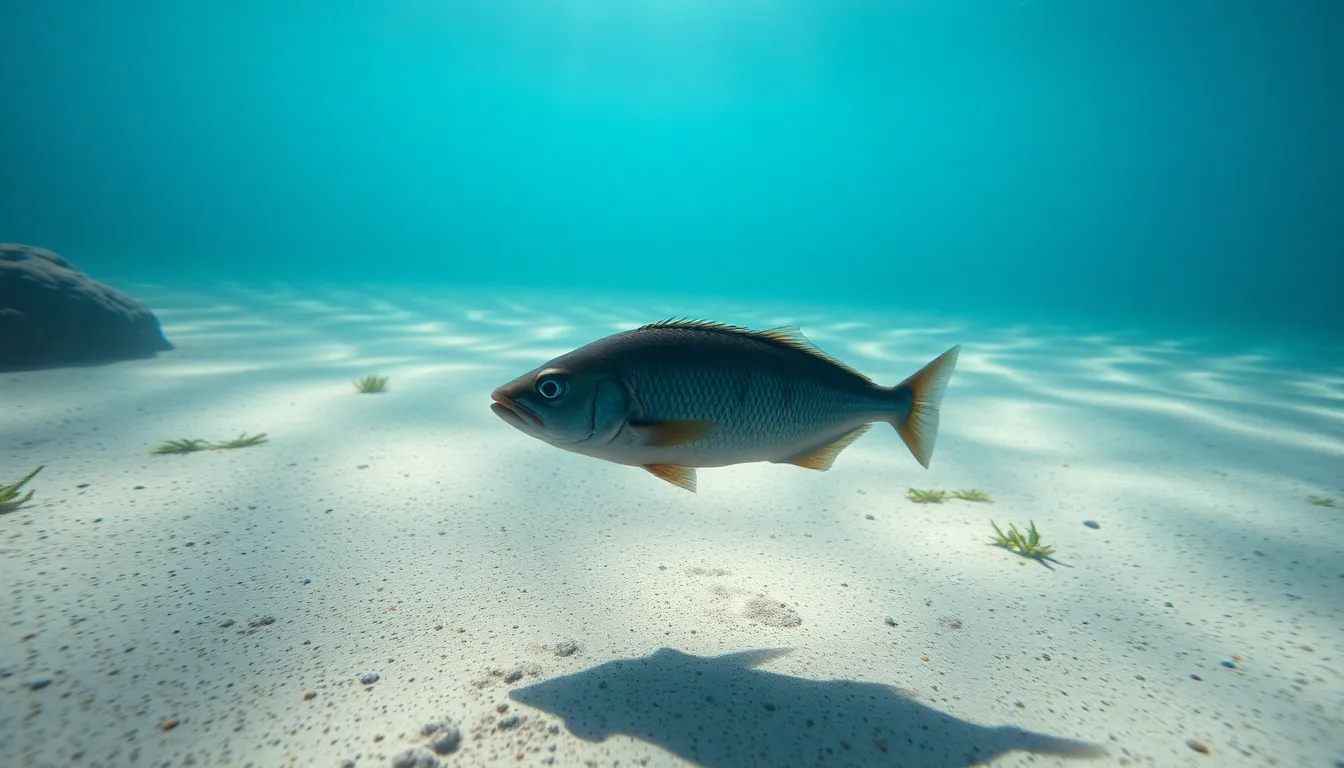
TheCorvina(scientific name:Sciaena umbra) is a species of fish that belongs to the Sciaenidae family. This group includes several fish known for their sound and their commercial and recreational importance. The Corvina is commonly referred to as “Black drum” in some places due to its dark coloration. In other regions, it may simply be known as “Drum.”
Physical description and identification marks
The Corvina has an elongated and laterally compressed body, with a large head and a pointed snout. Its color varies from dark gray to black on the top, with a lighter belly. The fins are generally a lighter color, and the caudal fin is notably deep, providing it with great agility in the water.
Identification characteristics
- Body: Elongated and compressed.
- Coloration: Dark gray to black on the top and silvery white on the belly.
- Fins: Long and slender dorsal and anal fins.
- Barbels: It has two barbels on the chin, which are useful for detecting prey on the seabed.
Size ranges and record specimens
The Corvina can reach lengths of up to 80 cm, although the average catch size ranges between 40 and 60 cm. Record specimens have been documented in some regions, with individuals exceeding 10 kg in weight. These measurements vary considerably depending on the habitat and diet of the individuals.
Habitat distribution and depth ranges
The Corvina is found in coastal waters of the Atlantic, primarily in the Mediterranean and the Black Sea. It prefers sandy and muddy bottoms, where it can camouflage itself from predators. Its depth range varies, generally between 20 and 100 meters, although it can be found in deeper waters during certain periods.
Habitat and depth table
| Region | Depth Range (m) |
|---|---|
| Atlantic | 20-100 |
| Mediterranean | 20-80 |
| Black Sea | 30-90 |
Seasonal behavior and migration patterns
The Corvina exhibits different behaviors depending on the season of the year. During spring and summer, they tend to move closer to the coast to spawn, making them a popular target for spearfishers. In autumn, they may migrate to deeper waters in search of food, which can make them harder to catch.
Seasonal behavior patterns
- Spring: Approaching the coast for spawning.
- Summer: High activity and easy access for fishing.
- Autumn: Migration to deeper waters.
- Winter: Lower activity, they take refuge in deeper bottoms.
Difficulty level for spearfishing and techniques
Fishing for the Corvina can vary in difficulty. Generally, they are considered moderately challenging fish, meaning they require proper techniques and a good understanding of their behavior. Correct identification and choosing the right moment are crucial for success.
Recommended techniques
- Wait and stalk: Waiting in a strategic location can be effective.
- Group fishing: Collaborating with other fishermen can increase the chances of capture.
- Use of lures: Using lures that mimic their prey can be beneficial.
Better hunting methods and equipment recommendations
For spearfishing for the Corvina, it is recommended to use a medium to large-sized speargun, with good visibility underwater. Additionally, wearing a suitable wetsuit is essential for comfort and protection during the dive.
Equipment recommendations
- Speargun: 75-110 cm in length.
- Mask and fins: Equipment that offers good visibility and mobility.
- Wetsuit: With an appropriate thickness for the water temperatures where fishing occurs.
Culinary applications and preparation methods
The Corvina is highly valued in gastronomy for its white, firm, and flavorful meat. It can be prepared in various ways, such as grilled, baked, or in ceviches. Its versatility in the kitchen makes it a popular choice among chefs and cooking enthusiasts.
Recommended preparation methods
- Grilled: Marinate and grill to enhance the flavors.
- In ceviche: Use lime juice and fresh herbs.
- Baked: Cook with vegetables and spices for a healthy dish.
Regulatory status and size limits by region
It is essential to know the local regulations regarding Corvina fishing, as these can vary significantly between regions. Many places set size limits and catch quotas to ensure the sustainability of the species.
Size limits by region
- Spain: Minimum size of 40 cm.
- Italy: Minimum size of 45 cm.
- France: Minimum size of 50 cm.
Conservation status and sustainability notes
The Corvina faces pressures due to overfishing and habitat degradation. However, its population is considered relatively stable in many areas. It is crucial for fishermen to respect regulations and practice sustainable fishing methods to ensure the continuity of this species.
Alerts on conservation status
- Overfishing: Constant monitoring of populations is necessary.
- Degraded habitats: Protect breeding and feeding areas.
- Sustainable practices: Promote responsible fishing and respect for regulations.