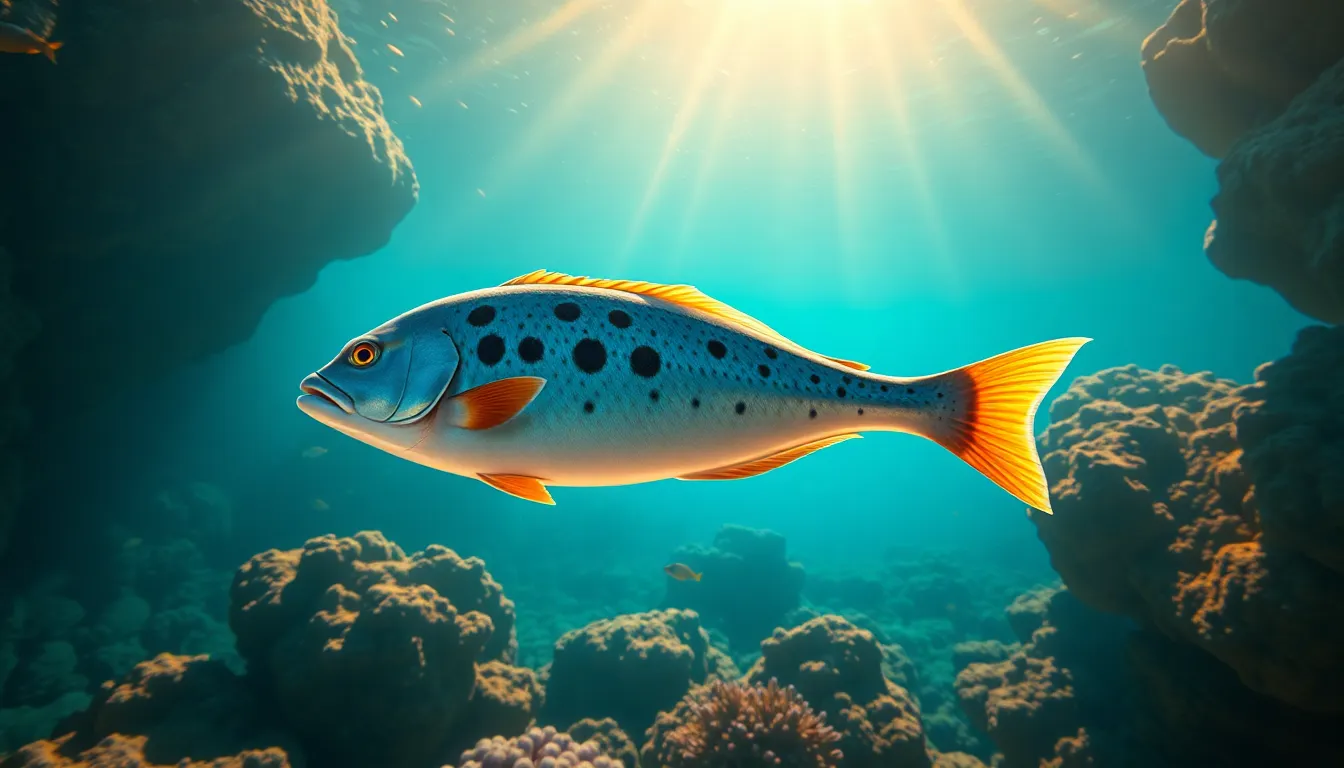
TheCortés grouper(Mycteroperca jordani) is a species of fish that belongs to the Serranidae family. This family includes groupers and sea bass, known for being predators in their marine habitat. Often, the Cortés grouper is known in various regions by other names, such as black grouper or Pacific coast grouper, depending on the geographical area and local culture.
Physical description and identification markers
The Cortés grouper has a robust and elongated body, with a large head and prominent jaws. Its coloration varies between shades of brown and olive green, with darker spots or markings that aid in its camouflage on the seafloor. Juveniles often have more defined patterns that fade as they grow. The dorsal fin is long and extends almost the entire length of the body, giving it a distinctive appearance.
- Length: 60-100 cm in adulthood.
- Weight: Can reach up to 20 kg.
Size ranges and record specimens
Cortés groupers can vary in size, but the largest specimens record lengths of up to 1.2 meters. The catch record for this species is around 35 kg, demonstrating its potential as a sport fishing target. However, catch sizes can vary significantly depending on the region and local conservation practices.
Habitat distribution and depth ranges
TheCortés grouperis predominantly found in the waters of the Pacific Ocean, especially in the area of the Baja California peninsula and the Gulf of California. It prefers coral reef and rocky habitats, where it can take refuge from predators and hunt prey. Its depth range varies, but it is generally found between 10 and 60 meters, although it can descend deeper in search of food.
Seasonal behavior and migration patterns
Cortés groupers exhibit seasonal migratory behaviors, especially during the breeding season, which occurs mainly in spring and early summer. During these periods, they gather in specific areas to spawn, making them easier to locate for fishermen. In other seasons, they tend to disperse in search of food, which can make them harder to catch.
- Spring: Breeding season, groupings.
- Summer: Dispersal in search of food.
- Autumn and Winter: Predominantly in deeper waters.
Difficulty level in spearfishing and techniques
TheCortés grouperis considered an interesting challenge for spearfishers. Its cautious behavior and refuge habitat make it difficult to catch. It is recommended to use stealth hunting techniques and high-quality equipment. For beginners, fishing for this species can be complicated, while experienced fishermen may enjoy the thrill of catching it.
- Recommended techniques: Free diving, spearfishing.
- Difficulty rating: 4 out of 5.
Best hunting methods and equipment recommendations
To catch the Cortés grouper, it is recommended to use a high-powered speargun, along with wetsuits that provide camouflage and protection. It is important to have diving gear that includes good visibility goggles and a weight belt to facilitate immersion.
- Recommended speargun: Speargun of 90 to 120 cm.
- Accessories: Goggles, snorkel, and fishing knife.
Culinary applications and preparation methods
The Cortés grouper is highly valued in local cuisine, known for its firm white meat that is ideal for various preparations. It can be cooked in many ways, including grilled, baked, or in ceviche. Its mild flavor makes it an excellent ingredient for sophisticated dishes.
- Popular preparations: Grouper ceviche, grilled fillets.
- Preparation tips: Marinate to enhance its flavor.
Regulatory status and size limits by region
It is vital to be informed about local regulations affecting the fishing of theCortés grouper. In many areas, there are size limits and catch quotas that must be respected to ensure the sustainability of the resource. Regulations vary considerably between different jurisdictions, so fishermen should consult local regulations before going fishing.
Conservation status and sustainability notes
The Gulf grouper faces pressures due to overfishing and habitat destruction. Conservation organizations are working to protect this species and its natural environment. It is crucial for fishermen to be aware of sustainability and practice responsible fishing, avoiding the capture of juvenile specimens and respecting spawning seasons.
To aid in conservation, it is recommended to participate in population monitoring programs and support habitat restoration initiatives.
Conservation status alerts: Make sure to stay informed about conservation campaigns and updates on the status of the Gulf grouper.