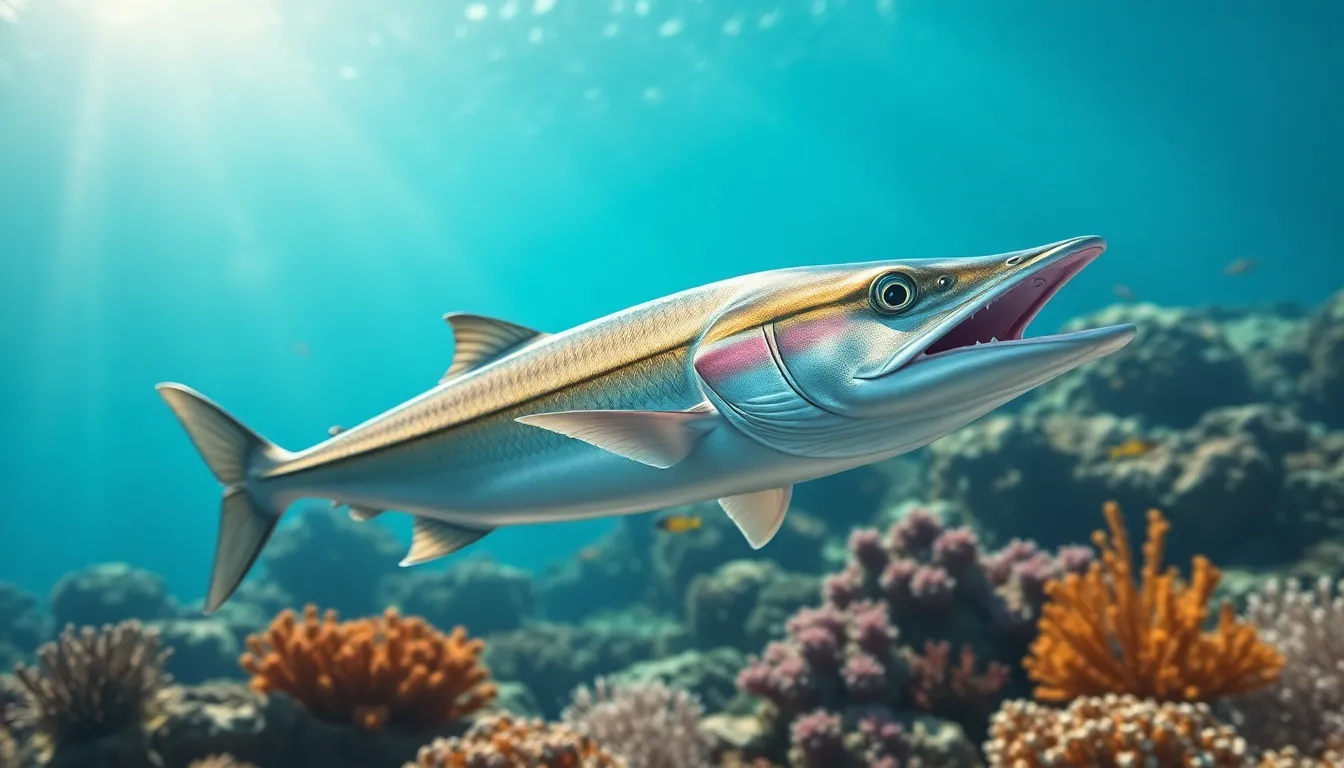
The Barracuda (scientific name: Sphyraena barracuda) belongs to the family Sphyraenidae. This species is commonly known as the great barracuda, and it is noted for its elongated body and intimidating presence in the marine ecosystem. The classification hierarchy is as follows:
- Kingdom: Animalia
- Phylum: Chordata
- Class: Actinopterygii
- Order: Perciformes
- Family: Sphyraenidae
- Genus: Sphyraena
- Species: Sphyraena barracuda
Physical Description and Identification Markers
The barracuda is characterized by its streamlined body shape, which is built for speed. Key identification markers include:
- Body Shape: Long and slender, tapering towards the tail.
- Coloration: Typically silver with a bluish tint on the back and light underbelly; some may exhibit dark vertical stripes.
- Teeth: Prominent, sharp teeth that are visible even when the mouth is closed.
- Fins: The dorsal fin is located far back on the body, consisting of two parts, with the first being spiny.
These physical features allow for quick identification in the field, especially when observing their hunting behavior in the water.
Size Ranges and Record Specimens
Barracudas can grow to impressive sizes. On average, they reach lengths of 3 to 5 feet (0.9 to 1.5 meters), but they can grow significantly larger under optimal conditions.
- Average Size: 3 to 5 feet (0.9 to 1.5 meters)
- Record Size: Specimens have been recorded at lengths of up to 6.5 feet (2 meters) and weights exceeding 100 pounds (45 kg).
The largest barracuda ever recorded was caught in the Bahamas, weighing in at a staggering 102 pounds (46 kg). Such large specimens are rare, and most caught by anglers and spearfishers tend to be significantly smaller.
Habitat Distribution and Depth Ranges
Barracudas inhabit a variety of marine environments. Their preferred habitats include:
- Coral Reefs: Often found near structures that provide cover for ambushing prey.
- Seagrass Beds: Utilize these areas for hunting smaller fish and crustaceans.
- Open Water: Frequently seen in pelagic zones, particularly when hunting schooling fish.
In terms of depth, barracudas are typically found at depths ranging from:
| Depth Range (meters) | Habitat Type |
|---|---|
| 1 – 30 | Shallow coastal waters |
| 30 – 100 | Coral reefs and drop-offs |
They are adaptable fish, capable of thriving in various environments as long as adequate prey is available.
Seasonal Behavior and Migration Patterns
Barracuda exhibit distinct seasonal behaviors, which can influence their availability for spearfishing:
- Spawning Season: Generally occurs in warmer months, often in shallow waters.
- Migration: Some populations may migrate in search of food or suitable spawning grounds, typically following temperature changes in the water.
During the cooler months, barracuda may move to deeper waters, making them more challenging to target. Understanding these patterns can greatly enhance fishing success.
Spearfishing Difficulty Level and Techniques
Spearfishing for barracuda can be both thrilling and demanding. The difficulty level is often rated as moderate to high due to their speed and agility. Some effective techniques include:
- Stalking: Approach quietly to avoid spooking them, as they are highly alert.
- Ambush: Positioning yourself near likely hunting grounds where barracudas prey on smaller fish.
- Use of Float Lines: A float line can help to keep the fish at bay once speared, minimizing the risk of losing your catch.
Utilizing the right techniques can significantly increase your chances of a successful hunt.
Best Hunting Methods and Gear Recommendations
To effectively hunt barracuda, consider the following gear:
- Spear Types: A longer spear with a strong tip is advantageous for penetrating the tough skin of the barracuda.
- Wetsuit: A thicker wetsuit will help protect against the barracuda’s sharp teeth.
- Fins: Stiff fins allow for quick movements, essential for chasing after these fast swimmers.
In addition to the right gear, selecting the best hunting method is crucial. Some recommended approaches include:
- Freediving: Offers a stealthy approach, allowing spearfishers to get closer to the fish.
- Scuba Diving: Provides the ability to reach deeper waters where larger barracudas may reside.
Culinary Applications and Preparation Methods
Barracuda is known for its firm white flesh, making it a popular choice for various dishes. It can be prepared in several ways:
- Grilling: Marinated and grilled, it brings out the natural flavors.
- Smoking: Adds a unique taste that enhances its rich texture.
- Steaming: A healthy cooking method that retains moisture and flavor.
Before consumption, it is crucial to ensure that barracuda is properly prepared, as they can carry ciguatera toxin, which can be harmful if ingested. Always consult local guidelines regarding safe sizes and regions for consumption.
Regulatory Status and Size Limits by Region
The regulatory status of barracuda varies by region, with specific size limits implemented to ensure sustainable fishing practices. Some general guidelines include:
- United States: Size limit of 24 inches (61 cm) in many states.
- Bahamas: Minimum size limit of 30 inches (76 cm).
- Australia: Varies by state but generally aligns with sustainable practices.
It is essential for spearfishers to check local regulations, as these can change frequently and may differ based on the conservation status of local fish populations.
Conservation Status and Sustainability Notes
From a conservation perspective, barracuda populations are generally considered stable, but localized overfishing can pose a risk. Some key sustainability notes include:
- Monitoring Population Levels: Regular assessments can help track the health of barracuda stocks.
- Responsible Fishing Practices: Adhering to size limits and seasonal regulations is crucial to maintain population levels.
- Habitat Protection: Supporting reef conservation efforts can benefit barracuda populations, as they rely on these ecosystems for food and breeding.
By following these guidelines, spearfishers can contribute to the sustainability of barracuda populations and the health of marine ecosystems.