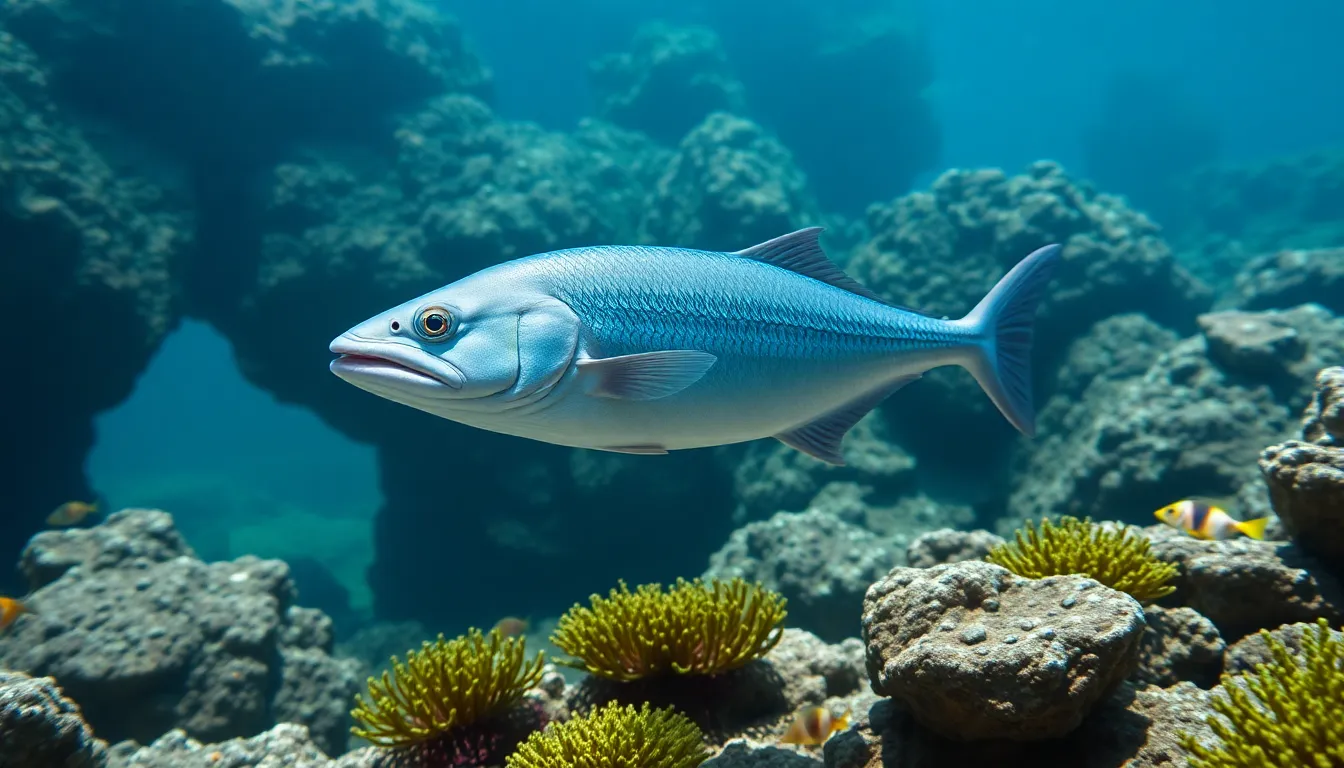
The common dentex, scientifically known as Dentex dentex, belongs to the family Sparidae, which encompasses various species of sea bream. This species is commonly referred to as the Mediterranean dentex or simply dentex. It is a significant target for both recreational and commercial fishing due to its culinary value and sporting qualities.
Physical Description and Identification Markers
The common dentex features a streamlined body that is typically elongated and somewhat compressed laterally. Its coloration ranges from bluish to a silvery sheen, with a hint of pink or golden hues on its sides. One of the most distinguishing characteristics of the common dentex is its large, prominent canine teeth, particularly noticeable in larger specimens. The dorsal fin is long and spiny, while the anal fin is shorter and rounded. These physical traits make the dentex easily recognizable among other fish species in the Mediterranean.
Size Ranges and Record Specimens
Common dentex can grow to impressive sizes, with adults typically measuring between 50 to 70 centimeters in length. However, record specimens have been reported to exceed 100 centimeters. Weighing up to 10 kilograms, these fish are prized not only for their size but also for the challenge they present to spearfishers. The largest recorded common dentex was caught in the Mediterranean Sea, weighing an astonishing 14 kilograms.
Habitat Distribution and Depth Ranges
The habitat of the common dentex spans a range of environments, primarily found in the Mediterranean Sea and the eastern Atlantic. They prefer rocky substrates, reefs, and sandy bottoms where they can hunt for prey. Common dentex are typically found at depths ranging from 30 to 200 meters, although they may venture shallower during feeding times, particularly at dusk and dawn.
| Habitat Type | Depth Range (meters) |
|---|---|
| Rocky Reefs | 30-150 |
| Sandy Bottoms | 50-200 |
| Open Water | 30-100 |
Seasonal Behavior and Migration Patterns
The common dentex exhibits distinct seasonal behaviors, influenced by water temperature and spawning cycles. During the warmer months of late spring and summer, these fish are more active and often migrate towards shallower waters for spawning. In contrast, as temperatures drop in autumn and winter, they tend to retreat to deeper waters, where they congregate in larger schools. Understanding these migration patterns is crucial for successful hunting, as spearfishers can time their expeditions to coincide with the dentex’s seasonal movements.
- Spring (March – May): Active in shallower waters for spawning.
- Summer (June – August): High activity; often found near reefs.
- Autumn (September – November): Migration to deeper waters begins.
- Winter (December – February): Generally inactive, found in schools at depth.
Spearfishing Difficulty Level and Techniques
Hunting common dentex can be quite challenging due to their cautious nature and the environments they inhabit. The difficulty level of spearfishing for this species is often rated as moderate to high, depending on the experience of the hunter and the conditions of the water. Effective techniques include:
- Stalking: Approach slowly and quietly to avoid scaring the fish.
- Use of Float Lines: To keep the speargun secure and to assist in retrieval.
- Drift Diving: Allows hunters to cover larger areas where dentex may be lurking.
Employing a combination of stealth and patience is key to a successful hunt, as these fish are known to be wary and can quickly retreat into rocky crevices.
Best Hunting Methods and Gear Recommendations
To maximize success in hunting common dentex, specific gear and methods are recommended:
- Speargun: A mid to long-range speargun (90-120 cm) is ideal for targeting dentex.
- Wetsuit: A 3-5 mm wetsuit is recommended for comfort and insulation in varying temperatures.
- Fins: Long fins improve propulsion and maneuverability underwater.
- Weight Belt: Ensures proper buoyancy control while diving.
Additionally, using a dive computer can help monitor depth and time, enhancing safety during spearfishing excursions.
Culinary Applications and Preparation Methods
The common dentex is highly regarded for its firm, white flesh and mild flavor, making it a favorite among chefs and home cooks alike. Culinary applications for dentex include:
- Grilling: Whole fish can be grilled with herbs and lemon for a flavorful dish.
- Baking: Baking dentex with vegetables and spices retains moisture and enhances taste.
- Sashimi: The fish’s delicate texture makes it suitable for raw preparations.
When preparing dentex, freshness is key. It is advisable to clean and cook the fish as soon as possible after catching to preserve its quality and flavor.
Regulatory Status and Size Limits by Region
Regulations regarding the hunting of common dentex vary across different Mediterranean countries. It is essential for spearfishers to stay informed about local laws to ensure sustainable practices. Generally, there are size limits imposed to protect juvenile populations:
- Spain: Minimum size limit of 40 cm.
- Italy: Minimum size limit of 45 cm.
- Greece: No specific size limit, but recommended conservation practices apply.
Compliance with these regulations is crucial to maintaining healthy populations and ensuring the future of spearfishing in the Mediterranean.
Conservation Status and Sustainability Notes
The common dentex is currently classified as a species of least concern by the IUCN, but local populations can be vulnerable due to overfishing and habitat degradation. Sustainable spearfishing practices, such as catch and release, adhering to size limits, and avoiding breeding areas during spawning seasons, are essential for the conservation of this species. Spearfishers are encouraged to engage in responsible fishing practices and support conservation efforts to maintain the biodiversity of the Mediterranean marine ecosystem.
By understanding the ecological and regulatory aspects of common dentex hunting, spearfishers can contribute to sustainable practices that ensure the longevity of this prized species and the health of the marine environments they inhabit.