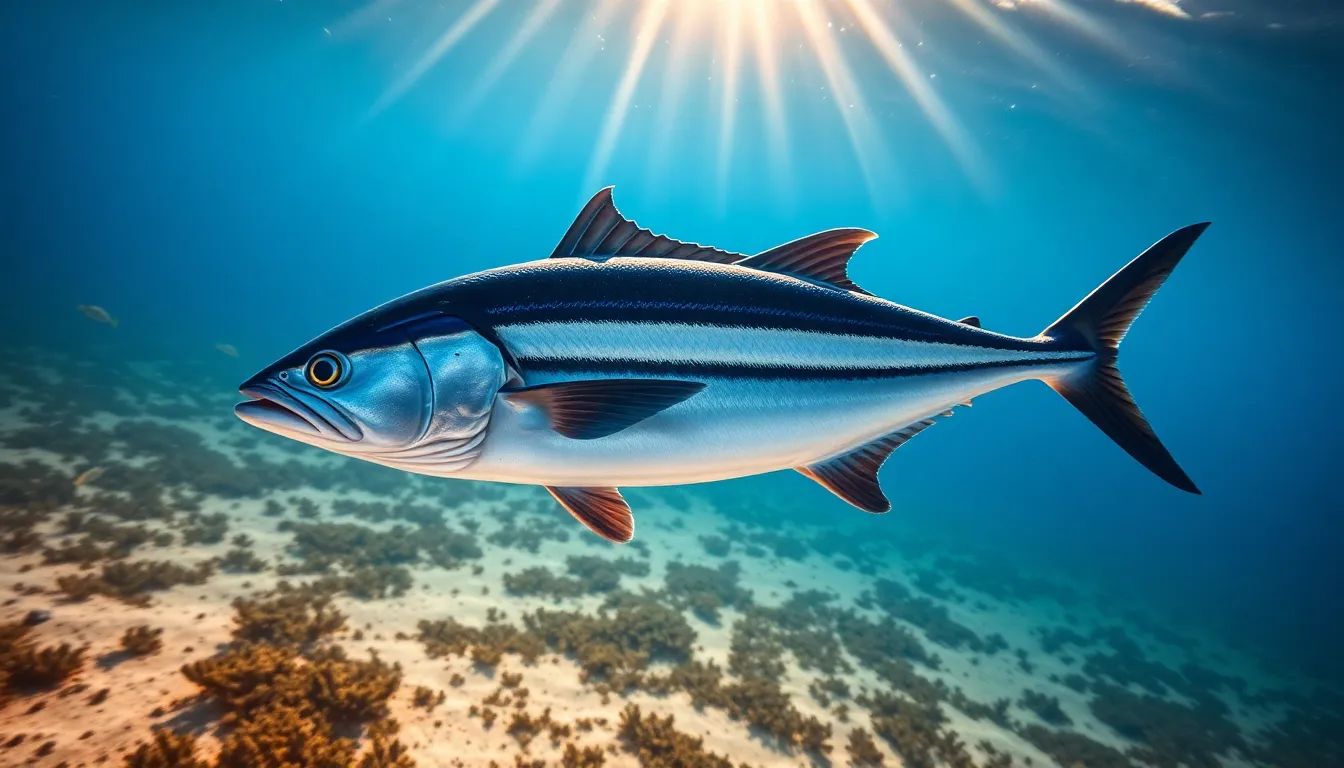
The wahoo, scientifically known as Acanthocybium solandri, belongs to the family Scombridae, which includes other well-known species such as tuna and mackerel. This species is commonly referred to by several names, including:
- Wahoo
- Peto
- Ono (in Hawaiian)
Wahoos are highly valued in both commercial and recreational fishing due to their speed, size, and delectable taste.
Physical Description and Identification Markers
Wahoos possess a streamlined body that is characteristic of the Scombridae family. Key physical traits include:
- Coloration: They have a dark blue or greenish-blue dorsal side that transitions to a silver-white underbelly.
- Stripes: Prominent vertical stripes run along their sides, which are particularly noticeable on younger specimens.
- Fins: They feature a long, pointed dorsal fin and sharp pectoral fins that aid in their swift movement through water.
Adult wahoos can be distinguished from other similar species by their elongated bodies and the unique patterning of their stripes.
Size Ranges and Record Specimens
Wahoos are known for their impressive size, often reaching lengths of up to 8 feet (2.4 meters) and weights exceeding 180 pounds (82 kilograms). The average size encountered by anglers typically ranges from:
- Young Wahoos: 10 to 30 pounds (4.5 to 13.6 kg)
- Adult Wahoos: 30 to 100 pounds (13.6 to 45.4 kg)
The current world record for wahoo stands at 184 pounds (83.5 kg), caught off the coast of Cabo San Lucas, Mexico. Such specimens are rare and often result from targeted fishing efforts.
Habitat Distribution and Depth Ranges
Wahoos are predominantly found in warm oceanic waters, thriving in tropical and subtropical regions. Their habitat distribution can be characterized as follows:
- Geographic Range: They inhabit the Atlantic, Pacific, and Indian Oceans, with a significant presence in the Caribbean Sea.
- Depth Preferences: Wahoos are typically found at depths of 30 to 300 feet (9 to 91 meters) but can dive deeper in pursuit of prey.
Wahoos prefer open water environments and are often located near underwater structures such as reefs and floating debris.
Seasonal Behavior and Migration Patterns
Understanding the seasonal behavior of wahoos is crucial for successful hunting. They exhibit migratory patterns influenced by water temperature and prey availability:
- Spring and Summer: Wahoos move closer to shore as they follow baitfish, offering excellent hunting opportunities for spearfishers.
- Fall and Winter: They may migrate to deeper waters as water temperatures drop, making them harder to locate.
Wahoos are known for their aggressive feeding behavior, especially during dawn and dusk, which aligns with the activity patterns of their prey.
Spearfishing Difficulty Level and Techniques
Wahoos present a considerable challenge for spearfishers due to their speed and agility. The difficulty level is often rated as high, requiring skill and experience. Effective techniques include:
- Chumming: This method attracts wahoos to a specific area, increasing your chances of a successful hunt.
- Spotting: Look for signs of feeding activity on the surface, such as bird activity or baitfish schools.
- Stalking: Employ stealth and patience while diving, as wahoos can be skittish and quick to flee.
Utilizing advanced freediving techniques can enhance your chances of encountering these elusive fish.
Best Hunting Methods and Gear Recommendations
When hunting wahoos, the right gear is essential for success. Recommended gear includes:
- Speargun: A powerful, accurate speargun is crucial, with a recommended size of 90 to 120 cm for optimal range.
- Wetsuit: A high-quality wetsuit will provide warmth and protection from the elements while allowing for ease of movement.
- Fins: Long, efficient fins will help you maneuver swiftly in the water, keeping pace with the fast-moving wahoo.
Additionally, consider equipping yourself with a dive computer to monitor your dive times and depths, ensuring safety during your hunts.
Culinary Applications and Preparation Methods
Wahoos are renowned for their firm, white flesh, which is both flavorful and versatile in culinary applications. Popular preparation methods include:
- Grilling: Marinate wahoo steaks and grill them for a smoky flavor.
- Sashimi: Due to their freshness, wahoos are ideal for sashimi or sushi dishes.
- Smoking: Smoking wahoo provides a unique flavor that complements its natural taste.
Regardless of the method, fresh wahoo can be a culinary delight, making it a favorite among seafood enthusiasts.
Regulatory Status and Size Limits by Region
As with many fish species, wahoo fishing is regulated to ensure sustainable populations. Regulations can vary significantly by region:
- United States: The federal size limit is 39 inches (99 cm) fork length.
- Bahamas: Minimum size limit is set at 30 inches (76 cm).
- Australia: Regulations vary by state, often with size limits around 70 cm (27.5 inches).
Always check local regulations before embarking on a fishing trip to ensure compliance and contribute to conservation efforts.
Conservation Status and Sustainability Notes
Wahoo populations are currently considered stable, but overfishing poses risks. Sustainable fishing practices are critical to maintaining healthy stocks. Key points include:
- Catch Limits: Adhering to established catch limits helps prevent overfishing.
- Responsible Practices: Employing catch-and-release techniques when possible can aid in conservation efforts.
- Monitoring Programs: Participating in local monitoring programs can provide valuable data for sustainable management.
As a responsible angler, understanding your impact and promoting sustainability will contribute to the longevity of wahoo populations for future generations of spearfishers.