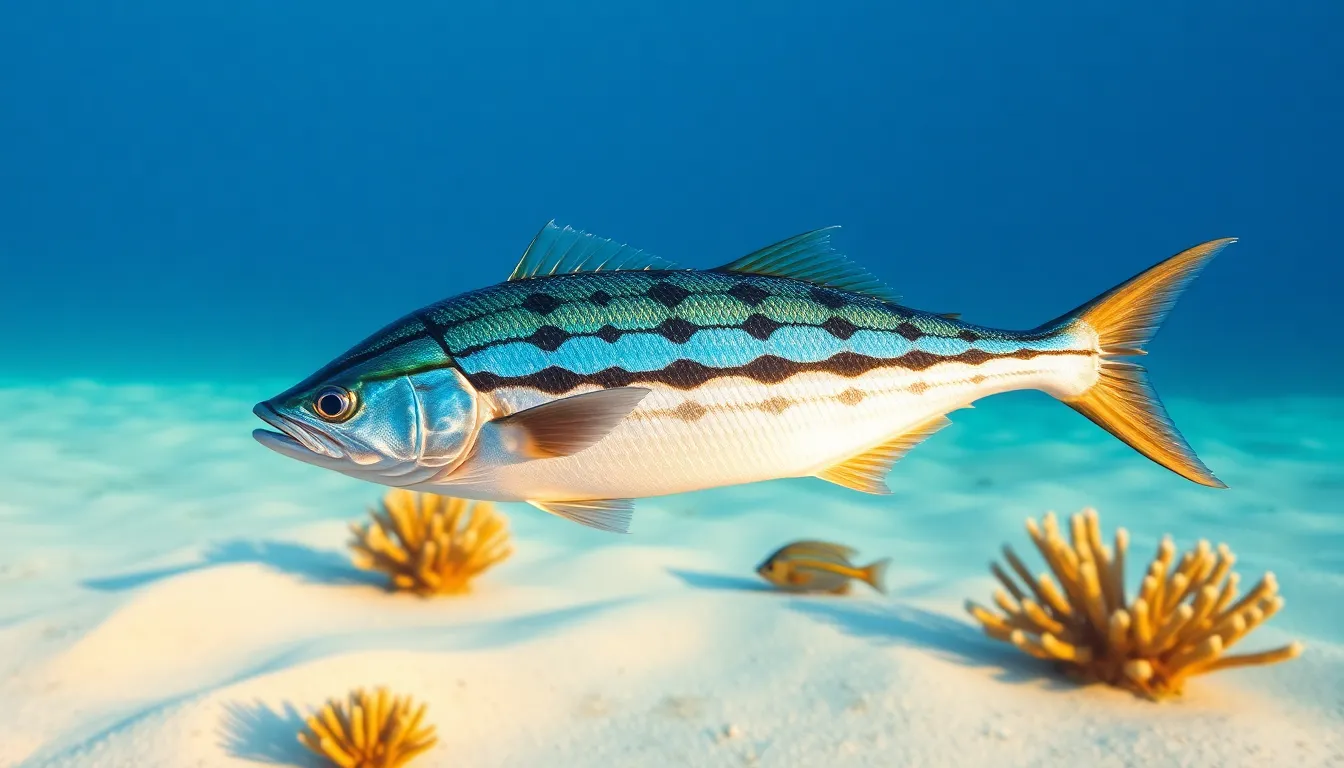
The Carite estriado, scientifically known as Scomberomorus commerson, belongs to the family Scombridae, which encompasses various species of mackerels and tunas. Commonly referred to as the striped mackerel or Spanish mackerel, this species is widely recognized among spearfishing enthusiasts due to its impressive speed and agility in the water.
Physical Description and Identification Markers
The Carite estriado displays a streamlined body that is characteristic of pelagic fish. Its coloration is a striking blend of blueish-green on the dorsal side, fading to silver on the belly, with distinct dark vertical stripes running along its sides. These stripes are critical for identification and can vary in intensity.
- Body Shape: Slim and elongated, allowing for swift movements.
- Fins: The dorsal fin is typically tall and pointed, while the pectoral fins are relatively long.
- Eyes: Large eyes facilitate excellent vision underwater.
In terms of size, adult Carite estriado usually range from 60 to 90 cm in length, although larger specimens have been recorded exceeding 1 meter. The average weight of this species can reach around 10 kg, making it a formidable catch for spearfishers.
Size Ranges and Record Specimens
As mentioned, the typical size of Scomberomorus commerson varies, with individuals commonly measuring between 60 cm and 90 cm. However, the largest recorded specimen of Carite estriado weighed an impressive 15 kg and measured over 120 cm. Such record specimens are rare and usually found in less disturbed waters.
For reference, the following table summarizes size ranges and record specimens:
| Size Range (cm) | Average Weight (kg) | Record Size (cm) | Record Weight (kg) |
|---|---|---|---|
| 60 – 90 | 10 | 120 | 15 |
Habitat Distribution and Depth Ranges
The Carite estriado is predominantly found in warm, coastal waters of the Atlantic and Indian Oceans. This species prefers habitats that offer ample schooling baitfish, often inhabiting areas near reefs and estuaries. They are typically found at depths ranging from 5 to 50 meters.
- Geographical Distribution: Commonly found in the Caribbean Sea, Gulf of Mexico, and along the coasts of Africa and Southeast Asia.
- Preferred Depth: Most commonly observed in shallow waters, but can also be found in deeper offshore environments.
Habitat depth can be summarized as follows:
| Region | Depth Range (m) |
|---|---|
| Caribbean Sea | 5 – 30 |
| Gulf of Mexico | 10 – 50 |
| Indian Ocean | 5 – 40 |
Seasonal Behavior and Migration Patterns
The Carite estriado exhibits seasonal behavior patterns that are influenced by water temperatures and spawning cycles. Generally, these fish are more active during warmer months, engaging in feeding frenzies when baitfish are abundant.
Migration patterns can vary by region, but typically, they move to deeper waters during the cooler months and return to shallower areas for spawning in spring and summer. This behavior can significantly influence the timing and location of spearfishing efforts.
- Spring/Summer: Active feeding, often seen in large schools.
- Fall/Winter: Migration to deeper waters, less active.
Seasonal behavior patterns can be illustrated as follows:
| Season | Behavior |
|---|---|
| Spring | Spawning and feeding in shallow waters |
| Summer | High activity, often in schools |
| Fall | Migration to deeper waters |
| Winter | Lower activity, deeper habitats |
Spearfishing Difficulty Level and Techniques
When it comes to spearfishing the Carite estriado, enthusiasts often rate the difficulty level as moderate to challenging due to the species’ speed and agility. Effective techniques can significantly enhance the chances of a successful catch.
- Hunting Techniques:
- Stalking: Approach slowly to avoid spooking the fish.
- Ambushing: Utilize natural structures to hide.
- Essential Skills:
- Good breath-hold capability
- Accurate aim
Overall, understanding fish behavior and employing stealth will greatly improve the success rate when hunting Carite estriado.
Best Hunting Methods and Gear Recommendations
To effectively hunt the Carite estriado, spearfishers should consider using specialized gear that complements their hunting style. The right equipment can make all the difference in terms of safety and success.
- Recommended Gear:
- Speargun: A mid-range speargun (90-110 cm) is ideal for this species.
- Wetsuit: A 3mm wetsuit provides adequate protection without sacrificing mobility.
- Fins: Long fins help in covering distances quickly.
- Hunting Methods:
- Spotting schools and diving beneath them
- Using a float to mark location and attract fish
Additionally, it is crucial to ensure that all gear is well-maintained for optimal performance during hunts.
Culinary Applications and Preparation Methods
The Carite estriado is not only a thrilling catch but also a culinary delight. Its firm, white flesh is highly regarded in various culinary traditions, particularly in coastal regions.
- Popular Preparations:
- Grilled: A simple marinade of lemon, garlic, and herbs enhances its natural flavors.
- Seared: Quick cooking at high temperatures offers a delicious crust while keeping the inside tender.
- Raw: Sushi and sashimi preparations highlight the freshness of the fish.
Regardless of the method, fresh Carite estriado is a treat that can be enjoyed in countless ways.
Regulatory Status and Size Limits by Region
Understanding the regulatory status of the Carite estriado is essential for responsible fishing practices. Size limits and regulations can vary significantly by region, reflecting efforts to conserve fish populations.
It is recommended to check local regulations for specific size limits and seasonal restrictions. For example:
| Region | Size Limit (cm) | Seasonal Restrictions |
|---|---|---|
| Florida | 38 | Closed during spawning months |
| Carribean | 40 | No restrictions |
Conservation Status and Sustainability Notes
The conservation status of the Carite estriado is a critical consideration for spearfishers. Current evaluations indicate that while the species is not endangered, certain populations are under threat due to overfishing and habitat degradation.
Efforts are being made globally to promote sustainable fishing practices, including:
- Adhering to local fishing regulations to ensure population sustainability.
- Participating in conservation initiatives aimed at protecting marine habitats.
- Educating fellow spearfishers about the importance of responsible fishing.
Conservation status alerts should be heeded, and spearfishers are encouraged to stay informed about changes in regulations and population assessments.