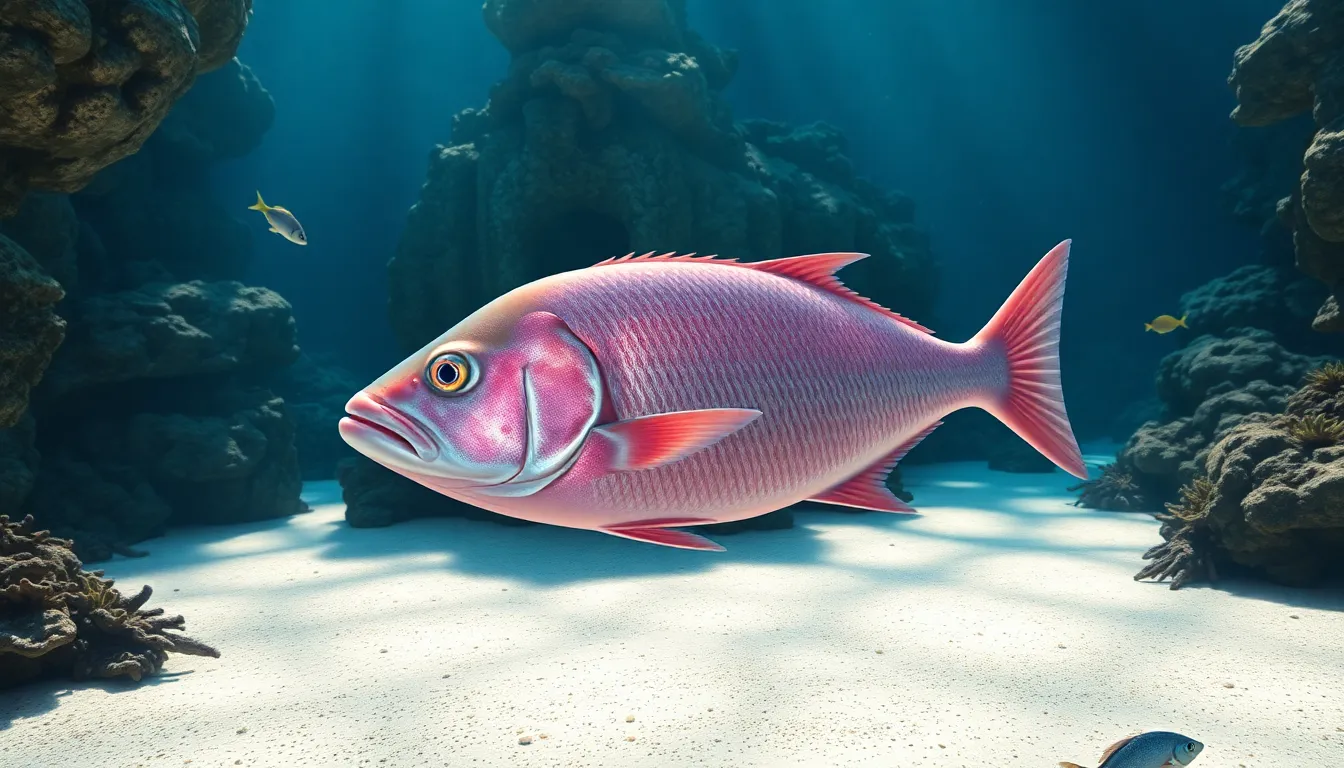
Thesnapper(scientific name:Pagrus pagrus) is a fish from the family Sparidae, highly valued in spearfishing and gastronomy. It is commonly known as snapper, dorado, or red snapper, depending on the region. Its taxonomic classification is as follows:
- Kingdom: Animalia
- Phylum: Chordata
- Class: Actinopterygii
- Order: Perciformes
- Family: Sparidae
- Genus: Pagrus
- Species: Pagrus pagrus
Physical description and identification markers
The snapper is a robust fish, characterized by its oval shape and prominent head. Its coloration varies from silver on the flanks to a deep pink on the top. Some distinctive features are:
- Scales: It has large, shiny scales.
- Barbels: It possesses barbels on the lower jaw, which are useful for detecting food on the seabed.
- Dorsal fin: It has a dorsal fin that extends along its body, with spines that provide protection.
To identify a snapper, one can observe its color and shape, as well as the arrangement of its fins, which are unique characteristics of the species.
Size ranges and record specimens
Snappers can reach considerable sizes, with specimens up to 1 meter in length and weighing up to 15 kilograms. However, the average size caught in spearfishing ranges between 30 and 60 centimeters.
A notable record was that of a snapper weighing 17 kilograms, caught off the coast of the Iberian Peninsula. This size and weight make the snapper an attractive fish for both recreational and commercial fishermen.
Habitat distribution and depth ranges
The snapper is found in coastal waters and is often associated with structures such as coral reefs and kelp beds. Its geographical distribution spans the Atlantic Ocean, the Mediterranean Sea, and parts of the Indian Ocean.
Habitat distribution and depth range table
| Region | Depth (m) |
|---|---|
| North Atlantic | 30-100 |
| Mediterranean Sea | 10-150 |
| Indian Ocean | 20-200 |
Seasonal behavior and migratory patterns
The snapper exhibits migratory behavior that varies by season. During spring and summer, they tend to move closer to the coasts to spawn, while in autumn and winter, they can be found in deeper waters.
Seasonal behavior patterns
- Spring: Spawning in coastal waters.
- Summer: Active feeding on the surface.
- Autumn: Migration to deeper waters.
- Winter: Inactivity and seeking shelter.
Difficulty level in spearfishing and techniques
Snapper fishing is considered medium to high difficulty due to its agility and ability to hide among the rocks. The most effective techniques include waiting and stalking, where the fisherman moves stealthily to avoid scaring the fish.
Hunting difficulty rating
- Beginner: 3/10
- Intermediate: 5/10
- Advanced: 7/10
Best hunting methods and equipment recommendations
To effectively hunt snappers, it is recommended to use a speargun of at least 90 cm in length. Additionally, long fins and a suitable wetsuit are essential for mobility in the water. Here are some effective methods:
- Waiting fishing: Wait in a strategic location where snapper activity is known.
- Group fishing: Work with other fishermen to corner the fish.
- Use of bait: Attracting snappers with natural bait can be very effective.
Culinary applications and preparation methods
Snapper is highly valued in cooking due to its firm white flesh. It can be prepared in various ways, including grilled, baked, or in ceviche. Some popular recipes include:
- Salted snapper: Cooked in a salt crust to maintain its juiciness.
- Snapper ceviche: Marinated in lemon juice with onion and cilantro.
- Baked snapper: With herbs and lemon, a healthy and delicious option.
Regulatory status and size limits by region
Snapper fishing is regulated in many areas to ensure the sustainability of the species. Size and quantity limits vary by region. For example:
- Spain: Minimum size of 35 cm.
- Portugal: Catch limit of 5 fish per day.
- Italy: Fishing bans during the breeding season.
Conservation status and sustainability notes
Snapper is classified as a species of conservation interest, as its population has declined in some areas due to overfishing and habitat degradation. It is vital to follow sustainable fishing practices, such as:
- Respecting catch limits: Follow local regulations to protect the population.
- Using responsible fishing techniques: Minimize damage to the marine habitat.
- Participation in conservation programs: Contribute to initiatives that protect the marine environment.
In summary, the snapper (Pagrus pagrus) is a fascinating and valuable species for both spearfishing and gastronomy. With proper knowledge of its biology, habitat, and hunting techniques, fishermen can enjoy a rewarding and responsible experience.