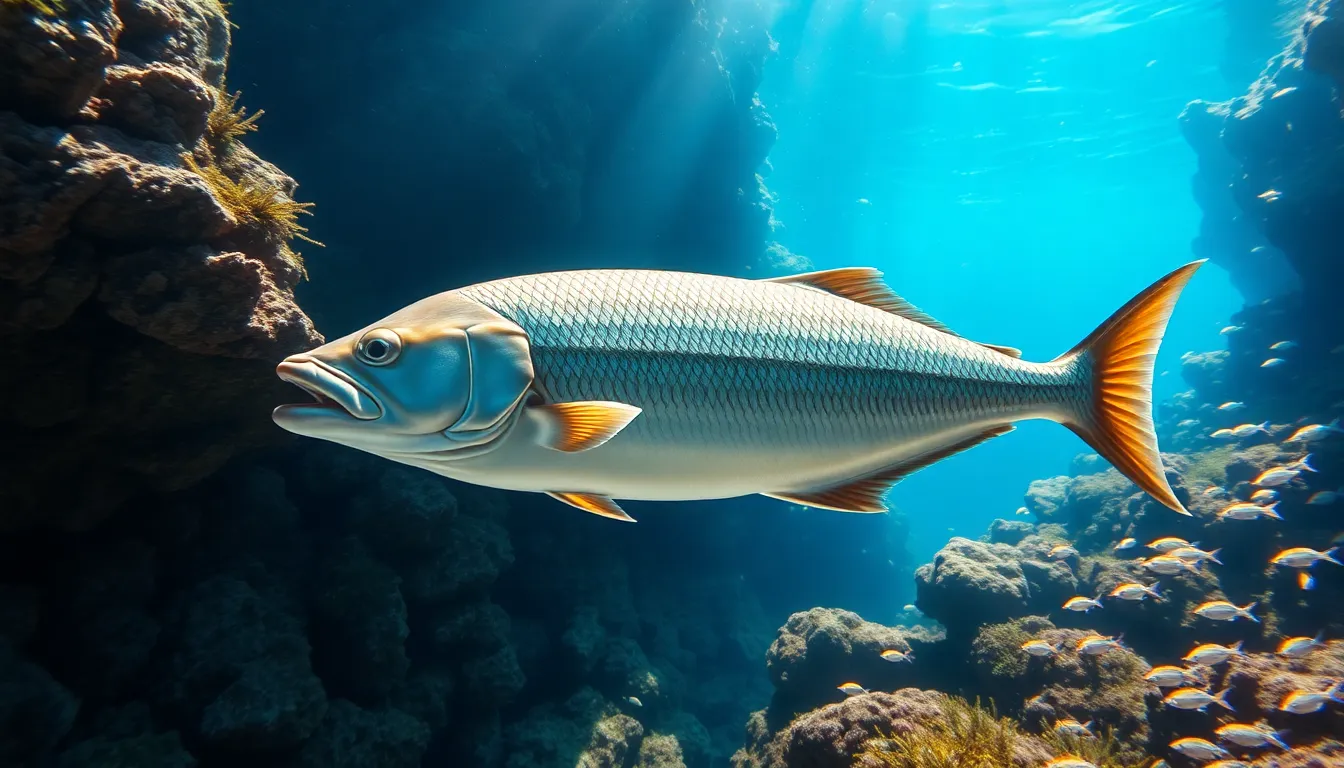
The dentex, scientifically known asDentex dentex, belongs to the family of dentex and is a highly valued fish in spearfishing. This fish is commonly known in various regions as “dentex,” “denton,” or “dentex.” Its taxonomic classification is as follows:
- Kingdom: Animalia
- Phylum: Chordata
- Class: Actinopterygii
- Order: Perciformes
- Family: Sparidae
- Genus: Dentex
- Species: Dentex dentex
Physical description and identification markers
The dentex is a robust, elongated fish with a large head and prominent eyes. Its color ranges from a shiny silver on the flanks to a darker shade on the dorsal part. Among the distinctive features of this fish are:
- Teeth: It has prominent canine teeth, which are useful for capturing prey.
- Fins: The dorsal fin is long and composed of spines and soft rays, while the anal fin is shorter and also has spines.
- Scales: Its skin is covered with cycloid scales that give it a shiny and scaly appearance.
Size ranges and record specimens
The size of the dentex can vary considerably, reaching lengths of up to 1 meter and weights exceeding 15 kilograms. However, the most commonly caught specimens in spearfishing range between 2 and 5 kilograms. Capture records have documented dentex weighing over 20 kilograms, with these catches being exceptional and highly valued among fishermen.
Habitat distribution and depth ranges
The dentex is commonly found in the waters of the Mediterranean and the Atlantic Ocean, especially in rocky areas and regions with algae. It prefers depths ranging from 20 to 80 meters, although it can be found in deeper waters. Its geographical distribution includes:
- Mediterranean Sea: Very common in this sea, especially in hard-bottom areas.
- Atlantic Ocean: From the coasts of Portugal to North Africa.
Seasonal behavior and migratory patterns
The dentex exhibits seasonal behavior that varies according to water temperature and food availability. During the summer, dentex tend to approach the coast to feed, while in winter they may migrate to deeper waters to avoid colder temperatures. The migratory patterns include:
- Reproduction: Occurs in spring when dentex move to warmer waters.
- Feeding: In summer, they feed on small fish, crustaceans, and mollusks.
Difficulty level for spearfishing and techniques
Fishing for dentex is considered medium to high difficulty due to its cautious behavior and rocky habitats. Recommended techniques include:
- Freediving: This technique allows for stealthy approaches to the dentex.
- Use of lures: Lures that mimic their natural prey are very effective.
The key to optimal success is knowledge of the environment and patience.
Best hunting methods and equipment recommendations
For successful hunting of the dentex, it is recommended to use:
- Tridents: Useful for quick and efficient catches.
- Harpoon: A good quality harpoon with an appropriate tip is recommended to ensure the catch.
- Wetsuit: To maintain body temperature and protect against rocks.
Culinary applications and preparation methods
The dentex is highly valued in gastronomy for its firm white flesh. It can be prepared in various ways, such as:
- Grilled: A popular option that highlights its natural flavor.
- Griddled: Quick and easy, ideal for preserving its juiciness.
- Soups and stews: Combinations that enhance its texture and flavor.
Regulatory status and size limits by region
It is vital to know the local regulations before fishing for dentex. Size limits may vary, but it is generally recommended not to catch specimens smaller than 30 cm to ensure the sustainability of the species.
It is important to consult the fishing regulations of each region to avoid penalties and contribute to the conservation of the species.
Conservation status and sustainability notes
The conservation status of dentex is considered “least concern,” although overfishing and habitat loss are constant threats. It is recommended:
- Sustainable fishing practices: Respect regulations and not exceed catch limits.
- Education: Stay informed about the ecology of dentex and the best practices for its conservation.
Protecting its habitat and promoting sustainable practices are essential to ensure that future generations of fishermen can enjoy this species.