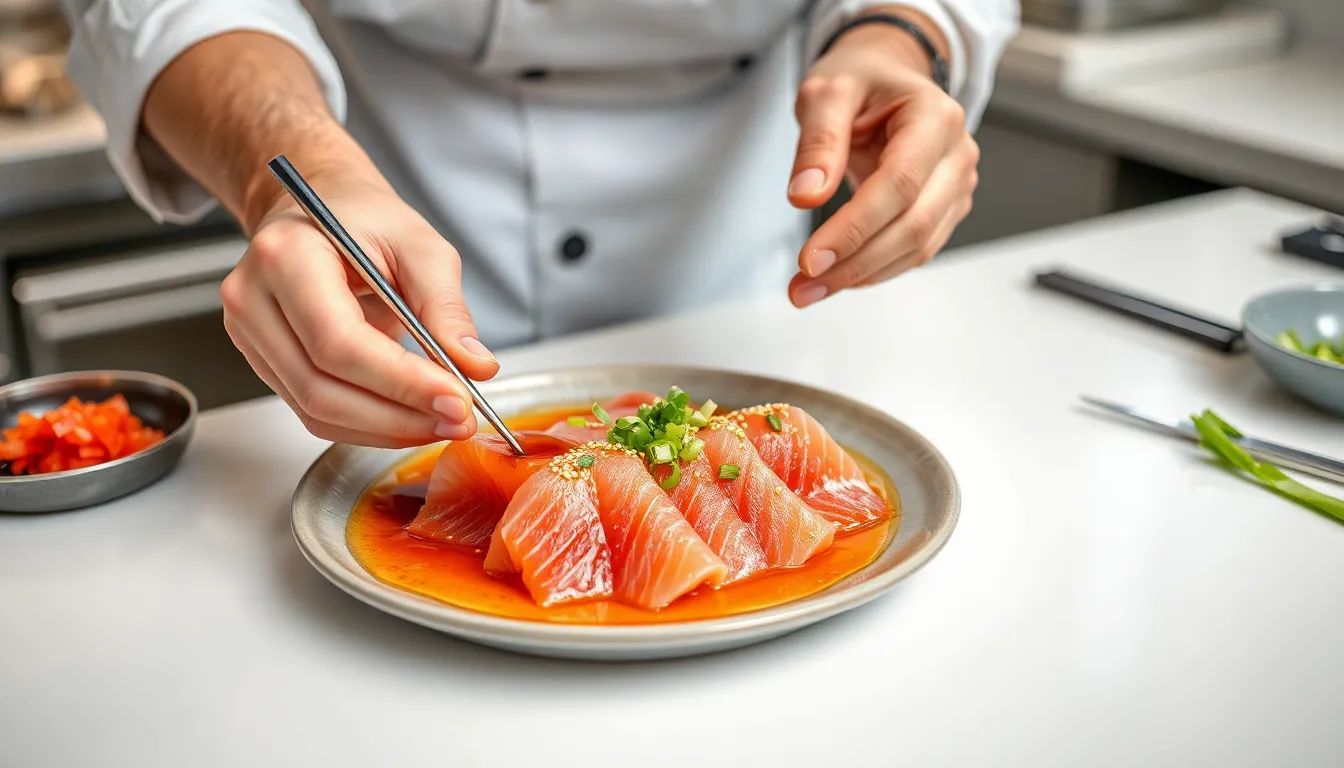
Fish Yukhoe is a Korean dish made with fresh fish, loved by many for its unique flavor and texture. This dish, using fresh sashimi-grade fish, harmonizes beauty and depth of flavor, making it easy to enjoy at home. The charm of Yukhoe lies in its simplicity, but the choice of ingredients and the balance of seasonings are crucial. Here, we present a specific recipe for making delicious Yukhoe at home. The photo of the finished product showcases beautiful plating with colorful ingredients that are sure to whet your appetite just by looking at it! Through this recipe, you too can enjoy authentic Korean cuisine at home.
A list of necessary ingredients, including precise measurements
- Fresh sashimi-grade fish (tuna, salmon, etc.): 200g– The freshness of the fish greatly affects the deliciousness of Yukhoe. Especially, tuna and salmon have a good fat content, providing a melt-in-your-mouth texture. When selecting, choose fish that is vibrant in color and free of any unpleasant odors.
- Soy sauce: 2 tablespoons– Japanese soy sauce is an important seasoning that enhances umami. Using a dark soy sauce particularly increases the flavor and pairs well with the fish.
- Sesame oil: 1 tablespoon– Sesame oil adds a rich aroma and deep flavor to the dish. Choosing high-quality sesame oil enhances its nuttiness, making the dish even more delicious.
- Sugar: 1 teaspoon– Sugar mellows the overall flavor and balances the seasonings. Even a small amount is effective, as it enhances the sweetness and emphasizes the fish’s umami.
- Green onion: 1 stalk (finely chopped)– Green onion adds a crunchy texture and aroma, tightening the overall flavor. Choose fresh ones that have a strong scent.
- White sesame seeds: to taste– White sesame seeds add nuttiness and texture. They also serve as a beautiful topping.
- Egg yolk: 1– The egg yolk is an important element that adds creaminess. Choosing fresh eggs and placing the yolk on top enhances the overall flavor.
- Nori: to taste (for topping)– Nori is a flavorful topping that adds a textural accent. Cutting it finely and sprinkling it enhances the visual appeal.
- Mustard (optional): to taste– Adding mustard creates a spicy accent that sharpens the overall flavor. Adjust the spiciness to your preference.
A list of tools and equipment needed for cooking
- Knife– A sharp knife is necessary for cutting the fish. Using a sashimi knife in particular results in clean cuts, making the presentation beautiful.
- Cutting board– Having a dedicated cutting board for fish is hygienic and reassuring. Wooden boards are common, but plastic ones are also good.
- Bowl– A bowl of appropriate size is needed for mixing the seasonings. Choosing a deep one makes mixing easier.
- Whisk or fork (for mixing the egg yolk)– This tool is used to mix the egg yolk smoothly. Using a whisk allows for a more uniform mixture.
- Spoon– Useful for measuring ingredients and serving. Prepare a handy spoon.
- Plating dish– A dish for beautiful plating greatly influences the impression of the dish. Using a white plate makes the colors stand out, making it look more appetizing.
Preparation time, cooking time, and overall difficulty level
The preparation time for making this fish Yukhoe is about 15 minutes, with a cooking time of just 5 minutes, making it a quick dish to complete. Overall, it is rated as “easy,” making it accessible even for beginners. Especially, once the ingredients are prepared, delicious Yukhoe can be made in no time, making it perfect for a busy dinner or as a dish for entertaining guests. Additionally, cooking together with friends or family can provide a fun time.
Easy-to-understand, step-by-step cooking instructions for beginners
- Wash the fresh sashimi-grade fish thoroughly with water and pat dry with paper towels.– Washing the fish removes surface dirt and odors. By thoroughly drying it, the seasonings will adhere better, enhancing the flavor.
- Cut the fish into bite-sized pieces and place them in a bowl.– Slicing the fish thinly improves the mouthfeel. It is important to cut it into manageable sizes.
- Add soy sauce, sesame oil, and sugar, and mix well.– Mixing the seasonings first allows for an even flavor. Be sure to mix well until the sugar dissolves.
- Add the finely chopped green onion and white sesame seeds, and mix again.– The aroma of the green onion and the nuttiness of the sesame seeds enrich the overall flavor. Mix thoroughly to ensure the ingredients are evenly combined.
- Plate the fish and place the egg yolk on top.– Beautifully plating the fish in the center of the dish enhances its appearance. Placing the egg yolk in the middle adds a touch of elegance.
- Top with nori or mustard to taste and it’s complete.– Toppings not only improve the appearance but also add flavor accents. Adjust the amount of mustard to your liking and enjoy your preferred level of spiciness.
Tips for success, common mistakes, and how to avoid them
The key to success is choosing fresh fish. It is recommended to purchase from a reliable fishmonger or market. The fresher the fish, the more the flavor of the yukhoe is enhanced. Additionally, measure the ingredients accurately, paying particular attention to the amounts of soy sauce and sesame oil. Common mistakes include using fish that is not fresh or adding too many seasonings. To avoid this, it is important to check the freshness of the fish and to add seasonings gradually while tasting. If the flavor is too strong, consider diluting it with a small amount of water.
Plating suggestions and presentation to make the dish look beautiful
Presentation is crucial for yukhoe. First, beautifully arrange the fish in the center of the plate and place the egg yolk on top. Scatter some seaweed and finely chopped green onions around the edges to create a colorful finish. Paying attention to the way the fish is cut and arranged will enhance its visual appeal. Finally, sprinkle some white sesame seeds to make it look appetizing. Adding a bit of mustard to the edge of the plate adds color and makes it even more beautiful. Additionally, garnishing with seasonal fruits or vegetables can effectively enhance the table’s appearance.
Proper storage methods and recommendations for deliciously utilizing leftovers
Since freshness is crucial for fish yukhoe, it is recommended to eat it as soon as possible. If there are leftovers, they can be stored in a sealed container in the refrigerator, but it is ideal to consume them within 24 hours. When storing, it is important to seal it tightly to prevent exposure to air. Additionally, using leftover yukhoe to create salads or rolled sushi can provide new ways to enjoy it. For example, adding lettuce and tomatoes to a salad, or rolling it with rice in sushi, can easily create a delicious dish.
Recipe variations and customization options to suit preferences
This basic fish yukhoe recipe can be enjoyed in various variations by changing the type of fish. For instance, using salmon or white fish (such as flounder or sea bream) is also delicious. In particular, white fish is characterized by its light flavor, allowing for a refreshing yukhoe experience. If you want to add some spiciness, adding a little chili or gochujang is also a good idea. Furthermore, topping with avocado or cucumber enhances the texture and makes it even more delicious. Try creating your own unique yukhoe as a creative dish.
Strong conclusion
Fish yukhoe is a dish that captivates with its deep flavors hidden in a simple recipe and beautiful presentation. By using fresh fish and carefully selected seasonings, you can enjoy authentic Korean cuisine at home. Trying this recipe, which is easy even for beginners, will allow you to experience the joy of cooking and create a delightful dining experience with friends and family. Be sure to add your own twist and complete your original yukhoe. Let’s share the joy of cooking while enjoying this delicious yukhoe at your next meal.