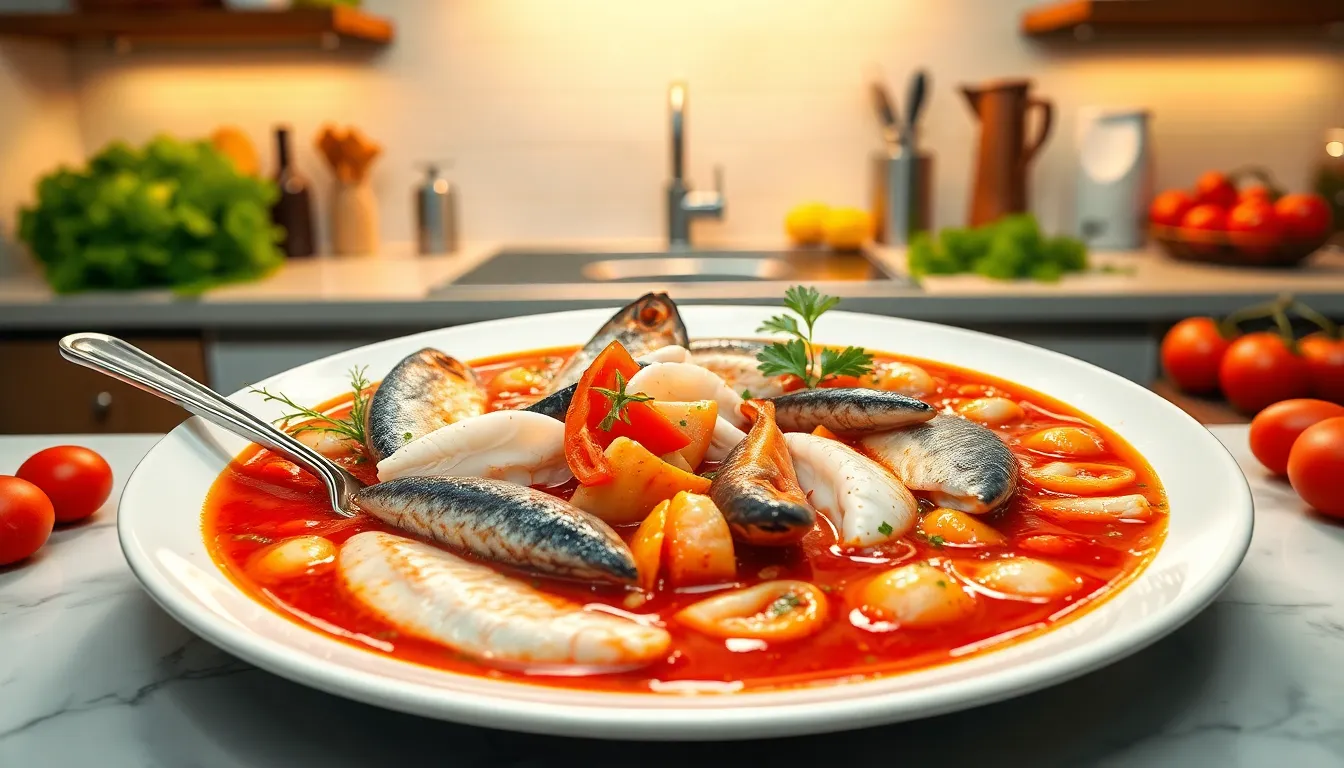
Have you ever wanted to savor a dish that encapsulates the flavors of the sea in a single spoonful? Thefish soup recipeis just what you need! This traditional Italian dish is a triumph of freshness, combining various types of fish and seafood, slowly cooked in a rich and aromatic broth. Its preparation is an art passed down through generations, carrying with it the history of Italy’s coastal communities. With ingredients like juicy tomatoes, fragrant garlic, and selected spices, the final result is a soup with an intense and enveloping flavor, perfect for a special dinner or to warm up during cold winter evenings. Served with crispy bread croutons, this soup is not just a dish, but a culinary experience that celebrates Italian tradition and the beauty of the sea.
Criteria for selecting ingredients/components
The choice of ingredients is crucial for achieving an exceptional fish soup. Each element contributes to creating a balanced and flavorful dish. Here are some criteria to consider:
- Freshness: Opt for fresh fish and seafood, preferably purchased from the local fish market. Freshness not only enhances the flavor but also ensures the nutritional quality of the dish. If possible, choose fish that has been caught just a few hours before your preparation for a truly authentic experience.
- Variety: Choose at least three or four types of fish and seafood for a more complex flavor. For example, combine cod with mussels, shrimp, and squid. This variety not only enriches the taste but also offers a range of beneficial nutrients, making the soup not only tasty but also healthy.
- Quality: Choose sustainable fish from reliable sources. Check labels and inquire about the origin of the fish. Selecting high-quality ingredients not only supports responsible fishing practices but also guarantees a better and more authentic flavor in your soup.
- Seasonality: Use seasonal ingredients to ensure the best flavor and quality. For example, in summer, fresh and fragrant tomatoes can replace canned ones, while in autumn, you can add specific vegetables like zucchini for an extra touch of flavor. Seasonality not only enhances taste but also allows you to save money, as seasonal ingredients are often cheaper.
Tools and equipment needed
To prepare your fish soup, you will need some essential tools. Each tool plays an important role in the preparation, ensuring that the final dish is impeccable:
- Large pot: Ideal for cooking the soup evenly. A stainless steel or cast iron pot distributes heat uniformly, avoiding hot spots that can burn the ingredients. Make sure it is large enough to hold all the ingredients without overcrowding, to ensure optimal cooking.
- Wooden spoon: To stir the ingredients without scratching the pot. Wood is ideal because it does not alter the flavor of the food and prevents chemical reactions with metals. Additionally, the wooden spoon is perfect for tasting the soup during cooking, allowing you to adjust the seasonings as needed.
- Sharp knife: To clean and cut the fish and vegetables. A good knife not only makes the job easier but also ensures precise cuts, essential for even cooking. Investing in a quality knife can make a difference in preparing your recipes.
- Cutting board: To prepare the ingredients safely. Choose a sturdy wooden or plastic cutting board that is easy to wash and disinfect. A wooden board provides an excellent surface for cutting fish, while a plastic one is more suitable for vegetables, avoiding cross-contamination.
- Sieve: If you want to strain the broth at the end. A fine sieve helps separate any impurities or solid residues from the broth, ensuring a smooth and refined soup. This step is crucial if you desire a velvety texture and a clean flavor.
Preparation and planning times
Preparing the fish soup takes some time, but the results will be worth it. Planning ahead will allow you to enjoy the process without rushing. Here’s a useful timeline to organize your kitchen:
- Ingredient preparation: 30 minutes. Spend this time cleaning and cutting the fish and vegetables, and preparing all the necessary ingredients. Having everything ready will allow you to cook more smoothly and without interruptions.
- Cooking: 40-50 minutes. During this phase, the broth will develop in flavor and aroma. It is important not to rush the cooking: let the flavors meld slowly, stirring occasionally to ensure even cooking.
- Resting: 10 minutes before serving. This step is crucial to allow the flavors to stabilize and meld. Additionally, the soup will cool slightly, making it easier to serve without burning yourself.
In total, dedicate about 1 hour and 20 minutes for the preparation and cooking of the soup. Considering the resting time, it is advisable to plan for about two hours to complete the entire process, so you won’t be rushed and can enjoy every moment.
Detailed step-by-step instructions
Follow these steps to prepare your fish soup perfectly:
- Preparing the broth: Start by heating olive oil in a large pot. Add a chopped garlic clove and a sliced onion, sautéing until golden brown.Pro-Tip:Extra virgin olive oil not only adds flavor but also has health benefits. The garlic and onion will release wonderful aromas, creating a perfect base for your soup.
- Adding the tomatoes: Combine peeled and crushed tomatoes, seasoning with salt and pepper to taste. Let it cook for about 10 minutes.Pro-Tip:If using fresh tomatoes, be sure to blanch and peel them before adding. This will improve the consistency of the broth, making it creamier and richer in flavor.
- Preparing the fish: While the sauce is cooking, clean and cut the fish and seafood. Be sure to remove any shells and entrails.Pro-Tip:For the fish, it is advisable to use varieties like cod, sea bass, or sole, which cook well and do not flake easily. Remember that the quality of the fish greatly affects the final result.
- Union of ingredients: Add the fish and seafood to the sauce, stirring gently. Cover and let simmer for about 20-30 minutes.Pro-Tip:Do not stir too vigorously to avoid breaking the fish pieces. A slow cooking allows the flavors to blend perfectly.
- Cooking check: Make sure the fish is cooked and the seafood is open. If some seafood remains closed, discard them.Pro-Tip:The fish is cooked when it becomes opaque and flakes easily with a fork. Taste the soup before serving to adjust any seasonings.
Quality indicators and checkpoints
To ensure your fish soup is perfect, consider the following quality indicators. These checkpoints will help you evaluate the final result before serving:
- Color and consistency: The soup should have a beautiful deep red color and a slightly thick consistency. A good broth should not be watery; if necessary, you can reduce it further to achieve the right thickness. A vibrant color is a sign that fresh ingredients have been used.
- Aroma: A fresh, marine aroma is a good sign that the ingredients are of high quality. As you cook, the smell should be inviting and satisfying. If the aroma is sharp or unpleasant, it may be a sign that some ingredients are not fresh.
- Taste: Taste the soup to adjust the salt and pepper; it should have a balanced and rich flavor. Don’t forget to consider the acidity of the tomatoes: sometimes, a pinch of sugar can help balance the flavors. If the soup is too salty, a bit of water or broth can help correct the taste.
Serving, presentation, or finishing tips
For optimal serving of your fish soup, follow these tips for a presentation that will impress your guests:
- Serve hot: Fish soup is best when hot. Serve it immediately after preparation to ensure the flavors are at their peak. Use warmed bowls to maintain the temperature during serving.
- Garnishes: Add a drizzle of olive oil and a sprinkle of freshly chopped parsley for a touch of freshness. You might also consider using grated lemon zest for a vibrant aroma and refreshing taste.
- Crostini: Accompany the soup with toasted bread crostini for added crunch. You can prepare the crostini by tossing slices of bread with olive oil, garlic, and rosemary, then toasting in the oven until golden. This contrast in texture enriches the tasting experience.
Storage, preservation, or maintenance
If you have leftovers of fish soup, here’s how to store them to maintain freshness and flavor:
- Refrigerator: Store the soup in an airtight container in the refrigerator for up to 2 days. Make sure to cool the soup completely before placing it in the fridge to avoid condensation.
- Freezer: You can freeze the soup in portions for up to 3 months. Remember to let it cool completely before freezing. Use freezer bags or suitable containers, labeling them with the freezing date.
- Reheating: Reheat the soup slowly on the stove, adding a bit of water if necessary to restore the consistency. Avoid the microwave, as it can cook unevenly and alter the texture of the fish.
Variants and customization options
Fish soup is a versatile dish that you can customize to your taste. Explore new combinations and discover which version you like best:
- Fish: Try different varieties of fish such as cod, sole, or salmon. Each type of fish will bring a unique flavor profile. For an exotic touch, consider adding tropical fish like tuna or mahi-mahi.
- Spices: Add chili for a spicy kick or herbs like thyme or oregano for a different flavor. You can also explore using spices like cumin or coriander to give your soup a Mediterranean twist.
- Vegetables: Incorporate other vegetables like zucchini or bell peppers to enrich the dish. Vegetables not only add color but also nutrients. You can also include legumes like white beans for a heartier dish.
Thefish soup recipeis an invitation to explore and have fun in the kitchen, so don’t hesitate to experiment! Remember that cooking is a journey of discovery, and every variation can lead to new surprising flavors.
Conclusion: Your journey in preparing fish soup
In conclusion, preparing fish soup is a rewarding experience that combines tradition and creativity. By following the steps and tips provided, you can create a dish that not only satisfies the palate but also brings a piece of the sea to your table. Remember to pay attention to the quality of the ingredients and enjoy the preparation process. Don’t hesitate to customize the recipe to your tastes, exploring different variants and ingredients. Now that you’re ready, gather your fresh ingredients and start your culinary adventure. Enjoy your meal!