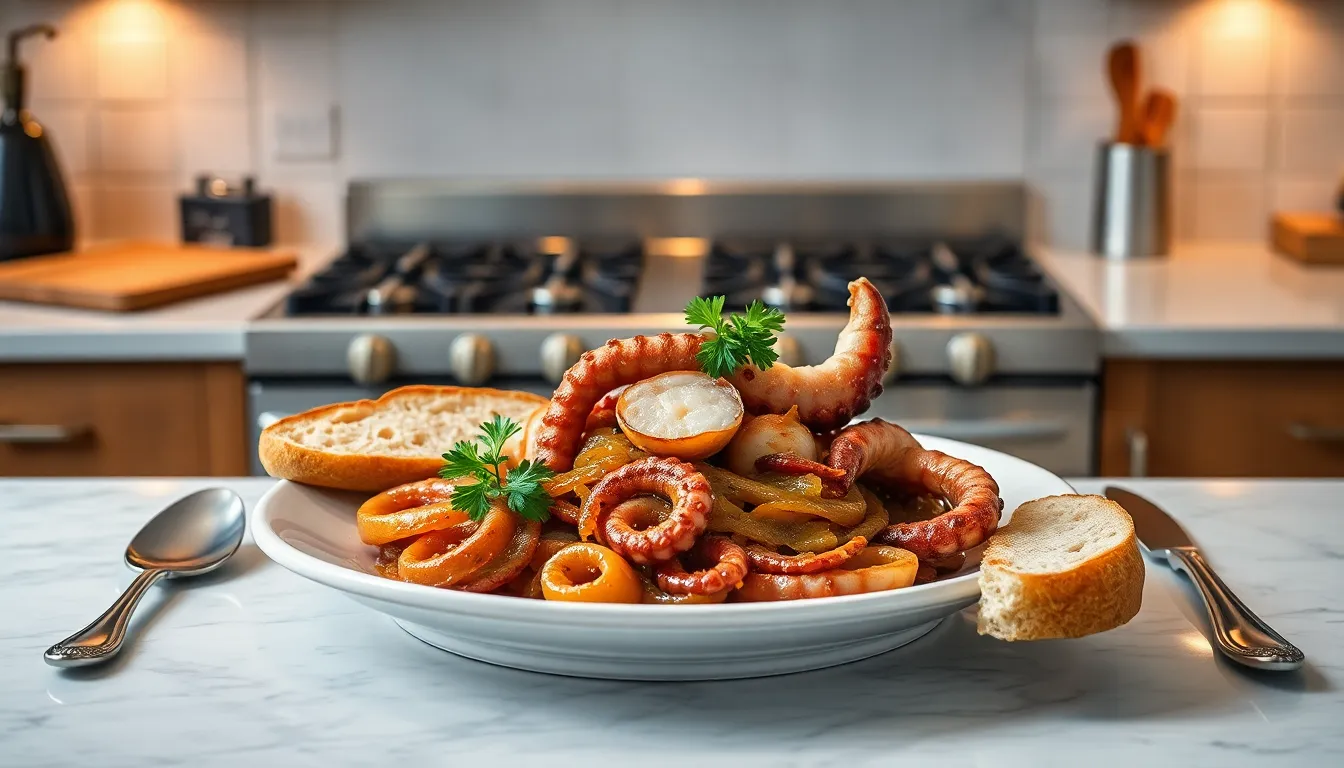
Have you ever tried a dish that combines the softness of the sea with the sweet and caramelized flavor of onions? Therecipe for onion octopusis a culinary experience that not only delights the palate but also evokes memories of family dinners and special celebrations. This dish, originating from various Mediterranean cultures, has earned a special place in gastronomy due to its simplicity and sophistication. The combination of tender octopus, cooked to perfection, and caramelized onions creates a balance of flavors that is sure to impress your guests. Whether for a romantic dinner, a gathering with friends, or a special lunch, onion octopus is the perfect choice for those seeking a dish that speaks of elegance and flavor. Get ready to enjoy a delicious culinary experience that will leave a mark!
Ingredient/component selection criteria
The quality of the ingredients is crucial for the success of the onion octopus recipe. Below are the criteria you should consider for each component:
- Octopus: Opt for fresh octopus if possible, as its texture and flavor are unmatched. If you decide to use frozen octopus, make sure it has been properly thawed, preferably in the refrigerator overnight. Fresh octopus should have a vibrant color and a mild sea smell; avoid any option that has a strong or unpleasant odor, as this may indicate it is not fresh.
- Onions: Yellow or red onions are ideal due to their natural sweetness. Look for firm onions, free of blemishes or sprouts. The quality of the onions directly influences the flavor of the dish; poor-quality onions can impart a bitter or unpleasant taste to the onion octopus. A trick is to choose onions that feel heavy for their size, as this indicates freshness and juiciness.
- Spices: Use fresh or high-quality spices. Sweet paprika and garlic are essential for enhancing the flavor of the octopus. Consider using smoked paprika to add an extra dimension to the dish. Additionally, spices should be stored properly in a cool, dark place to maintain their potency and freshness. Try smelling the spices before purchasing them; if they don’t have a strong aroma, they are likely not fresh.
- Olive oil: Choose extra virgin olive oil for the best flavor. High-quality olive oil not only enhances the taste but also provides health benefits. Look for oils with labels indicating their origin and type of olive, and opt for those that are cold-pressed, as they retain their properties better. A quality olive oil can make a difference in the depth of flavor of the dish.
Required tools and equipment
Before you start cooking, make sure you have the following tools on hand, which are essential for successful preparation:
- A large pot for boiling the octopus, preferably stainless steel, as it distributes heat evenly and avoids undesirable reactions with the ingredients.
- A wide skillet for sautéing the onions, which should be non-stick to prevent sticking and facilitate caramelization.
- Sharp knives for cutting, as a good knife not only makes the job easier but also ensures precise cuts, crucial for even cooking.
- A sturdy and easy-to-clean cutting board, preferably made of high-quality wood or plastic, to avoid cross-contamination.
- Wooden spoons for mixing, as they do not damage the surfaces of utensils and prevent unwanted flavor transfer.
- A strainer for draining the octopus, which should have fine mesh to prevent small pieces from escaping during the draining process.
Planning and preparation schedule
Preparing the onion octopus recipe requires good planning to ensure everything is ready on time. Here’s a schedule you can follow to guarantee a smooth cooking experience:
- Cooking time for the octopus: 30-40 minutes. This time may vary depending on the size of the octopus; a larger octopus may need more time. Proper cooking is key to achieving tender and not rubbery octopus.
- Ingredient preparation time: 15-20 minutes. During this time, make sure to clean and cut all the ingredients, which will facilitate the cooking process and allow you to focus on the technique.
- Onion sautéing time: 10 minutes. This time is crucial for achieving the perfect browning and caramelization of the onions, which will intensify their natural sweetness.
- Approximate total time: 1 hour. This is the estimated time from when you start preparing until the dish is ready to be served. Enjoy the process and don’t rush the steps, as each one is important for the final result.
Detailed step-by-step instructions
Step 1: Cook the octopus
In a large pot, boil salted water. Once the water is boiling, add the octopus. Cook over medium-low heat for 30-40 minutes, or until tender. Remember to remove any foam that forms on the surface to keep the water clean.Pro-Tip: To ensure the octopus doesn’t become rubbery, avoid cooking it over high heat. Cooking it slowly allows the muscle fibers to soften, resulting in a more tender texture. Additionally, you can add a bay leaf to the water for a touch of aroma and flavor during cooking.
Step 2: Prepare the onions
While the octopus is cooking, slice the onions thinly. In a large skillet, heat the olive oil over medium heat. Add the onions and cook, stirring occasionally, until they are golden and caramelized, about 10 minutes.Pro-Tip: Sauté the onion slowly to develop its natural sweetness. If you rush, the onions may brown too quickly on the outside while remaining raw on the inside. Patience is key here; the caramelization process transforms the flavor of the onions, giving them a sweet and rich profile that will perfectly complement the octopus.
Step 3: Mix the octopus and onions
Once the octopus is cooked, drain it and cut it into pieces. Add the octopus to the skillet with the caramelized onions. Add the paprika, chopped garlic, and season with salt and pepper to taste. Cook everything together for 5-7 minutes to blend the flavors.Pro-Tip: When adding the paprika, do so off the heat or over very low heat, as it can burn easily and make the dish bitter. This mixture of ingredients will not only enhance the flavor of the octopus but also create a tasty sauce that you’ll want to enjoy with bread or rice.
Quality indicators and checkpoints
To ensure your onion octopus recipe is successful, pay attention to the following quality indicators during preparation:
- The octopus should be tender, not rubbery. You can check this by piercing it with a fork; if it goes in easily, it’s ready. Undercooked octopus can become tough and unappetizing.
- The onions should be well caramelized, with a dark golden color. Good caramelization not only adds deep flavor but also an attractive color to the dish. Make sure they are not burnt, as this can ruin the balance of flavors.
- The flavor should be balanced; adjust the salt and spices to your liking. It is always advisable to taste the dish at the end of cooking and adjust the seasonings as necessary, as this can vary depending on the ingredients used.
Tips for serving, presenting, or finishing
Presentation is key to fully enjoying this dish. Here are some tips you can follow to make your onion octopus look as good as it tastes:
- Serve it hot in a deep plate, garnished with a bit of chopped fresh parsley. This touch of color not only adds freshness but also complements the flavors of the dish.
- Pair it with fresh bread to enjoy the delicious sauce. A good bread, like a crusty baguette or country bread, is perfect for soaking up the flavors of the octopus and onion mixture.
- A few slices of lemon on the side can add a touch of freshness to the dish. Squeezing a little lemon over the octopus just before eating can further enhance the flavors and add a pleasant contrast.
Storage, preservation, or maintenance
If you have leftover onion octopus, here’s how to store it properly to enjoy later:
- Store it in an airtight container in the refrigerator, where it can last up to 3 days. Make sure it is completely cool before storing to avoid condensation in the container, which can affect the texture and flavor.
- If you want to keep it longer, you can freeze it. Make sure it is completely cool before freezing. Divide the portions into freezer bags and remove as much air as possible to prevent freezer burn.
- To reheat, use a skillet over low heat to avoid making the octopus tough. Add a little olive oil or water to help maintain moisture, and stir occasionally to heat evenly.
Variations and customization options
The onion octopus recipe is versatile and can be adapted to your preferences and local flavors. Here are some ideas to customize it:
- With white wine: Adding a splash of white wine to the pan while cooking the onions will give it an extra flavor. The white wine can help deglaze the pan, incorporating the caramelized flavors into the mixture.
- With peppers: Adding red or green peppers to the mixture not only adds a colorful touch but also brings sweetness and texture, making the dish even more appealing.
- Spicy version: Incorporate chili or hot pepper for a spicy kick that will enhance the dish. This option is ideal for those who enjoy bolder and spicier flavors.
Conclusion
Onion octopus is more than just a simple dish; it is a celebration of flavors that combines the freshness of the sea with the sweetness of caramelized onions. This dish is not only easy to prepare but also offers an impressive presentation that is sure to impress your guests. By following the tips on ingredient selection, preparation, and presentation, you can create a memorable culinary experience. Whether you are cooking for a special occasion or just want to enjoy a delicious meal, onion octopus will always be a great choice. Dare to explore the variations and customize the recipe to your taste! Take the first step and surprise your loved ones with this delicious dish that will leave everyone asking for the recipe.